
Question
Gramps,
Which of the Twelve Tribes do black people belong to?
Richard
Answer
Richard,
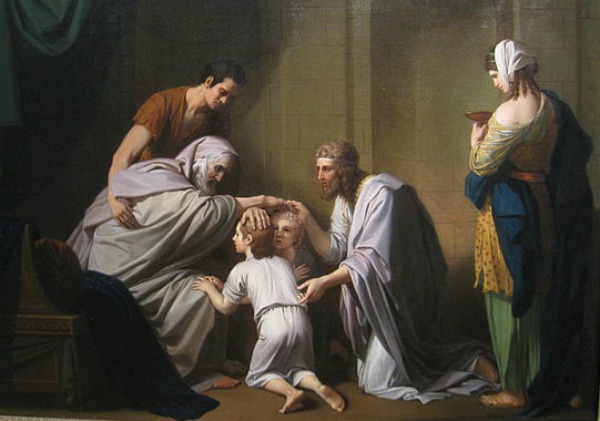
Patriarchal lineage refers to the ancestral line through which blessings and responsibilities are passed down in the context of the Church. According to Church doctrine, all members are considered descendants of Abraham, and through him, they are connected to the twelve tribes of Israel. This connection is not merely symbolic; it is believed to have spiritual significance, particularly in the context of patriarchal blessings, which are personal revelations given to members of the Church that often include their tribal affiliation.
Patriarchal blessings are a unique aspect of the Church’s practice, serving as a personal declaration of one’s lineage and divine potential. These blessings are administered by a patriarch, who is a priesthood holder authorized to give such blessings. The blessings often identify the recipient’s tribe, which can be Ephraim, Manasseh, Judah, or others. However, the process is not straightforward, as it requires revelation and personal guidance from God. We can’t just give a blanket statement as to which tribe a certain group of people would belong to or adopted into.
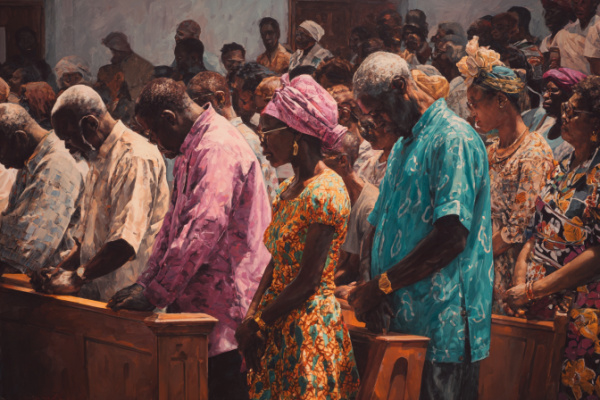
The Church is a global organization, and its membership reflects a wide array of ethnic backgrounds. While many members are identified as descendants of Ephraim, there are also members from other tribes, including those of African descent. The Church’s teachings emphasize that individuals of all races and ethnicities can belong to any of the tribes of Israel, and this is confirmed through patriarchal blessings. Blacks would be no different than those of any other race. This inclusivity is a vital aspect of the Church’s doctrine, promoting the idea that all are equal in the eyes of God.
Historically, the Church has faced challenges regarding race and the priesthood. Before 1978, members of African descent were restricted from holding the priesthood, a policy that was rooted in complex historical and cultural factors. This policy was officially rescinded in 1978, allowing all worthy male members, regardless of race, to receive the priesthood. This change marked a significant shift in the Church’s approach to race and lineage, opening the doors for greater inclusivity and participation among members of African descent.
The revelation in 1978 that lifted the priesthood ban for men of African descent was a pivotal moment in the Church’s history. It not only allowed for greater participation of Black members in Church leadership but also signified a broader acceptance of diversity within the Church. Following this revelation, many Black families began to participate more fully in Church activities, including temple worship and missionary work. The story of Helvécio and Ruda Martins, who contributed to the construction of the São Paulo Temple despite not being able to enter it at the time, illustrates the faith and resilience of Black members during this transitional period.
Understanding one’s lineage is not only relevant in this life but is also believed to have implications for the next. According to Church teachings, those who are adopted into the tribes of Israel through patriarchal blessings will have specific roles and responsibilities in the afterlife. This belief displays the importance of lineage as a means of connecting individuals to their spiritual heritage and divine potential. The declaration of to which tribe of Israel any person belongs may be more important for life in the next world than it is in mortality.
For many members, understanding their lineage is a source of identity and belonging within the Church. The belief that all members can be part of the house of Israel fosters a sense of unity and purpose. This is particularly significant for members of African descent, who may have historically felt marginalized within the Church. The acknowledgment that they can belong to any tribe of Israel reinforces their place within the community and affirms their spiritual heritage.
The Church teaches that revelation is essential in understanding one’s lineage. Patriarchal blessings are not merely ceremonial; they are considered divine communications that provide insight into an individual’s spiritual identity. This reliance on revelation emphasizes the personal nature of faith within the Church, allowing members to seek guidance and understanding from God regarding their lineage and purpose.
As the Church continues to grow and diversify, the understanding of lineage will likely evolve. The increasing global membership brings new perspectives and experiences that can enrich the Church’s teachings on lineage and identity. The Church’s commitment to inclusivity and revelation will play a crucial role in shaping the future of how lineage is understood and embraced by all members.
Gramps