

Question
Gramps,
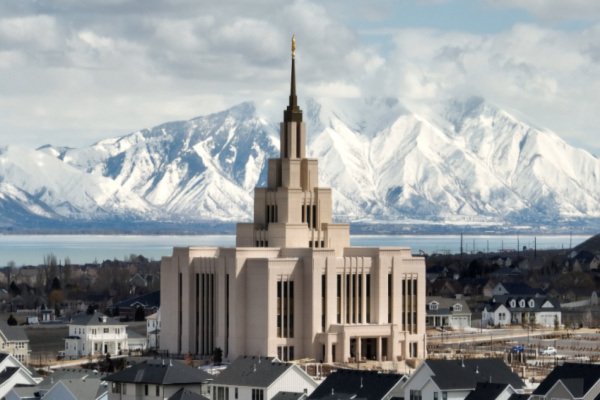
What happens at a temple dedication?
Sara
Answer
Dear Sara,
For millions of Latter-day Saints around the globe, the dedication of a temple is one of the most sacred and joyous events of their religious lives. These milestones are occasions of profound meaning, hallowed tradition, and heavenly connection. But what actually happens at a temple dedication? Why is it considered so significant and who is allowed to attend?
At the heart of the restored gospel, temples stand as “houses of the Lord,” places where the highest and holiest ordinances of the faith are performed. The process of constructing and dedicating a temple is not merely ceremonial or symbolic—it is foundational to the mission and teachings of The Church of Jesus Christ of Latter-day Saints. Church leaders have consistently taught that, from the time of Joseph Smith, the building and setting apart of temples is not simply church tradition, but a divine command. Elder Charles C. Rich once explained, “God ordained from before the foundation of our world . . . that His people can only receive from Him certain blessings in certain places,” highlighting why temples are not just important, but essential, to the faith.
Every temple is formally dedicated to God and set apart from the world after its construction, following a period known as the “open house.” Before this sacred moment, the temple is open for public tours, allowing people of all faiths to enter and see its beautiful rooms and learn about Latter-day Saint beliefs. But after the dedication, only members in good standing—those holding a “temple recommend”—are permitted to enter, as the temple becomes a literal House of the Lord. President Howard W. Hunter taught, “These temples are His houses, built in His name for His glory and for His purposes.”
Aside from the religious rites that follow, the dedication itself is viewed by many as a spiritual portal opening heaven’s blessings to the earth. As one temple coordinator put it, “Anytime a temple gets dedicated, the world gets a little brighter and a little better.” Each dedication is not just about a building; it represents increased opportunity—another place where God’s presence dwells, where families are strengthened, and where members can grow closer to the Savior.
The pattern for modern temple dedications in The Church of Jesus Christ of Latter-day Saints was established with the Kirtland House of the Lord in 1836, the first temple constructed by the restored Church. Historical accounts describe a sacred and orderly agenda, which has endured (with some adaptation) ever since. The meeting in Kirtland began with prayers, hymns, and sermons; Joseph Smith offered a dedicatory prayer, now canonized in Doctrine and Covenants 109; and then the congregation sang “The Spirit of God.” Finally, the proceedings were “sealed” by a unified “hosanna shout” to God and the Lamb: the congregation shouted “Hosanna” three times, each followed by “Amen, Amen, and Amen.”
This tradition was so meaningful that, four days later, when another group met for a second dedication session, they followed the same pattern. “The services of the day were commenced, prosecuted, and terminated in the same manner as at the former dedication, and the spirit of God rested upon the congregation,” one recording noted. These elements—the prayers, the hymns, the testimonies, and the Hosanna shout—have remained central features of temple dedications throughout the history of the Church.
In Nauvoo, the final day of the three-day dedication ceremony in 1846 was limited solely to members as a mark of its sacredness. A charitable collection was taken during the first session to help compensate workers who had sacrificed so much to complete the building, emphasizing both spiritual dedication and temporal gratitude. The sense of anticipation and reverence associated with dedications was palpable as Latter-day Saints, sometimes after great struggles, gathered to see these structures devoted to God.
Through the decades, the Church has adapted to growth and logistical realities. In recent years, temple dedications often include multiple sessions—sometimes broadcast to Church buildings outside the temple—to allow more members to participate. The principal elements, however, remain unchanged. The prayers are written in advance and read with solemnity. The Hosanna shout remains a highlight, underscoring communal gratitude and worship. In the words of Elder Lorenzo Snow, “This is no ordinary order… a sacred shout, and employed only on extraordinary occasions like the one now before us. We want every man and every woman to shout these words to the very extent of their voices… and it may reach to the eternal worlds.”
The journey toward a dedication begins not with exclusivity, but with radical openness. Once construction and inspections are complete, the temple is thrown wide to the community. The open house period is a chance for neighbors and friends of other faiths to tour the building, ask questions, and learn about the beliefs and ordinances central to the Church.
Often, the evening before the dedication, youth from the temple district gather for a cultural celebration. This event—typically filled with music, dance, and regional storytelling—highlights both local heritage and the faith of the rising generation. For instance, before the Phoenix Arizona Temple dedication, more than 4,300 youth participated in a program themed “Be a Light,” weaving together cultural contributions with tributes to military service, local industry, and the Church’s international diversity.
The actual dedication day is carefully orchestrated. It is generally presided over by a member of the First Presidency or the Quorum of the Twelve Apostles and includes multiple sessions to accommodate thousands of members. In the Phoenix Arizona Temple’s case, three sessions were held within the temple, with thousands more participating via secure broadcast in local chapels. For these broadcasts, local meetinghouses become “an extension of the temple,” meaning that those attending must hold a temple recommend—even though the sacred building itself may be hundreds of miles away. This practice is rooted in revealed scripture: “And inasmuch as my people build a house unto me in the name of the Lord, and do not suffer any unclean thing to come into it… my glory shall rest upon it” (Doctrine and Covenants 97:15–17).
Admittance is thus restricted to ensure reverence and spiritual preparation, reflecting the sanctity of the occasion and the commandment “that His people can only receive from Him certain blessings in certain places.” The broadcast-and-recommend system, though sometimes puzzling to Latter-day Saints eager to include friends and relatives, is a protection of the sacred, not a barrier to participation.
The cornerstone ceremony, which sometimes takes place outside the temple before or following the dedication, offers a moment for the community at large to witness the symbolic completion of the structure. This rite reminds all that “Jesus Christ is the chief cornerstone of the Church.”
Within the temple or broadcast locations, the atmosphere is one of sacred anticipation. The program includes hymn singing, including the traditional “The Spirit of God,” stirring prayers, remarks from Church leaders, and often the united singing of the “Hosanna Anthem.” The Hosanna shout is carefully explained beforehand; all stand and together raise their voices in a threefold cry of “Hosanna to God and the Lamb,” each time followed by a triple “Amen.” Elder B.H. Roberts once wrote, “It is impossible to stand unmoved on such an occasion. It seems to fill the prairies or woodland, mountain wilderness, or tabernacle, with mighty waves of sound; and the shout of men going into battle cannot be more stirring. It gives wonderful vent to religious emotions and is followed by a feeling of reverential awe—a sense of oneness of God.”
These proceedings not only sanctify the building, but symbolize the unity and gratitude of the Church’s members, gathered from many backgrounds and places, “sealed” together in faith.
At its core, a temple dedication is about transforming space and people. From the earliest Israelite temples to the latest modern building, the temple has always been set apart as a “house of instruction, worship, and divine presence.” Hugh Nibley, a noted Latter-day Saint scholar, observed that “the place seemed to be a general center of activity.: The huge outer court allowed for this… but through the years, both the structure and the uses to which it was put have remained completely focused on sanctity and gathering.
For members of The Church of Jesus Christ of Latter-day Saints, these dedications are a renewal—not only of walls and altars, but of covenants, aspirations, and spiritual hope. The ordinances that follow bring families together for eternity, offer healing and hope to individuals, and, in the words of President Howard W. Hunter, make possible a closer relationship “where He and His Spirit may dwell, where He may come or send others.” Every temple thus stands as a “window to Heaven, another light in the world, and another chance to grow closer to the Savior.”
In short, a temple dedication is not the end of a building project, but a sacred beginning for generations of faithful Saints—to reach heavenward, to gather in His name, and to become a holy people.
Gramps