

Question
Gramps,
What can be said of the overall moral integrity of the Founding Fathers of America? Would it be fair to judge by their actions that they strove for moral integrity in spite of their blatant flaws? I think it’s important to ask, given that Doctrine & Covenants 101 identifies the Constitution as an inspired document. Thanks!
Jude
Answer
Jude,
I think the answer requires us to look at both sides of their lives.
In Doctrine and Covenants 101:77–80, the Lord explains that He established the Constitution of the United States through wise men whom He raised up for that purpose. Verse 80 specifically states:
“I have established the Constitution of this land, by the hands of wise men whom I raised up unto this very purpose.”
That is a remarkable statement. From a Latter-day Saint perspective, it means the Constitution was not simply the result of ordinary political circumstances. The Lord had a purpose in bringing about a government that would protect individual liberty, including the freedom to worship.
However, notice something important. The Lord does not say that every man involved in creating the Constitution was perfect, or that every decision they made was inspired. He identifies the Constitution as part of His purpose, not every personal action of the men who helped establish it.
That distinction matters.
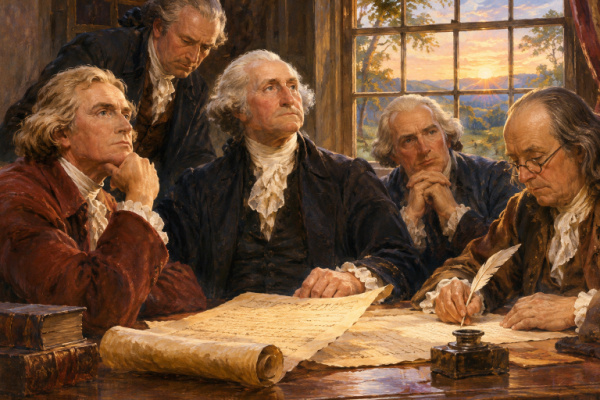
The Founding Fathers were human beings living in a particular time and culture. Some were deeply religious, while others had more complicated relationships with organized religion. Some were sincerely committed to liberty and individual rights, yet their personal lives sometimes reflected attitudes and practices that contradicted those very principles.
One of the most obvious examples is slavery.
Several prominent Founding Fathers, including George Washington and Thomas Jefferson, enslaved other human beings. Jefferson wrote about liberty and equality, yet he participated in a system that denied those freedoms to many people. Washington eventually provided for the emancipation of the enslaved people he owned in his will, but that does not erase the reality of his earlier actions.
These contradictions cannot simply be ignored.
If we are going to talk about moral integrity, we have to acknowledge that the Founding Fathers sometimes failed to live up to the principles they proclaimed. Their treatment of enslaved people is one of the most serious examples. At the same time, it would also be unfair to assume that their failures tell us everything about their character.
Many of these men genuinely believed that liberty was an important moral principle. They risked their lives, their property, and their reputations in resisting what they believed was unjust government authority. They helped establish a system in which people could challenge government power and exercise religious freedom. That does not make them morally perfect. But it does provide evidence that many of them sincerely valued principles beyond their own immediate interests.
From an LDS perspective, this is where the doctrine of inspiration becomes particularly interesting. The Lord has never required that the people He works through be perfect. Throughout the scriptures, we find individuals who were called to accomplish important purposes despite their weaknesses.
Moses had limitations. David committed serious sins. Peter denied knowing Jesus. Yet the Lord continued to work through imperfect people. The same principle can help us understand the Founding Fathers.
The fact that God raised up wise men to establish the Constitution does not mean He approved of everything they did. It means He could work through their abilities, experiences, and circumstances to accomplish something important. We see a similar principle in Doctrine and Covenants 1:24, where the Lord explains that He gives commandments to His servants according to their language and understanding.
God works with people where they are. That does not excuse wrongdoing. Rather, it reminds us that divine purposes can be accomplished through imperfect individuals who are still learning and growing.
I also think it is important to recognize that the Constitution itself contains principles that eventually helped expose the contradictions in the nation’s treatment of people. The Declaration of Independence declared that all men are created equal, even though the nation did not initially apply that principle equally. Over time, Americans used the language of liberty and constitutional rights to challenge slavery, discrimination, and other injustices.
The Constitution did not immediately solve those problems. In fact, its original compromises helped preserve slavery. But the principles of liberty and equal rights became important tools in the struggle to expand freedom. The Church’s own teachings about the Constitution emphasize its purpose in protecting the rights of all people.
The Doctrine and Covenants 101:77–79 speaks of the Constitution as a means of protecting individual rights and allowing people to exercise their conscience. The emphasis is not simply on protecting the rights of one group, but on establishing principles that can benefit everyone.
That is consistent with the statement in Doctrine and Covenants 134:2 that governments should protect the free exercise of conscience, the right to control property, and the protection of life.
In other words, the Constitution’s inspired purpose should encourage us to value liberty for all people, not just those who lived during the founding generation.
So, would it be fair to say that the Founding Fathers generally strove for moral integrity despite their blatant flaws? I think that is a reasonable conclusion, provided we understand what we mean. Many of them demonstrated courage, sacrifice, and a sincere commitment to principles they believed were morally important. Their efforts helped establish a government that protected religious freedom and limited government power.
But their personal actions also reveal serious failures. Some supported slavery, some held prejudices common to their time, and some did not consistently practice the principles they advocated. We should neither turn them into flawless heroes nor dismiss everything they accomplished because of their weaknesses.
The LDS understanding of the Constitution gives us a reason to appreciate their contribution while still recognizing their humanity. Ultimately, the inspiration of the Constitution does not depend on the moral perfection of the men who helped create it. It depends on the purposes God intended it to serve. And perhaps that is one of the most important lessons we can take from their story: God can accomplish important things through imperfect people, but that does not mean their imperfections should be overlooked.
We can be grateful for the Founding Fathers’ contributions to religious liberty and constitutional government while honestly acknowledging where they fell short. Their legacy is worth studying not because they were perfect, but because they helped establish principles that continue to challenge us to become better people and build a more just society.
Gramps
Related Posts
 When do Mormons believe that Jesus was born?
 Why are the youth of the Mormon Church counseled not to participate in some activities that other people have no problem with?
 As members of the Church, what can I do to encourage my husband to give up the notion of wearing earrings?
 Should we always accept the callings we receive?