

Question
Gramps,
Are we commanded to bless our food before eating?
Cheyenne
Answer
Cheyenne,
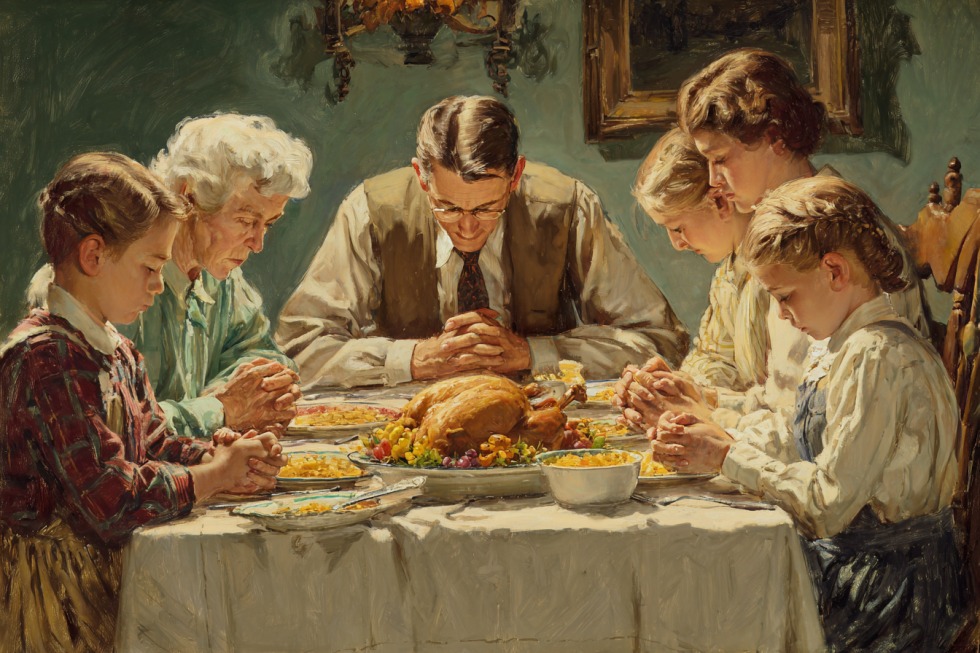
The act of pausing before a meal to bow one’s head in prayer is almost universal among Latter-day Saint families. Whether uttered in homes, at large gatherings, or even in public restaurants, these prayers stand as a visible and verbal reminder to express gratitude. Yet for many, these prayers may also become routine—a habitual string of phrases recited without much thought. Still, for others, the question arises: why do we bless our food? Is there anything special, doctrinal, or even miraculous about these prayers? Grappling with these questions leads to a deeper exploration of faith, gratitude, and intentional worship in everyday life.
To understand the practice, one must first look to the scriptures. Importantly, there are several accounts where Christ and other prophets blessed food or gave thanks before eating.
In the New Testament, Jesus sets a precedent by blessing bread and fish before distributing them to the masses in two separate miraculous feedings (Matthew 14:19, 15:36). In one account He “blessed” the loaves and in another He “gave thanks.” Scholars suggest Christ was likely performing the Jewish custom of the b’rakhah—a prayer of praise and gratitude for God’s gifts of sustenance. In this context, the blessing is directed less at the food itself and more toward God, the Giver, as an act of gratitude and worship. The longer, more detailed prayers of thanks after the meal referenced elsewhere in scripture (Deuteronomy 8:10, Alma 8:22) likewise focus on thanking God rather than invoking any transformation of the food itself.
Perhaps the most closely related practice within The Church of Jesus Christ of Latter-day Saints is the weekly sacrament, a sacred ordinance with roots in Christ’s Last Supper (Matthew 26:26, 3 Nephi 18:3-7). Here too, the bread and water represent the body and blood of Christ, and are blessed before being partaken. However, this blessing is not for physical nourishment so much as for spiritual renewal and sanctification—participants “eat in remembrance” of Christ’s sacrifice and covenant to follow Him (Moroni 4:3; Doctrine & Covenants 20:77-79). This illustrates how blessing food, in this case, transforms its purpose for the faithful.
Scripture also records rare instances when food was miraculously multiplied or protected as a direct result of divine intervention. Elijah’s blessing on the widow’s meal allowed it to last throughout a years-long famine (1 Kings 17), Moses called down manna from heaven to daily nourish the Israelites (Exodus 16), and Nephi was guided to food by the Liahona as his family journeyed in the wilderness (1 Nephi 16). In these instances, God’s power enabled food to accomplish more than was naturally possible—underscoring the potential for the miraculous, though always in exceptional circumstances.
Despite its prevalence, there are surprisingly few explicit references to routinely blessing food in official church publications. The Family Guidebook, found on the Church’s website, does advise that parents “see that family members learn to thank God for their food and ask Him to bless it before they eat. Each person, including young children, should take a turn offering the blessing. Offering a prayer for a blessing on the food helps parents and children learn to be thankful to our Heavenly Father.” The emphasis here is on gratitude rather than any specific spiritual or physical effect on the food itself.
A frequently cited admonition came from President Spencer W. Kimball following the Teton Dam Flood: “Never forget to bless the food.” Yet, as with the Guidebook, this seems to refer primarily to the act of praying over food as a form of gratitude rather than invoking a particular formulaic blessing.
In reality, much of the “bless this food” language appears to have arisen as a generational tradition. Countless meals among Latter-day Saints open with nearly identical phrases—a pattern so pervasive, in fact, that omitting it may prompt someone to insist the prayer be repeated. This is not just an English phenomenon; languages across the globe have equivalent expressions, such as the Russian “Bless this food so it will benefit us.”
Yet, not all agree with this common wording. Elder Bruce Porter cautioned against vain repetitions, identifying “Please bless this food to nourish and strengthen my body” as an example of mindless habit rather than meaningful prayer.
For some, the rote recitation risks turning prayer into a checklist item rather than a moment of genuine communication with God. Members such as those writing in the “Ask Gramps” advice column have raised questions like: “Is it necessary to ask God to bless brownies and donuts to nourish us?” The response: if you do not mean it, do not say it. Sincerity is what gives prayer its value, not the formulaic nature of the words. Instead, prayers can focus on gratitude, enjoyment, and appreciation for those who prepared the food, rather than vainly hoping for sugary treats to magically transform into healthy fare.
This view aligns with Christ’s warning against “vain repetitions” (Matthew 6:7). A prayer is supposed to be a moment of authentic connection with a loving Heavenly Father, not an empty ritual.
There are, nevertheless, stories—both historical and contemporary—where blessings on food led members to experience comfort, protection, or even miraculous events. Anecdotes from Church magazines recount instances where children’s faith-filled prayers over food prompted timely spiritual warnings, averting danger. These stories illustrate that the real transformative power lies not in the words themselves but in the faith and dependence on God expressed through prayer.
Another question members face is whether to pray over food in public settings, such as restaurants. The answer given in Latter-day Saint guidance is that it’s ultimately a personal decision based on one’s own comfort and conviction. The scriptural counsel is to always have a prayer in one’s heart (Alma 34:27), and not to be inhibited by fear of others if one genuinely feels impressed to offer thanks.
The pattern of praying for God’s blessing extends beyond food. Many members, especially those facing illness, have wondered whether it is appropriate to pray over daily medication or nutritional supplements. Again, the answer is yes, insofar as it represents a sincere desire for God’s help and acknowledgment of His hand in all things, but without necessarily formalizing such prayers or equating them with priesthood ordinances like the sacrament or healing blessings. The consistent scriptural invitation is to pray always, over all aspects of daily life, seeking God’s guidance and sanctification in whatever we undertake (2 Nephi 32:9; Alma 34:18-27).
The tradition of blessing and breaking bread traces back to the social customs of the ancient world and the accounts in both the Bible and the Book of Mormon. Interestingly, there are differences in historical records about the sequence of blessing and breaking bread. In the New Testament, Christ blesses before breaking (Mark 14:22; Luke 24:30), whereas in the Book of Mormon, He breaks and then blesses (3 Nephi 18:3). Joseph Smith’s translation of Matthew confirms the latter sequence. For the modern Church, the order is generally chosen for practicality and reverence, rather than doctrinal necessity.
Ultimately, the practice of blessing food is not about magical transformation but about cultivating gratitude and mindfulness. For many, reassessing the words and intentions of their prayers has led to deeper worship and heightened awareness of God’s constant generosity. Invitations to step beyond cultural habit into deliberate, authentic communication with God foster a more personal and powerful spiritual life.
Gramps