
Question
Gramps,
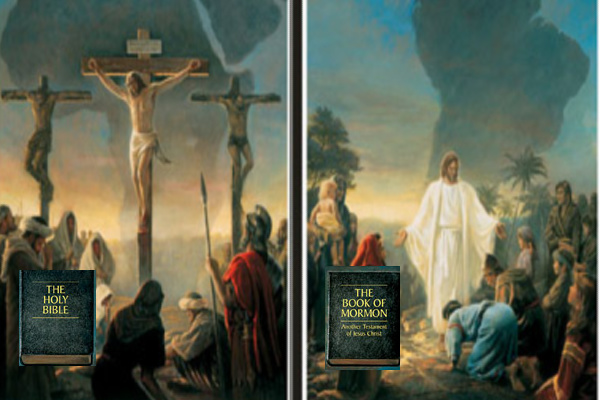
What is the fullness of the Gospel? What does the Book of Mormon contain that is not taught in the Bible?
Alex
Answer
Alex,
For this response, I’m going to focus mainly on your first question. I feel your second question could be an article all on its own.
In The Church of Jesus Christ of Latter-day Saints, there are at least two principal definitions for “the gospel of Jesus Christ” in Latter-day Saint teaching:
1. The Foundational Principles and Ordinances Necessary for Salvation
This basic definition focuses on faith in Jesus Christ, repentance, baptism by immersion, receiving the gift of the Holy Ghost, and enduring to the end. These are summarized in the Fourth Article of Faith and are regarded as essential for an individual’s salvation. By this measure, both the Bible and the Book of Mormon can be said to contain the ‘fulness of the Gospel,” as they outline and teach these savings principles and ordinances.
2. The Culmination and Totality of Gospel Knowledge
In a broader sense, “the gospel” can refer to all truth revealed by God—every doctrine, commandment, prophecy, and eternal principle. In this domain, no single book contains every possible teaching or revelation God has given or will yet give. The ongoing restoration and progression of divine revelation remain core to modern belief, as affirmed in the Ninth Article of Faith: “We believe all that God has revealed, all that He does now reveal, and we believe that He will yet reveal many great and important things pertaining to the Kingdom of God” (Articles of Faith 1:9)
In practice, teachings and lessons in the Church usually refer to the first, more focused definition. However, when examining scriptural claims—such as the Book of Mormon’s introduction stating it “contains, as does the Bible, the fulness of the everlasting gospel”—it becomes vital to clarify which definition of “fulness” is intended and to recognize the boundaries of both biblical content and continuing revelation.
The question of the Bible’s fullness is not new. Ancient prophets foresaw—and lamented—that many plain and precious truths would be lost from the Bible through the centuries. In the Book of Mormon, 1 Nephi 13 details the “most plain and precious parts of the gospel of the Lamb” that “have been kept back by that abominable church, which is the mother of harlots,” yet also testifies that the Lord will “bring forth unto them…much of my gospel, which shall be plain and precious” (1 Nephi 13:34). This prophecy encompasses the restoration of lost truths through the advent of the Book of Mormon but also acknowledges the real, yet incomplete presence of the gospel in the Bible itself.
Notably, the Book of Mormon repeatedly distills the “gospel” into a six-part formula, present in key passages:
1. Faith in Christ
2. Repentance
3. Baptism
4. Reception of the Holy Ghost
5. Enduring to the end
6. Ultimate salvation in the presence of God
For instance, 2 Nephi 31, 3 Nephi 11, and 3 Nephi 27 all reiterate these steps, sometimes directly attributed to the teachings of Christ Himself. The Bible contains these doctrines and recounts their institution through Christ’s own words to His disciples (see Matthew 28:19-20; Acts 2:38), emphasizing baptism, repentance, faith, and obedience—mirroring the essence highlighted in the Book of Mormon.
Yet, as President Ezra Taft Benson observed, declaring the Book of Mormon contains the “fulness of the gospel” does not mean it is exhaustive:
“The Book of Mormon contains the fulness of the gospel of Jesus Christ. That does not mean it contains every teaching, every doctrine ever revealed. Rather, it means that in the Book of Mormon we will find the fulness of those doctrines required for our salvation. And they are taught plainly and simply so that even children can learn the ways of salvation and exaltation”
Similarly, the Bible lays out these foundations but, according to both scripture and prophetic commentary, does not claim to include every divine truth or revelation ever dispensed.
If the saving principles and ordinances are found in the Bible, why then the need for additional scripture or restoration? The Book of Mormon and modern revelation teach that over time, “plain and precious” truths were removed or obscured from the biblical text, necessitating restoration to ensure the fullness of the gospel could be plainly understood.
Hugh Nibley, renowned Latter-day Saint scholar, notes that “the doctrine of the fulness has not been on earth until now… It cannot be received all at once, but our obligation is to receive everything we possibly can so that we can be ready for more.” He emphasizes the concept that the “fulness” of the gospel, as referenced in modern scripture, is not “an infinity of knowledge stretching into the eternities,” but rather the fulness of what one is capable of receiving at any given time. Thus, the restoration through Joseph Smith marked a return and expansion of gospel truths, making “the knowledge and power of God… expanding,” yet still anticipating future revelation and greater fullness.
This principle of continual revelation and accumulated “fulness” is what differentiates the Restoration from other Christian movements: not only a return to the original principles but the ongoing process of receiving additional truth. As B. H. Roberts observed, the Book of Mormon’s primary aim includes “to enlarge the foundations of faith,” and it offers the promise that “by the power of the Holy Ghost ye may know the truth of all things” (Moroni 10:3-5).
Finally, how can we know if biblical or restored gospel claims are true? The Church teaches a pattern rooted in its earliest history: sincere study, accompanied by honest, faith-filled prayer, can bring divine confirmation through the Holy Ghost. As recounted in Joseph Smith’s experience and perpetuated by generations of converts, spiritual witness is offered to all who seek with real intent—a promise that extends to the study of both Bible and Book of Mormon alike.
Gramps