
Question
Gramps,
I know in my heart that Jesus suffered and died for me. That in the Garden He was pressed in agony for our pains, sins, diseases, sorrows, etc. When did Jesus pay for our sins? In the Garden and again on the cross? How was His suffering different in the two places? When did He partake of the bitter cup, and what was it?
Kelly
Answer
Kelly,
On the eve of his crucifixion, as Roman soldiers arrived to arrest him, Jesus halted Peter’s defensive violence with a simple, soul-stirring question: “Shall I not drink the cup which my Father hath given me?” The “cup” was not a mere metaphor for mortal suffering, but an explicit reference to His divine mission as Redeemer—a sacred covenant to suffer, die, and rise for the salvation of all.
For centuries, Christians of every tradition have pondered the exact nature of Christ’s Atonement—what happened in Gethsemane, on the cross, and at the resurrection. Members of The Church of Jesus Christ of Latter-day Saints bring further clarity from both ancient and modern scripture. Yet, misunderstandings persist: Was the Atonement accomplished mainly in the garden? Did any element occur solely on the cross? Or is there a seamless unity in all these events?
To answer, we must reverence the cup: to understand its scriptural roots, its fulfillment in suffering, death, and resurrection, and its redeeming power for all humankind.
The imagery of “the cup” appears throughout scripture as a symbol of destiny—or, more often, of divine appointment to suffering or wrath. The Psalmist, in a messianic prophecy, wrote: “I will take the cup of salvation, and call upon the name of the Lord” (Psalm 116:13). Isaiah, too, spoke of Jerusalem drinking “the cup of his fury” (Isaiah 51:17), a foreshadowing of redemptive suffering to come.
In the context of Passover—the Jewish feast Christ celebrated at the Last Supper—multiple cups of wine symbolized God’s historic promises. Jesus chose one of these covenant cups to symbolize His imminent sacrifice. “This is my blood of the new testament, which is shed for many for the remission of sins… I will not drink henceforth of this fruit of the vine, until that day when I drink it new with you in my Father’s kingdom” (Matthew 26:28–29). The symbol of the cup, then, points to both suffering and redemption: the ordeal Christ would undergo, and the joyous fulfillment of atonement.
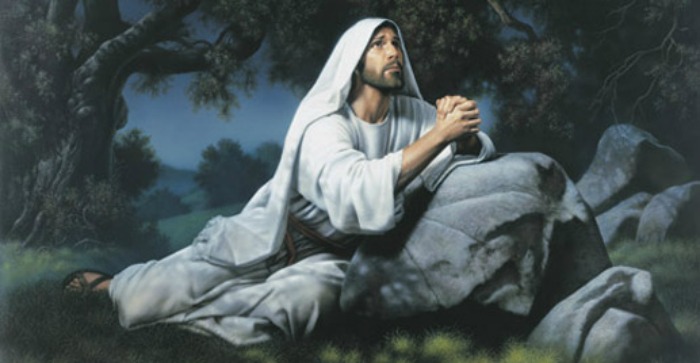
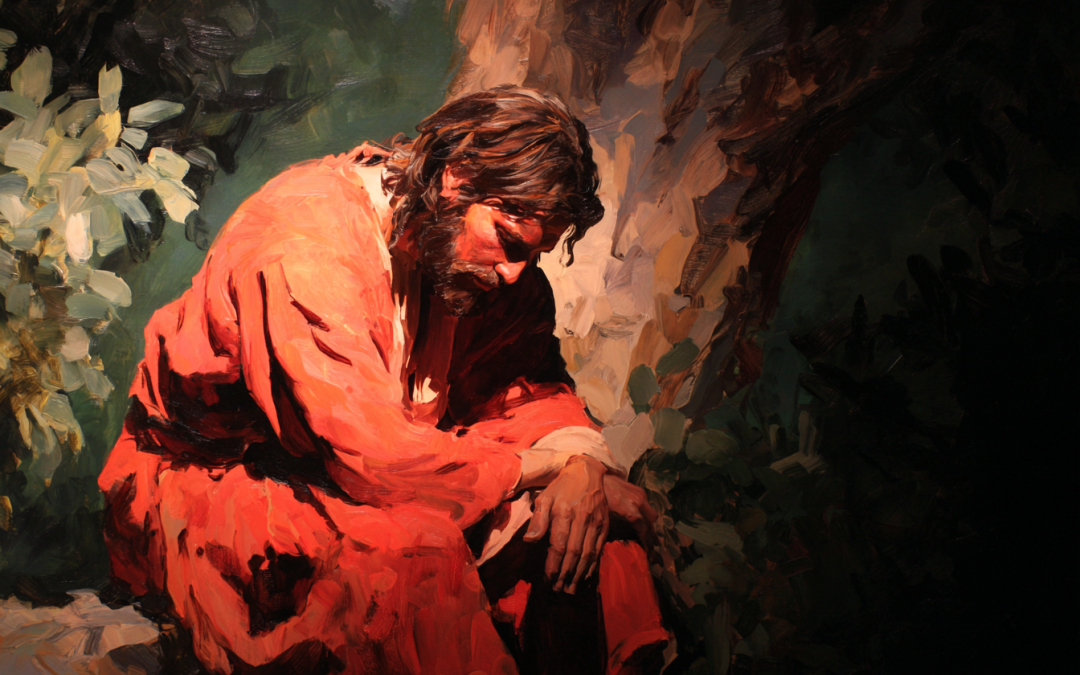
The spiritual climax begins in the olive grove called Gethsemane. Here, the “cup” becomes a lived reality. Jesus prays: “Father, if thou be willing, remove this cup from me: nevertheless not my will, but thine, be done” (Luke 22:42). An angel strengthens Him, yet He is “in an agony… and his sweat was as it were great drops of blood falling down to the ground” (Luke 22:44). Modern scripture, such as Alma 7:11-13 and Doctrine and Covenants 19:16-19, testifies that Christ in Gethsemane suffered not only for sin, but for all human pain, affliction, and anguish. Hematohidrosis—a rare medical phenomenon of sweating blood brought on by extreme distress—witnesses the physical and spiritual torment endured by the Savior.
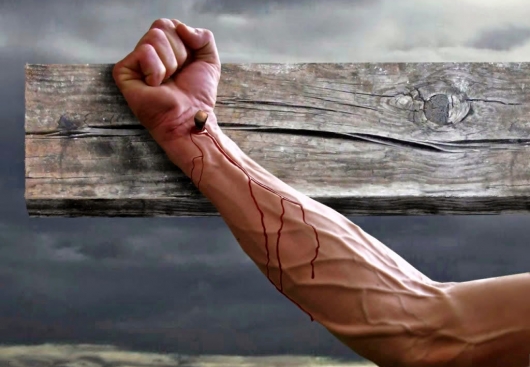
Following Gethsemane, Jesus endures arrest, scourging, mockery, and finally crucifixion. On the cross, He cries out, “My God, my God, why hast thou forsaken me?”—fulfilling the prophesied moment of utter loneliness and spiritual separation from the Father. Thus, Christ experienced not only the physical agony of crucifixion but, as Elder Jeffrey R. Holland taught, the “paralyzing despair of divine withdrawal,” echoing how mankind feels in estrangement from God due to sin.
If suffering and death were all there were, redemption would be incomplete. The Resurrection is the crowning event: “But now is Christ risen from the dead, and become the firstfruits of them that slept… For as in Adam all die, even so in Christ shall all be made alive” (1 Corinthians 15:20-22). In the Book of Mormon, Abinadi testifies, “if Christ had not risen from the dead… there could have been no resurrection. But there is a resurrection, therefore the grave hath no victory, and the sting of death is swallowed up in Christ” (Mosiah 16:7-9). Thus, the cup includes not only suffering and death, but the triumph of life over death.
In Church doctrine, Christ’s suffering in the Garden is both unique and essential. Here, He took upon Himself not only the penalty for sin but every sorrow, pain, and infirmity ever experienced by mankind. As Alma declared, “he shall go forth, suffering pains and afflictions and temptations of every kind… that his bowels may be filled with mercy… that he may know according to the flesh how to succor his people according to their infirmities” (Alma 7:11-12). Latter-day revelation expands our understanding: “Which suffering caused myself, even God, the greatest of all, to tremble because of pain, and to bleed at every pore… would that I might not drink the bitter cup, and shrink” (Doctrine and Covenants 19:18).
Contrary to some assumptions, the Atonement is not limited to Gethsemane alone; the cross is central. President Thomas S. Monson recounted, “He was scourged… carried His own cross until He could go no farther… nailed to a cross… Yet He cried out, ‘Father, forgive them; for they know not what they do.’”
Elder Holland further clarifies that the final agony occurred as the Father briefly withdrew His Spirit, marking the necessity of Christ descending below all things. “For His Atonement to be infinite and eternal, He had to feel what it was like to die not only physically but spiritually, to sense what it was like to have the divine Spirit withdraw, leaving one feeling totally, abjectly, hopelessly alone.
Though some Latter-day Saint authorities, such as Bruce R. McConkie, have speculated that the “infinite agonies… of Gethsemane recurred” on the cross, Church teachings emphasize that both Gethsemane and Calvary are essential and indivisible elements of the Atonement’s “cup.”
Finally, the Atonement is incomplete without the Resurrection. As Paul taught, “if Christ have not been raised, your faith is vain; ye are yet in your sins” (1 Corinthians 15:17).
Members of The Church of Jesus Christ of Latter-day Saints renew their covenants each week by partaking of the sacrament: symbolic bread and water (or wine in ancient days), remembering Christ’s body and blood. This ordinance was instituted during the Passover meal, with the blessed cup set apart to represent Christ’s atoning blood. “This cup is the new testament in my blood: this do ye, as oft as ye drink it, in remembrance of me,” Paul records (1 Corinthians 11:25-26).
The ritual is not just remembrance; it’s a spiritual recommitment to “always remember Him, and keep His commandments… that they may have His Spirit to be with them.” In reflecting on why Christ himself did not partake of the cup at the Last Supper or during his visit to the Nephites, Latter-day scriptures recall His promise—that He would not drink of the sacramental cup again “until [He] drinks it new with [us] in the Father’s kingdom.”
Each Latter-day Saint teaching on the Atonement testifies to the depth of Christ’s descent: He “descended below all things, in that he comprehended all things” (Doctrine and Covenants 88:6). The God Who Weeps, a modern theological work, explains that perhaps Christ’s “identification with human suffering is so complete, that in one fell vision He comprehended the depth and range and terror of all our individual pain.” The Atonement, then, is the ultimate act of love—a voluntary acceptance not only of sin’s penalty but also of every consequence and sorrow, taken upon Himself that we are invited to repentance, healing, and eternal life.
Every scripture, teaching, and ordinance in The Church of Jesus Christ of Latter-day Saints bears witness that Christ’s “cup” was emptied for us. Let us remember Him, “showing forth the Lord’s death till he come,” and strive to make His Atonement the center of our lives.
Gramps