
Question
Gramps,
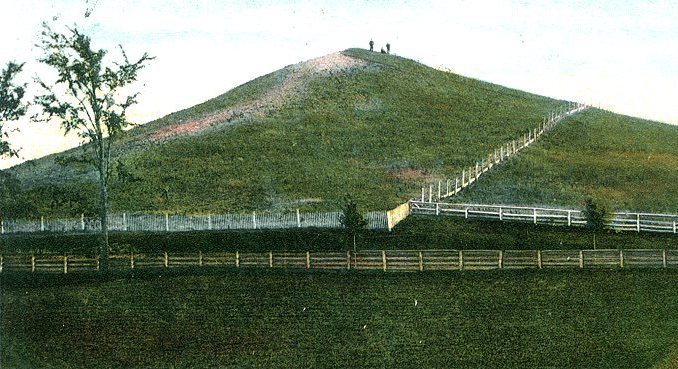
How come the Church has never gone to the Hill Cumorah and dug up Moroni’s stone box where he hid the Gold Plates? And the stone lid which covered it? Wouldn’t that be a great museum piece, too?
Robert
Answer
Robert,
Joseph Smith’s journey to the gold plates began with a vision. In 1823, he reported that the angel Moroni visited him, revealing the location of the plates buried in a hill near his home in New York. This hill, later identified as the Hill Cumorah, became the focal point of Smith’s prophetic mission. According to Smith’s account, he was instructed to return to the hill annually until he was deemed worthy to retrieve the plates. This culminated in his successful retrieval of the plates on September 22, 1827, after years of preparation and spiritual growth.
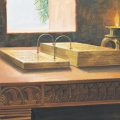
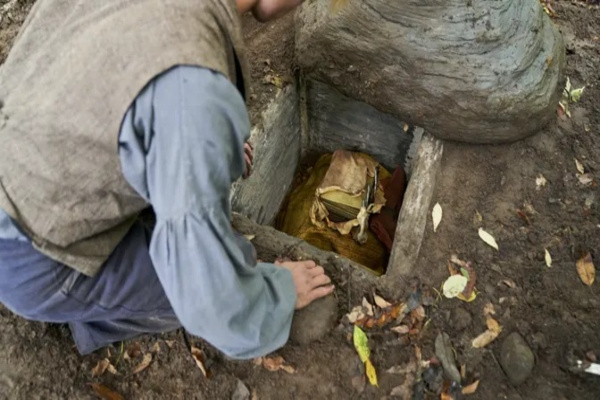
The plates were described as being housed in a stone box, constructed with stones and cement, and covered by a large stone that Joseph had to lift to access them. Inside the box, he found not only the gold plates but also the Urim and Thummim, a set of seer stones used for translation, and a breastplate. This moment marked a significant turning point in Smith’s life and the history of the Church, as it set the stage for the translation of the Book of Mormon.
The gold plates were said to be made of a gold-copper alloy, which would have made them lighter than pure gold. Witnesses described them as weighing between 40 to 60 pounds, bound together by three rings. The plates contained writings in an ancient script, which Smith translated into English through divine inspiration. The translation process was not merely a linguistic exercise; it was viewed as a spiritual endeavor, guided by God.
The plates contained the history of the Nephites and Lamanites, two groups descended from a family that left Jerusalem around 600 B.C. The narrative also included teachings about Jesus Christ, making the Book of Mormon a companion to the Bible in the Latter-day Saint faith.
After completing the translation of the Book of Mormon, Joseph Smith returned the gold plates to Moroni, who took them back into his custody. This act has sparked much speculation and debate about the plates’ current whereabouts. Many members of the Church believe that the plates will eventually be returned to the earth for further revelation, particularly the sealed portion that remains hidden.
The decision to return the plates has been interpreted in various ways. Some view it as a protective measure, ensuring that the sacred records would not fall into the wrong hands or be misused. Others see it as a divine command, emphasizing the importance of faith and spiritual understanding over physical evidence.
The stone box in which the plates were found has also become a subject of interest. According to Joseph Smith’s accounts, the box was carefully constructed, indicating the sacredness of its contents. The fact that the plates were hidden in a stone box aligns with ancient practices of safeguarding important records, as seen in various cultures throughout history.
While the exact location of the stone box remains unknown, it is believed to be in the vicinity of the Hill Cumorah. Many have sought to find it, but no definitive evidence has surfaced, adding to the mystique surrounding the gold plates and their original resting place.
The story of the gold plates raises profound questions about faith, evidence, and the nature of divine revelation. For believers, the existence of the plates is a testament to the truth of the Book of Mormon and the prophetic calling of Joseph Smith. Skeptics, however, often point to the lack of physical evidence and the absence of the plates in contemporary times as reasons to doubt the narrative.
The Church of Jesus Christ of Latter-day Saints emphasizes that faith is not solely based on physical evidence but is a spiritual conviction that comes through prayer, study, and personal revelation. This perspective invites individuals to seek their own understanding of the gold plates and the teachings of the Book of Mormon, rather than relying solely on historical or archaeological validation.
Scholars and archaeologists have explored the historical context of the gold plates, examining ancient practices of record-keeping and the use of metal plates in various cultures. The discovery of ancient texts and artifacts that resemble the descriptions of the gold plates has sparked interest in their historical authenticity.
For instance, the Etruscan Gold Book, discovered in Bulgaria, dates back to a similar time period as the Book of Mormon and demonstrates that writing on metal plates was a common practice in the ancient world. Such findings contribute to the ongoing dialogue about the historical and cultural context of the gold plates and the narratives contained within the Book of Mormon.
The story of the gold plates is one of faith, mystery, and the quest for understanding. While the physical plates may no longer be present, their impact on the lives of millions continues to resonate. The narrative invites individuals to explore their beliefs, seek personal revelation, and engage in meaningful discussions about faith and history.
As we reflect on the significance of the gold plates, we are reminded that the journey of discovery is as important as the destination. Whether viewed through the lens of faith or skepticism, the story of the gold plates challenges us to consider the deeper meanings of belief, revelation, and the sacred texts that shape our understanding of the divine.
Gramps