
Question
Gramps,
Do we believe that Jesus slew an animal to make the coats of skins for Adam and Eve? I have never heard or read anything from one of our Apostles or Prophets that says such a thing. I know so others have said it, but I have never heard it from an Apostle or Prophet. Thank you.
Stephen
Answer
Stephen,
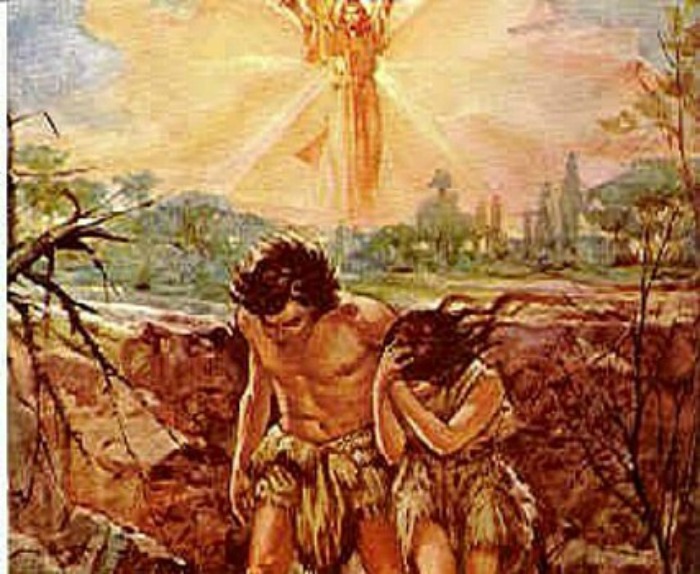
This is an interesting question because it touches on a subject that many Latter-day Saints have heard discussed over the years, but one that is not directly answered in scripture. The short answer is that the scriptures tell us that God made coats of skins for Adam and Eve, but they do not tell us who killed the animal or animals involved. Because of that, the Church has not established an official doctrine on the matter.
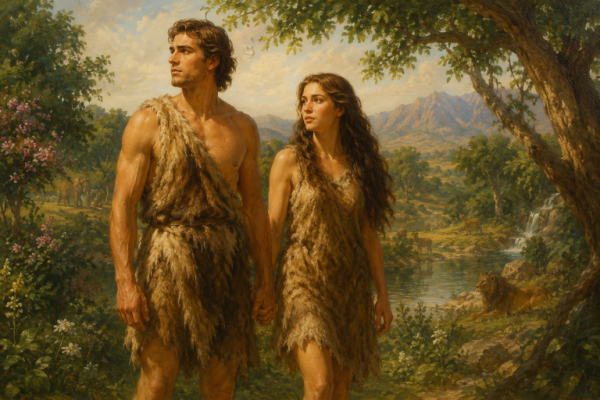
The account is found in Genesis 3:21:
“Unto Adam also and to his wife did the Lord God make coats of skins, and clothed them.”
A similar statement appears in Moses 4:27:
“Unto Adam, and also unto his wife, did I, the Lord God, make coats of skins, and clothed them.”
Notice what these passages do and do not say. They tell us that the Lord provided the coats of skins. They do not explain where the skins came from, whether an animal died, who killed it, or how the skins were prepared.
Because the text is silent on those details, any attempt to answer those questions moves from doctrine into interpretation.
Many Christians, including some Latter-day Saints, have suggested that the coats of skins may have come from the first animal sacrifice. The reasoning is fairly straightforward.
First, animal skins generally imply that an animal died. Second, shortly after the Fall, Adam was commanded to offer sacrifices to the Lord (see Moses 5:5-8). Third, those sacrifices pointed forward to the future sacrifice of Jesus Christ.
Because of these connections, some teachers and commentators have speculated that the coats of skins symbolized the Atonement of Christ and that God may have introduced the concept of sacrifice immediately after the Fall.
There is certainly symbolism that can be appreciated in that interpretation. The Fall brought mortality, and Christ would eventually provide redemption. The idea of innocent life being connected to salvation is a theme found throughout scripture.
However, it is important to recognize that this remains an interpretation rather than a revealed doctrine.
As far as the standard works and widely available teachings of modern prophets and apostles are concerned, there is no official statement declaring that Jesus Christ personally slew an animal to make the coats of skins for Adam and Eve.
Some Church members encounter this idea in lessons, books, online discussions, or commentary from individuals seeking to draw symbolic connections between the Fall, sacrifice, and the Atonement. While such ideas may be interesting and even spiritually meaningful, Latter-day Saints are encouraged to distinguish between revealed doctrine and speculation.
President Dallin H. Oaks taught this principle in General Conference:
“Let us not teach or use as official doctrine what does not meet the standards of official doctrine.”
He also reminded us:
“There is so much we do not know that our only sure reliance is to trust in the Lord and His love for His children.”
That counsel applies well to questions such as this one. The scriptures tell us that the Lord made coats of skins for Adam and Eve, but they do not explain how the skins were obtained or who killed the animal. Because the Lord has not revealed those details, it is wise to avoid presenting any particular explanation as established doctrine.
When we search the teachings of modern prophets and apostles, we find extensive discussion of the Fall, sacrifice, and the Atonement. What we do not find is a prophetic declaration that Jesus personally killed an animal to provide those skins.
Therefore, it would be difficult to present that idea as settled LDS doctrine. Instead, it is best viewed as a personal interpretation or speculation unless further revelation is given.
There are several things we can say confidently because they are directly supported by scripture.
First, Adam and Eve fell and became mortal.
Second, the Lord cared for them after the Fall. The making of coats of skins demonstrates His concern for their physical needs.
Third, animal sacrifice became part of revealed worship after the Fall. Adam was commanded to offer sacrifices, and those sacrifices pointed to Jesus Christ.
In Moses 5:7 we read:
“This thing is a similitude of the sacrifice of the Only Begotten of the Father.”
That teaching is clear and explicit. The purpose of the sacrifice was to teach about Christ.
Fourth, Jesus Christ is the Lamb slain from the foundation of the world. His Atonement was planned before the earth was created and is the central event to which all sacrifices pointed.
These truths are firmly established in LDS doctrine regardless of how the coats of skins were obtained.
Many readers see meaningful symbolism in the story even if they do not claim certainty about the details.
Adam and Eve had attempted to cover themselves with fig leaves after becoming aware of their nakedness. Later, the Lord Himself provided a more complete covering.
Some scholars and teachers have suggested that this can symbolize humanity’s inability to save itself and the need for the covering power of Christ’s Atonement. While this interpretation is not official doctrine, many find it spiritually meaningful.
The important point is that symbolism should not be confused with revelation. A symbolic interpretation can be insightful without becoming a required belief.
One of the strengths of the restored gospel is that it encourages us to distinguish between what has been revealed and what has merely been inferred.
On this question, the revealed facts are relatively simple:
- The Lord made coats of skins for Adam and Eve.
- The scriptures do not explain exactly how those skins were obtained.
- Animal sacrifice was later commanded and was a symbol of Jesus Christ’s future sacrifice.
- No official doctrine states that Jesus personally killed an animal to make the coats.
Because of that, faithful Latter-day Saints can reasonably hold different views. Some may see the coats as connected to an actual sacrifice. Others may simply conclude that the scriptures do not provide enough information to know.
Either position can be held while remaining completely faithful to the teachings of the Church.
It is often wise to follow President Oaks’s counsel to avoid teaching as doctrine things that have not been established by revelation. We can appreciate possible symbolism and thoughtful interpretations while remembering that the safest course is to hold firmly to what the Lord has revealed and to be comfortable saying, “We do not know,” when He has not.
Gramps