

Question
Gramps,
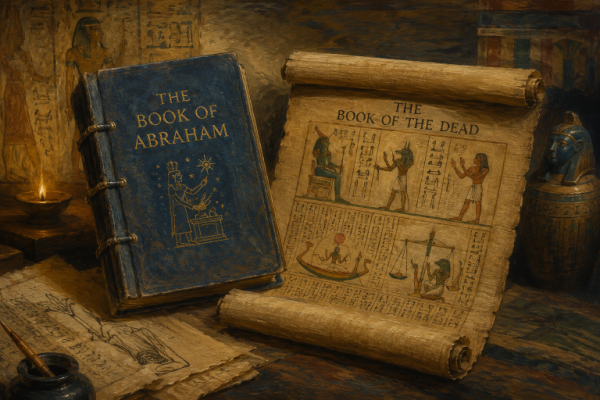
Egyptologists said the Book of Abraham is false and said it’s the Book of the Dead instead. Yet, I heard that there is evidence that the first facsimile image is indeed a sacrifice, not a mummification. Of course, we ultimately rely on our faith and testimony to know the book of Abraham’s truth, but why can’t Egyptologists be convinced otherwise? (Especially given that there is even an Egyptian text that mentions Abraham bringing sacrifices.) Thanks.
Beverly
Answer
Beverly,
One of the most common questions surrounding the Book of Abraham is this: if the Book of Abraham is true, why do so many Egyptologists say that the surviving papyri are ordinary Egyptian funerary texts, such as portions of the Book of the Dead? And if there is evidence that Facsimile 1 depicts a sacrifice rather than a mummification scene, why aren’t scholars persuaded?
This is a fair question. Latter-day Saints should not be afraid of asking honest questions. At the same time, it is important to recognize that scholars and believers often approach the Book of Abraham from very different starting points and with different assumptions.
Most non-LDS Egyptologists believe that the surviving papyrus fragments owned by Joseph Smith are ordinary Egyptian funerary documents. They identify the text as portions of documents commonly buried with the dead in ancient Egypt.
Regarding Facsimile 1, many Egyptologists interpret the image as a traditional embalming or resurrection scene. They generally see the figure lying on the couch as a deceased person and the standing figure as a deity associated with funerary rites.
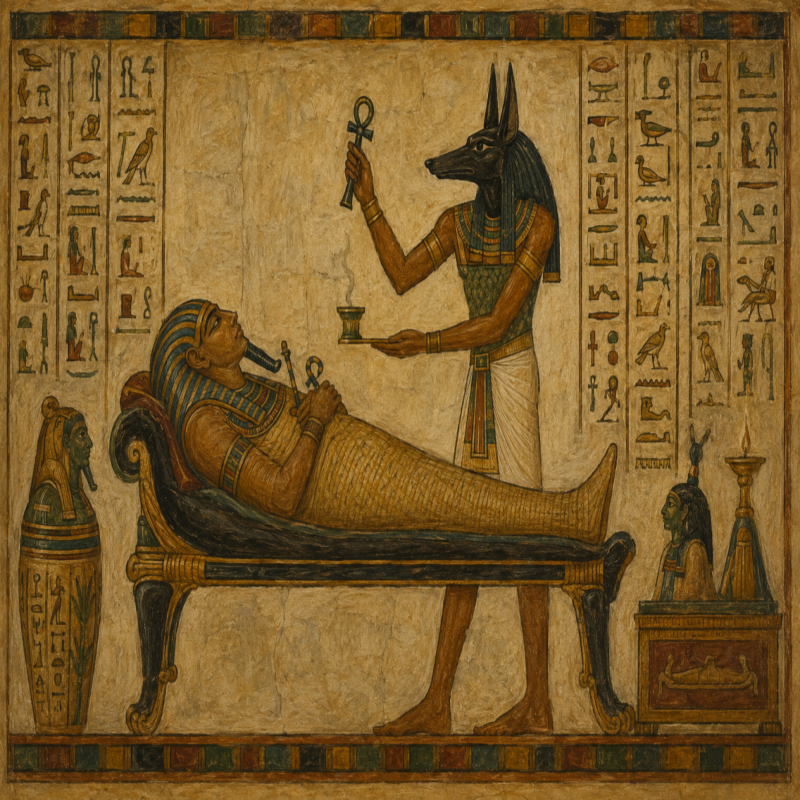
From their perspective, the scene is well known within Egyptian religion and does not refer to Abraham.
As a result, most Egyptologists conclude that Joseph Smith’s explanations do not match the conventional understanding of the surviving Egyptian material.
Latter-day Saint scholars have pointed out that the issue is more complicated than it is sometimes presented.
First, only a small portion of the original papyri survived. Much of the collection was destroyed in the Chicago Fire of 1871. Because we do not possess all the papyri Joseph Smith owned, it is impossible to know with certainty what was on the missing portions.
This has led some LDS scholars to propose that the Book of Abraham may have come from a section of papyrus that no longer exists.
Second, some researchers argue that Facsimile 1 contains features that are unusual and may not fit neatly into a standard funerary interpretation. They note that ancient Egyptian religious images could sometimes be adapted or understood in multiple ways.
Third, there are ancient traditions outside the Bible that describe Abraham facing an attempted sacrifice. While these traditions are not identical to the Book of Abraham, they demonstrate that stories connecting Abraham with a sacrificial episode circulated in antiquity.
For many Latter-day Saints, these traditions are interesting because the Bible itself says nothing about Abraham being placed on an altar by idolaters, yet the Book of Abraham contains such an account.
This is one of the more fascinating aspects of Book of Abraham studies.
Over the years, scholars have discovered Jewish, Christian, and other ancient writings that tell stories about Abraham being threatened, persecuted, or nearly sacrificed because of his beliefs.
These texts do not prove the Book of Abraham is true. However, they do show that the idea was not something Joseph Smith simply invented out of thin air. Ancient people were telling stories about Abraham’s confrontation with idolatrous priests long before Joseph Smith was born.
Some Latter-day Saint scholars see this as evidence that the Book of Abraham preserves authentic ancient traditions that had been lost or forgotten.
Critics, however, generally respond that similar traditions developed centuries after Abraham supposedly lived and therefore do not establish the historical accuracy of the Book of Abraham.
In other words, both sides look at the same evidence but draw different conclusions.
The simplest answer is that Egyptologists are trained to study Egyptian language, culture, and archaeology using academic methods.
Most scholars ask questions such as:
- What does the Egyptian text literally say?
- How was this image typically understood in ancient Egypt?
- How would other Egyptian documents interpret the scene?
Those are legitimate academic questions.
Latter-day Saints, however, often ask an additional question:
- Could God have revealed truths through Joseph Smith that go beyond what survives on the papyri today?
That question falls outside the normal tools of academic Egyptology.
A scholar can analyze grammar, symbols, and historical context. A scholar cannot use academic methods to prove or disprove revelation.
For example, an Egyptologist can determine whether a certain Egyptian word means one thing or another. But no academic method can test whether a prophet received divine revelation about Abraham’s life.
This is why the debate often continues without either side convincing the other.
The Church has been remarkably open in acknowledging both what is known and what is not known regarding the Book of Abraham.
In the Gospel Topics article Origins of the Book of Abraham, the Church states:
“Both Latter-day Saint and non–Latter-day Saint Egyptologists agree that the characters on these fragments do not match the translation given in the book of Abraham.”
The same article explains that faithful scholars have proposed different models to explain the relationship between the papyri and the revealed text, including the possibility that the source material was on missing papyri or that the papyri served as a catalyst for revelation. The Church does not officially endorse one theory over another. Instead, it affirms that the Book of Abraham came forth “by the gift and power of God.”
The Church also emphasizes that the ultimate question is not whether every scholarly issue has been resolved. In the Gospel Topics Essay Translation and Historicity of the Book of Abraham, we read:
“The veracity and value of the book of Abraham cannot be settled by scholarly debate concerning the book’s translation and historicity.”
The essay continues:
“The book’s status as scripture lies in the eternal truths it teaches and the powerful spirit it conveys.”
These statements are important because they show that the Church does not ask members to ignore scholarly questions. Rather, it teaches that scholarship alone cannot determine whether a revealed scripture is true.
The Church’s position does not require members to ignore evidence or stop asking questions. Rather, it encourages them to seek both learning and revelation.
Elder Jeffrey R. Holland addressed this principle in General Conference. Speaking to those who wrestle with questions, he taught:
“Honestly acknowledge your questions and your concerns, but first and forever fan the flame of your faith.”
That counsel fits the Book of Abraham discussion particularly well. There is nothing wrong with studying Egyptology, reading scholarly arguments, or examining evidence. But Latter-day Saints believe that a testimony ultimately comes through the Holy Ghost rather than through academic consensus.
A balanced Latter-day Saint approach is to be honest about the challenges while also recognizing the strengths.
It is true that most Egyptologists do not accept Joseph Smith’s explanations of the surviving papyri.
It is also true that there are intriguing ancient traditions about Abraham’s attempted sacrifice, unresolved questions about the missing papyri, and evidence that some elements of the Book of Abraham fit surprisingly well within the ancient world.
Ultimately, the reason Egyptologists are not convinced is that they operate within a different framework than faith. They evaluate evidence according to academic standards, while believers also consider revelation and spiritual witnesses.
For Latter-day Saints, the strongest evidence for the Book of Abraham is not found in a single facsimile, papyrus fragment, or scholarly argument. It is found in the doctrines the book teaches about premortal life, the nature of God, the Abrahamic covenant, the plan of salvation, and the witness of the Holy Ghost.
Evidence can be helpful and even encouraging. Ancient traditions about Abraham’s attempted sacrifice, questions surrounding the missing papyri, and ongoing scholarship provide interesting avenues for study. However, as the Church has taught, “The veracity and value of the book of Abraham cannot be settled by scholarly debate concerning the book’s translation and historicity.”
In the end, Latter-day Saints are invited to study the evidence, consider the scholarship, and seek personal revelation. As with all scripture, the final witness comes not from an Egyptologist’s conclusion, but from the confirming influence of the Holy Ghost.
Gramps
Related Posts
 What is known about Abraham going to Egypt and teaching the Egyptians about the stars and solar systems, and why would they believe him?
 What is the significnce of the thigh in swearing an oath in Genesis? Also, what is the significance in Genesis and Moses of the seed of the woman and Satan bruising each other’s head and heal?
 What is the true story of the creation account?
 Civil Marriages