

Question
Dear Gramps,
I would appreciate some help with the scripture found in D&C 6:16, if possible. We were discussing this in seminary, and I always interpreted it to mean that Satan cannot read your thoughts. I received some “opposing” interpretations, and I was wondering if you could shed some light on this subject, if possible. Thank you so much.
Mary
Answer
The doctrine that only God knows our thoughts is firmly rooted in scripture. In the Doctrine and Covenants, it is stated:
Yea, I tell thee, that thou mayest know that there is none else save God that knowest thy thoughts and the intents of thy heart (D&C 6:16).
This verse emphasizes that the divine alone possesses the ability to discern our innermost thoughts, setting a clear boundary between God’s omniscience and Satan’s limitations.
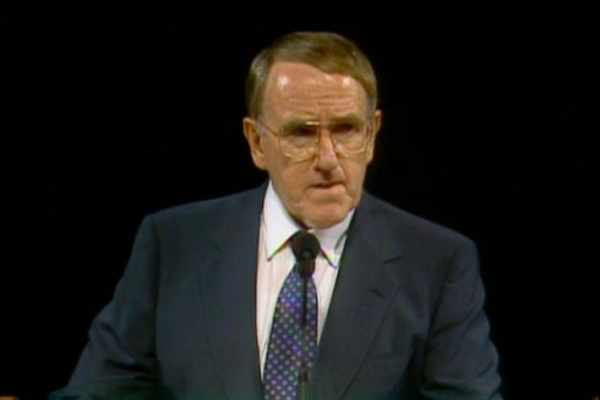
Elder Francis M. Gibbons, in a General Conference address in October of 1991, had this to say:
While Satan can convey thoughts, ‘he does not know whether these thoughts have taken root unless they are reflected either in our words or our actions. . . We should also be wise in the way we guard precious things that are revealed to us by the Spirit. Often we talk too much. We say things that need not be said, or should not be said; for in saying them, we may open a crevice which enables Lucifer to wedge his way into our lives. Wisdom suggests, therefore, that we suppress words and actions which might enable Satan to harm us, or whose tendency might be to create discord and enmity.
Satan, often referred to as the “father of lies,” possesses a range of powers that allow him to influence and tempt individuals. However, these powers are not absolute. According to teachings within the Church, Satan’s abilities are primarily observational rather than omniscient. He can observe our actions, body language, and emotional responses, which can provide him with insights into our thoughts and feelings.
For instance, as a spirit, Satan can detect physiological reactions such as heart rate and muscle tension, which may indicate fear, anxiety, or joy. This ability allows him to form a profile of individuals based on their reactions to various stimuli. However, it is essential to recognize that while he can observe these external cues, he cannot know the specific thoughts that lead to them.
Mentalism, a practice that involves reading subtle cues and behaviors, can shed light on how Satan may operate. Mentalists often rely on keen observation of body language, vocal tones, and other non-verbal signals to infer what someone might be thinking or feeling. In a similar vein, Satan can use his understanding of human behavior to manipulate and tempt individuals.
However, it is crucial to note that there are limits to this practice. While Satan may be adept at reading external cues, he cannot penetrate the veil of our thoughts. As I explained in another Q&A, “He may know you’re feeling fear, but it will be difficult to figure out what you are afraid of”. This limitation serves as a reminder that, despite his cunning, Satan does not possess the same level of knowledge as God.
One of the most empowering aspects of understanding Satan’s limitations is recognizing the power of individual choice. Members of The Church of Jesus Christ of Latter-day Saints believe that each person has the agency to choose between good and evil. This agency is a divine gift that allows individuals to resist temptation and choose righteousness.
When faced with temptation, individuals can draw strength from their faith and the teachings of Jesus Christ. As Helaman teaches in the Book of Mormon,
Remember that it is upon the rock of our Redeemer, who is Christ, the Son of God, that ye must build your foundation. (Helaman 5:12)
By anchoring their lives in faith and righteousness, individuals can withstand the adversary’s influence.
Prayer is a vital aspect of spiritual life for Latter-day Saints. It serves as a means of communication with God, allowing individuals to express their thoughts, desires, and concerns. However, some may wonder whether vocal prayers provide Satan with an opportunity to interfere.

While it is true that Satan may hear vocal prayers, the act of praying itself is a powerful defense against his influence. As I once noted,
The ability to overcome the influence of the Adversary does not lie in hiding from him that which we attempt to do, but we may limit his power by living in such a way that he cannot influence either our thoughts or our actions.
This perspective encourages individuals to pray openly and sincerely, trusting in God’s protection.
Gramps