

Question
Gramps,
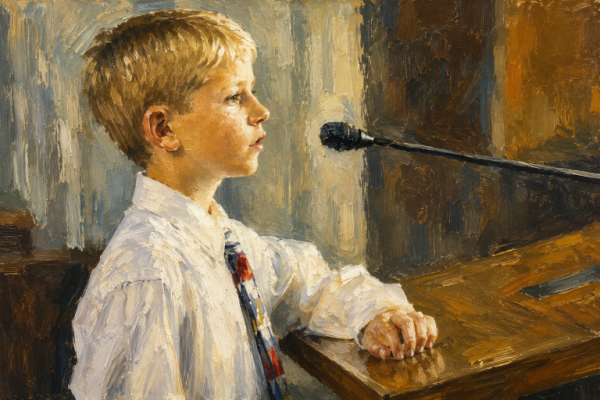
How do you feel about the fairly common practice of members taking their tiny children in arms up to the pulpit to coach them in bearing their testimonies? Some people feel it is very disruptive to the spirit of the fast and testimony meeting, and that it should be done perhaps in Primary or only at home. There have also been times when a child will get up by himself and simply “play with the microphone”. Do you think the bishopric has a duty to put a quick stop to this? While on the subject of testimony, what do you feel should be included in the bearing of testimonies? Some members seem to ramble on with everything but their testimony of the truthfulness of the gospel! Do you feel members need a little education about this, or should the meeting be whatever the member(s) want it to be?
JM
Answer
Dear JM,
If you’ve attended a Latter-day Saint fast and testimony meeting, you’ve probably seen it happen. A young child walks to the pulpit—sometimes with a parent, sometimes alone—and says something like, “I know the Church is true. I know Heavenly Father loves me. I love my mom and dad. In the name of Jesus Christ, amen.”
Some people find these moments sweet and uplifting. Others wonder whether very young children are actually sharing a testimony or simply repeating what they’ve been taught. So should little children be permitted to bear their testimonies during sacrament meeting?
The short answer is yes. The Church allows children to bear their testimonies, and doing so can be a wonderful part of their spiritual growth. At the same time, Church leaders have encouraged parents and leaders to help children understand what a testimony really is and how to express it meaningfully.
The place to start is understanding what a testimony meeting is for.
A fast and testimony meeting is intended to be a sacred opportunity for members to bear witness of Jesus Christ, the restored gospel, and truths they have come to know through the influence of the Holy Ghost. It isn’t a time for giving talks, sharing travel stories, making announcements, or simply expressing gratitude without connecting those experiences to faith in the Savior.
That principle applies to everyone, whether they’re eight years old or eighty.
Of course, children learn differently from adults. Nobody expects a four-year-old to express gospel truths with the depth of a lifelong disciple. Heavenly Father teaches “line upon line, precept upon precept” (Isaiah 28:10; 2 Nephi 28:30), and that includes learning how to bear testimony.
One of the beautiful things about the gospel is that faith often grows as we express it. A child’s testimony may begin with simple statements they’ve heard from parents or Primary teachers. Over time, as they have their own spiritual experiences, those words become personal convictions.
Elder Dallin H. Oaks taught, “We gain or strengthen a testimony by bearing it.” That principle applies to children just as much as adults. As children express their faith—even in simple ways—they begin to recognize the quiet influence of the Holy Ghost in their own lives.
The Savior Himself showed how much He values children. When He visited the Nephites, He invited the little children to come to Him, blessed them one by one, and declared that “of such is the kingdom of God” (3 Nephi 17). Their innocence and sincerity were qualities He praised, not shortcomings to be dismissed.
Because of that, many members find great joy in hearing children express their love for Heavenly Father and Jesus Christ, even in very simple language.
At the same time, Church leaders have offered some helpful counsel about how parents can guide these experiences.
Elder M. Russell Ballard acknowledged that children’s testimonies are an important beginning. He said:
“We often hear some members, and especially children, bear their testimonies… This is a good beginning, but testimonies need to be much more. They need to be anchored very early to the first principles of the gospel.”
His point was not that children should stop bearing testimony. Rather, parents and leaders should help children understand why they believe in Jesus Christ and His restored gospel, rather than simply repeating familiar phrases.
Many leaders have also gently encouraged parents not to whisper an entire testimony into a child’s ear while the child repeats every word. While well-intentioned, that practice can unintentionally turn testimony bearing into memorization rather than personal expression.
Instead, parents might prepare their children beforehand. Before testimony meeting, they could ask questions like:
- What do you know about Jesus?
- How has Heavenly Father blessed you this week?
- Why do you like coming to church?
- What have you learned in Primary?
Then, if the child wants to bear a testimony, they can share those thoughts in their own words. A parent can certainly stand nearby for comfort or help if the child gets nervous, but allowing the child to express genuine feelings—even if they’re only a sentence or two—helps make the experience more meaningful.
This approach also teaches an important gospel principle: testimonies are personal.
No one can give another person a testimony. Parents, teachers, and leaders can teach truth, bear their own testimonies, and create opportunities for spiritual experiences. But each individual, including every child, must eventually receive a witness from the Holy Ghost for themselves.
President Dieter F. Uchtdorf taught:
“A testimony is the most precious possession we can have because it is not acquired through logic or reason alone… We cannot depend on the testimonies of other people. We need to know for ourselves.”
That personal witness comes gradually as children pray, study the scriptures, obey the commandments, and feel the influence of the Holy Ghost.
The scriptures describe testimony as something that comes through the Spirit. Jesus taught that the Holy Ghost “shall testify of me” (John 15:26). Moroni promised that sincere seekers can know truth “by the power of the Holy Ghost” (Moroni 10:4–5). Even young children can feel that influence, depending on their understanding.
Another reason children should be welcomed to bear testimony is that it teaches them courage. Walking to the pulpit, speaking before the congregation, and declaring belief in Jesus Christ are acts of faith. Even if their testimony is brief or imperfect, they’re learning to publicly identify themselves as disciples of Christ.
Adults benefit from hearing them, too.
Children often remind us of simple truths that experienced members sometimes overlook. Their uncomplicated faith can encourage humility, gratitude, and trust in the Savior. Many members have felt the Spirit through a child’s heartfelt testimony.
Of course, parents should also exercise wisdom.
If a child is too young to speak independently and simply repeats every word whispered into their ear, it may be worth waiting until they’re a little older or helping them prepare ahead of time. The goal isn’t simply getting a child to the microphone every month. The goal is to help them develop a real testimony that belongs to them.
Likewise, parents shouldn’t feel pressured if one child eagerly wants to bear testimony while another is quiet or shy. Testimonies grow at different rates, just as personalities differ. Heavenly Father isn’t measuring how often someone stands at the pulpit. He looks upon the heart.
Church policy reflects this balanced approach. The General Handbook simply states that during fast and testimony meetings, members bear brief testimonies as guided by the Spirit. It does not establish a minimum age or prohibit children from participating. Rather, local leaders and parents are trusted to use good judgment while helping preserve the reverent purpose of the meeting.
Ultimately, the question isn’t really whether children should be allowed to bear testimony. The better question is how we can help them bear sincere testimonies that reflect what they truly believe and are beginning to know for themselves.
As they learn the gospel in their homes, attend Primary, read the scriptures, pray, and feel the influence of the Holy Ghost, their testimonies will naturally deepen. Elder Ulisses Soares taught that a testimony is nurtured through prayer, scripture study, obedience, and faithful Sabbath worship. Those same simple habits help children move from repeating truths they’ve heard to gaining a testimony they know for themselves.
So yes, little children should be permitted to bear their testimonies in sacrament meeting. The Savior welcomed them, the Church welcomes them, and their simple declarations of faith can bless both them and everyone listening. With loving guidance from parents and leaders, those early testimonies can become the foundation of a lifetime of discipleship.
Gramps
Related Posts
 Should I leave the Mormon Church because my new Ward does not follow the pattern of the Church in its Sunday School proceedings?
 Should my mentally handicapped son hold the priesthood in the Mormon Church?
 Why doesn’t the Mormon Church have crosses on their buildings as do other Christian churches?
 How Can I Teach My Children Not to Watch Pg-13 Rated Movies?