
Question
Gramps,
I’ve been a member of the Church for 12 years. I firmly believe in the distinct personages of God the Father, His Son Jesus Christ, and the Holy Ghost. I know that the Church teaches us to follow the example of the Savior by praying to God the Father (as evidenced in the sixth chapter of Matthew), but I have always had a hang-up with understanding the scriptures as to who people in the Old Testament prayed to and references made in the Doctrine & Covenants.
Since Jehovah was the name of Jesus in the Old Testament, did people pray to him, not knowing it was him, but thinking they were praying to God the Father?
When Joseph Smith prayed and received revelation in D&C 121, was it to the Lord Jesus Christ or to God the Father? When Joseph Smith received revelations, was it Jesus speaking to the Prophet? Confused and appreciate your insight.
Answer
Wayne,
We learn that Jehovah of the Old Testament was Jesus Christ before His mortal birth, yet the Old Testament often speaks of people worshipping and praying to Jehovah. Then we read Joseph Smith’s revelations and wonder: Was Joseph praying to Jesus or to Heavenly Father? And when revelations came, who was actually speaking?
The short answer is that, according to LDS doctrine, prayers are directed to God the Father, but many revelations are delivered through Jesus Christ, who acts as the Father’s spokesman and representative.
Latter-day Saints believe that Jehovah, the God of the Old Testament, was Jesus Christ in His premortal state. This belief is taught clearly in modern revelation.
When Joseph Smith and Oliver Cowdery saw the Savior in the Kirtland Temple, the Lord identified Himself as Jehovah:
“His eyes were as a flame of fire; the hair of his head was white like the pure snow; his countenance shone above the brightness of the sun; and his voice was as the sound of the rushing of great waters, even the voice of Jehovah, saying:
I am the first and the last; I am he who liveth, I am he who was slain; I am your advocate with the Father” (Doctrine and Covenants 110:3–4).
The First Presidency and Quorum of the Twelve Apostles also declared in The Living Christ:
“He was the Great Jehovah of the Old Testament, the Messiah of the New.”
This means that the Lord who spoke with Moses, made covenants with Abraham, and guided ancient Israel was Jesus Christ acting under the direction of Heavenly Father.
LDS doctrine teaches that the Father and the Son are separate divine beings. However, ancient Israel did not always understand that distinction as clearly as we do today.
President Joseph Fielding Smith explained:
“Jesus Christ is the spokesman for the Father and has declared Him from the beginning.”
Because Jehovah represented the Father and spoke with the Father’s authority, many Old Testament references simply refer to “God” or “the Lord” without distinguishing between the Father and the Son.
One of the Church study manuals teaches:
“Jesus Christ was and is Jehovah of the Old Testament, the God of Adam and of Noah, the God of Abraham, Isaac and Jacob.”
The Savior gave a clear pattern for prayer.
In the Sermon on the Mount, Jesus taught:
“After this manner therefore pray ye: Our Father which art in heaven, Hallowed be thy name” (Matthew 6:9).
When the resurrected Christ visited the Nephites, He gave the same instruction:
“Therefore ye must always pray unto the Father in my name” (3 Nephi 18:19).
For Latter-day Saints, the pattern is simple: we pray to Heavenly Father, we pray in the name of Jesus Christ, and answers come through the Holy Ghost.
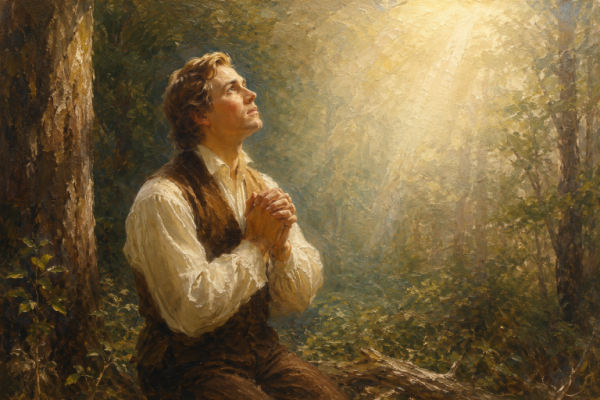
Doctrine and Covenants 121 begins with Joseph Smith’s heartfelt prayer from Liberty Jail:
“O God, where art thou? And where is the pavilion that covereth thy hiding place?” (Doctrine and Covenants 121:1).
The revelation does not specifically identify whether Joseph was addressing the Father or the Son. However, based on the pattern taught by Jesus Christ and practiced throughout the Church, it is reasonable to conclude that Joseph was praying to Heavenly Father.
Joseph had already seen both the Father and the Son in the First Vision and understood that they were separate beings. The restored gospel taught him to direct prayers to the Father.
The answer recorded in Doctrine and Covenants 121 begins:
“My son, peace be unto thy soul; thine adversity and thine afflictions shall be but a small moment” (Doctrine and Covenants 121:7).
The revelation does not explicitly identify the speaker. However, many revelations in the Doctrine and Covenants are given in the voice of Jesus Christ.
LDS doctrine teaches that Jesus Christ is the revealer through whom divine communication generally comes to mankind.
On the BYU Religions Studies website it explains:
“The Father has never dealt with man directly and personally since the Fall, and he has never appeared except to introduce and bear record of the Son.”
Because of this principle, many Latter-day Saints understand the comforting response in Liberty Jail to have been delivered through Jesus Christ, acting under the direction of the Father.
In many cases, Jesus Christ was the speaker in Joseph Smith’s revelations. One reason the Doctrine and Covenants frequently sounds like Jesus Himself is speaking is that He often was the speaker.
For example, Doctrine and Covenants 29 begins:
“Listen to the voice of Jesus Christ, your Redeemer, the Great I Am.”
In other words, Joseph Smith often prayed to Heavenly Father, but the revelation itself could be delivered through Jesus Christ, who serves as the Father’s spokesman.
This principle is often called Divine Investiture of Authority. The Father has given the Son authority to represent Him perfectly. Because of that authority, Christ can speak in the first person as though the Father Himself were speaking. This does not mean they are the same person. Rather, it means that the Son acts in complete harmony with the Father and speaks on His behalf.
Understanding this principle helps explain why Jehovah in the Old Testament, Jesus Christ in the New Testament, and many revelations in the Doctrine and Covenants often sound like the direct voice of God the Father.
According to LDS doctrine, Jehovah was Jesus Christ in His premortal state. Ancient prophets often interacted with Jehovah, who acted as the Father’s representative and spokesman.
When Joseph Smith prayed in Liberty Jail, he was most likely following the Savior’s pattern of praying to Heavenly Father. However, the answer he received may well have come through Jesus Christ, who is the Father’s revealer and mediator.
This understanding helps reconcile the Old Testament, the teachings of Jesus Christ, and the revelations received by Joseph Smith. The Father and the Son are distinct beings, yet they are perfectly united in purpose. We pray to the Father in the name of Christ, and revelation commonly comes through the Son, who faithfully represents and reveals the will of the Father.
Gramps