
Question
Hi Gramps,
I was recently reading in the Gospel Topics section, and I came across “Plural Marriage in Kirtland and Nauvoo.” I read something that didn’t sit well with me. In the article, it said, “But Emma likely did not know about all of Joseph’s sealings.” To me, this suggests that Joseph kept some of his marriages a secret, and therefore, was lying by omission to Emma. How do I reconcile this when lying is a sin? Why was it okay for Joseph Smith to lie? Why would God allow him to lie to his wife?
Hailey
Answer
Hailey,
When Joseph Smith first introduced the practice of plural marriage, he did so with great secrecy. Several late accounts strongly suggest that Joseph himself was deeply reluctant to begin the practice, feeling a “repugnance” toward the doctrine not just in himself, but as a reaction of the whole Christian world. Mary Elizabeth Lightner, one of Joseph’s plural wives, recalled that Joseph told her he was initially “afraid” when commanded by an angel to practice plural marriage, and only relented when threatened by the angel “with a drawn sword” if he did not fulfill the commandment.
This sense of dread was not Joseph’s alone. When he introduced the doctrine to close associates, it was met with devastation. Brigham Young later admitted that, upon first hearing it, he “desired the grave” and “could hardly get over it for a long time.” Heber C. Kimball reportedly begged Joseph to relieve him of the requirement, or he would leave the Church, and John Taylor wrote that he and others “seemed to put off as far as we could, what might be termed the evil day” when they would take plural wives. Far from being a popular or eagerly adopted new commandment, plural marriage was a heavy burden, met with resistance even among those closest to Joseph.
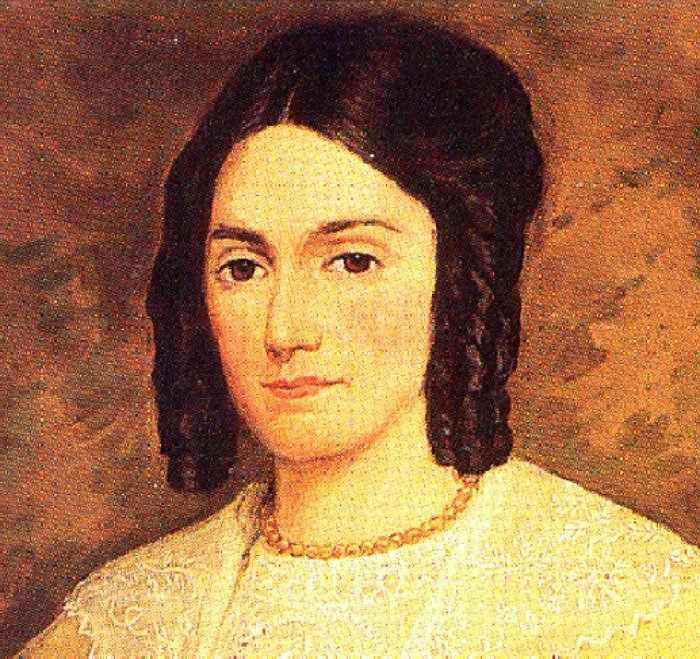
Emma Smith’s introduction to plural marriage was both indirect and deeply painful. As Linda King Newell and Valeen Tippetts Avery explain in their acclaimed biography, Emma did not receive a clear revelation or theological explanation for the practice—nor did Joseph attempt to offer one at first. Instead, Emma’s awareness came “piecemeal over a number of years through circumstances that hurt and shocked her.” Her suspicions were finally confirmed only after confrontation. Close friends discovered Joseph’s new teachings before Emma did, while she learned of his actions “over the years and in ways that hurt and shocked her.” Only under pressure did Joseph attempt to explain or justify plural marriage to Emma.
As the new and confusing order of marriage was implemented, Joseph and Emma’s home life became increasingly fraught. Historians note that Emma often “kept close watch” on young women in the Smith household, searching the house and neighborhood if they went missing—an illustration of her distress and vigilance. Sometimes, Emma was brought—reluctantly—into the arrangements, even consenting to certain plural marriages by Joseph, including to the Partridge and Lawrence sisters and Malissa Lott, only to “immediately regret that they had been performed.”
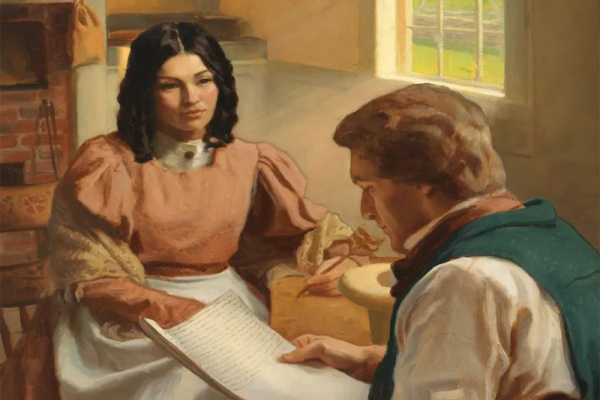
It is telling that Joseph himself seemed aware of the extraordinary pain his wife was experiencing. When the time came, at his brother Hyrum’s request, to record the revelation on celestial marriage, Joseph predicted that Hyrum’s attempt to convince Emma would fail. After Hyrum returned from sharing the revelation, he admitted, “I have never received a more severe talking to in my life. Emma is very bitter and full of resentment and anger.” Joseph quietly remarked, “I told you you did not know Emma as well as I did.”
Testimony from both primary participants and later observers indicates that Emma Smith did, in certain cases, give her formal consent. Emily Dow Partridge Young, one of Joseph’s plural wives, testified under oath that she was “resealed” to Joseph in Emma’s presence after an earlier marriage had been performed in secret. Lucy Walker, another plural wife, said Emma gave her consent for “at least four other girls to her husband, and that she was well aware that he associated with them as wives within the meaning of all that word implies,” emphasizing, however, that Emma herself “never knew about [Walker’s] own marriage.”
Yet Emma’s consent was not constant, nor was it always freely given. Accounts describe her actions as wavering between resigned cooperation, outright opposition, and bitter regret. Emma herself would arrange for and even “guard the door” during plural marriage ceremonies, but according to multiple testimonies, she very quickly turned “bitter and unpleasant” about the whole arrangement.
Emma’s personal pain was compounded by the secretive nature of plural marriage in Nauvoo. Joseph married several women without Emma’s knowledge, including some of the Partridge and Lawrence sisters. Only later were some of these marriages repeated with Emma’s participation or consent. The situation created a continuous strain in the Smith household, not only because of secrecy but also the need to protect reputations in a hostile society. As one historian wrote, “it must severely try the men as well,” but for the women—Emma especially—it was “calculated in its nature to severely try the women, to nearly tear their heart strings out of them.” Even when Emma did agree to specific marriages, she would soon regret and denounce what had transpired.
The confusion extended to Emma’s status among other women. Some sources attribute to Emma a resilient testimony for plural marriage—Orson Pratt, for instance, claimed she “had received a testimony of the truthfulness of plural marriage.” But other accounts, including that of Emily Partridge, describe Emma as often making things “very unpleasant,” yet deserving “pity” for facing an ordeal that would “nearly tear [the] heart strings out of them.” The best available evidence suggests that Emma gave her permission reluctantly, suffered terribly for having done so, and thereafter tried to navigate the implications within the Smith family and community.
Plural marriage was not performed solely in secrecy for Emma’s sake. Society at large—both within and outside the Church—reacted strongly against plural marriage. The Republican Party Platform of 1856 named polygamy as one of the “twin relics of barbarism.” Later, the Church officially ceased plural marriage over “the opposition of sixty millions of people,” “the cost of the confiscation and loss of all the temples,” and the threat of imprisonments and confiscations by the federal government. Within this swirl of external condemnation, Joseph Smith’s own concerns about Emma’s distress were heightened by fears for the Church’s reputation and survival in an openly hostile United States.
Following Joseph Smith’s death in 1844, Emma’s public stance on plural marriage underwent a significant shift. In an 1879 interview with her son, Joseph Smith III—who led the Reorganized Church and strongly opposed plural marriage—Emma denied that her husband had “a revelation on either polygamy, or spiritual wives.” She claimed he “had no other wife but me.” She made similar denials in 1867 and 1872.
When asked if Joseph ever had “marital relations with [other] women,” she replied, “he did not have improper relations with any woman that ever came to [her] knowledge.” Notably, Emma often used precise language and restricted her answers to her personal knowledge.
Some historians have argued that Emma’s denials were not outright lies but instead skillfully employed the coded language of Nauvoo. According to Linda King Newell and Valeen Tippetts Avery, Emma “easily denounced the old John Bennett term[s] of ‘polygamy’ and ‘spiritual wifery’ without lying,” sidestepping her son’s pointed questions by using more technical language—avoiding mention of “the new and everlasting covenant,” “celestial marriage,” or other terms used within the Church to justify plural marriage. Lawrence Foster likewise noted Emma “chose her words carefully in an attempt to satisfy both ‘truth’ and her desire to protect her son and family.
Her denials, then, did not necessarily refute that “the true order of marriage,” “celestial marriage,” or similar teachings had been practiced—but avoided condemning her husband with the terms most associated with public scandal and abuse. As Newell and Avery suggest, Emma “continued to use [these code words] throughout the remainder of her life to protect herself and her family.”
Gramps