

Question
Gramps,
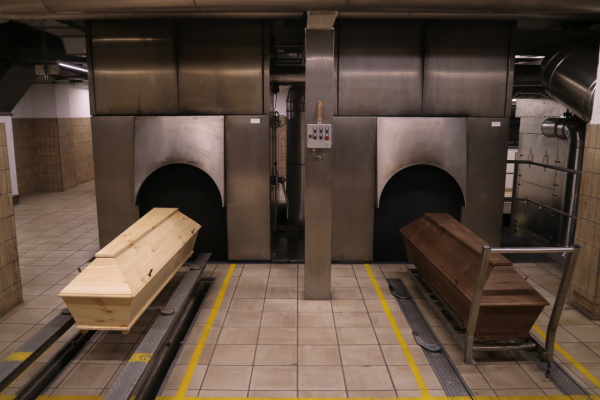
Does the Church have a policy regarding cremation?
Victoria
Answer
Victoria,
Historically, the Church has counseled that “consignment to the earth is proper and appropriate.” This sentiment appears in multiple Church documents and reflects a long-standing Christian tradition that views burial as the preferred means of laying the deceased to rest. The rationale is found in scripture, notably in Genesis 3:19: “In the sweat of thy face shalt thou eat bread, till thou return unto the ground; for out of it wast thou taken: for dust thou art, and unto dust shalt thou return.” This passage has been interpreted as a divine endorsement of in-ground burial.
Further, burying the dead is often seen as symbolically aligning with gospel teachings about death, burial, and resurrection, mirroring the Atonement of Jesus Christ and the practice of baptism by immersion. Roger R. Keller (a former professor of religion at BYU) wrote, “This tradition [of burying the dead] most nearly symbolizes the gospel teachings of death, burial, and resurrection—the atonement of Christ—and of baptism by immersion, as Paul suggests in Romans 6.”
However, alongside such encouragement, the Church also recognizes that the act of burial, while preferred, is not essential to one’s eternal salvation.
Throughout its history, the Church has addressed cremation with both caution and understanding. While cremation is generally not encouraged, the final decision is explicitly left to the discretion of the deceased’s family, especially when laws or practical circumstances (such as limited physical space) make traditional burial difficult.
The family of the deceased person decides whether his or her body should be buried or cremated. They respect the desires of the individual. (Handbook 38.7.2
The Church’s policy, therefore, distinguishes between its doctrinal encouragement of burial and the realities faced by members globally. In urban areas where burial plots are scarce or prohibitively expensive, the choice to cremate can be both a necessity and a matter of conscientious decision-making. Additionally, legal and cultural mandates in various countries can require cremation—making it essential that Church members abide by the laws of their land. In such cases, cremation is fully permitted and does not bar access to funerary rites or, more importantly, eternal blessings.
The Church also provides guidance for special considerations. When a deceased member has been endowed in the temple, it is encouraged “where possible” that their body be dressed in temple clothing before cremation—a mark of respect and an acknowledgment of the covenants entered into during life. Funeral services are likewise appropriate and encouraged, regardless of the final method of bodily disposition.
Some Latter-day Saints worry that cremation, by reducing the body to ashes, might interfere with the promise of resurrection. This concern is quite natural, given the emphasis on the body as part of our eternal nature. However, Church doctrine teaches that God’s power over matter is absolute. Whether a body is buried, lost at sea, destroyed in an accident, or cremated, the Lord can—and will—restore it in the resurrection:
Nothing is impossible with the Lord. Matter is never destroyed. We read in Doctrine & Covenants 93:33 “For man is spirit. The elements are eternal, and spirit and element, inseparably connected, receive a fulness of joy.
Thus, the manner in which remains are handled bears no ultimate consequence for one’s spiritual prospects or future resurrection. Both scriptural canon and prophetic teaching strongly affirm God’s omnipotence and the principle that all will rise again, regardless of the body’s condition at death.
The Church’s literature also acknowledges that in cases of destruction by fire, accident, or other uncontemplated means, the Lord’s ability to reunite body and spirit remains unaffected:
Whether a person’s body was buried at sea, destroyed in combat or an accident, intentionally cremated, or buried in a grave, the person will be resurrected.
For this reason, members and non-members alike are counseled not to let anxiety about cremation overshadow faith in the redemptive and restorative promises of the gospel.
As The Church of Jesus Christ of Latter-day Saints has expanded around the globe, leadership has recognized the diverse circumstances and customs of its international membership. In some cultures, cremation is the norm and is not associated with any lack of respect for the deceased. In densely populated areas like Asia’s major cities, such as Manila or Tokyo, space limitations may render burial nearly impossible or culturally inappropriate.
When I traveled to Hong Kong several years ago and went on a tour of part of the city, we came upon a large, extremely crowded cemetery. It was explained to us that due to the limited land space, people are buried for a period of seven years. At that time, they are exhumed, and the remains are then cremated.
The Church’s counsel has therefore evolved from a hardline stance to a more accommodating one. Burial is still preferred, but the ultimate decision is “a personal one and should be considered with much prayer.” Family members are encouraged to weigh their options thoughtfully, often in consultation with local leaders, and to consider personal revelation as they make these difficult choices. The same standard of counsel applies to other end-of-life decisions—such as organ donation—reflecting the Church’s emphasis on individual agency and faith.
One unique element in Latter-day Saint custom is the dedication of the grave or resting place as a sacred act. Traditionally, the gravesite is dedicated through prayer after burial. In cases where cremated remains are kept—whether in a cemetery, columbarium, or even a family home—the Church Handbook allows for the dedication of “the place” where the ashes reside. The vessel or urn itself is not dedicated, but rather the physical location, which may be tailored to local customs and family wishes.
This approach ensures that, regardless of the method used, loved ones can find peace and closure through sacred rituals that honor and remember the deceased.
Gramps
Related Posts
 Should my mentally handicapped son hold the priesthood in the Mormon Church?
 Why doesn’t the Mormon Church have crosses on their buildings as do other Christian churches?
 Should little children be permitted to bear their testimonies in Sacrament Meeting?
 How Can I Teach My Children Not to Watch Pg-13 Rated Movies?