
Question
Gramps,
Did we earn our earthly station when and where we came to earth?
Sam
Answer
Sam,
Every human being, at one time or another, confronts the question: “Why am I here, and did I have any say in my life’s circumstances?” Did we select our families, cultures, hardships, or missions before birth? Or are the circumstances of mortality something divinely appointed, outside our direct influence?
Asking if we chose or agreed to our earthly circumstances ignites passionate discussion among members of The Church of Jesus Christ of Latter-day Saints. Some hope the circumstances of their birth, opportunities, or even trials are reflective of choices made long before mortality. Others are comforted by the idea of a wise, loving God, crafting life’s details for a greater good. But is there a doctrinal consensus?
The truth is: the question strikes at the heart of what it means to be a child of God, endowed with agency yet subject to factors beyond mortal understanding. While some clues and teachings exist, definitive answers remain elusive, nudging each person to seek personal revelation, study, and faith.
One foundation of Latter-day Saint doctrine is the reality of agency—the God-given ability to choose. Scriptures teach that “without agency there would be no purpose to our existence. We would not have the ability to act or be acted upon; as such, we know our agency existed in the pre-mortal councils of heaven.”
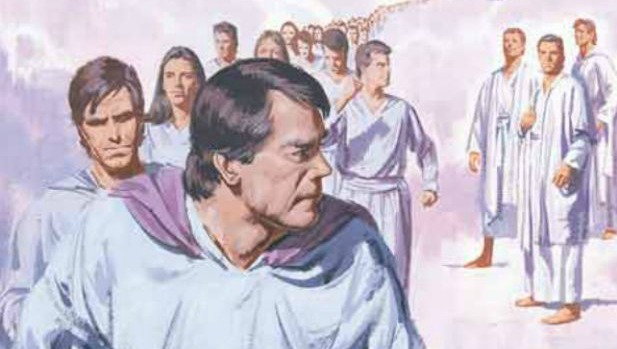
In the premortal realm, all of God’s spirit children lived with Him. There, Heavenly Father presented the Plan of Salvation, including the necessity of an earthly experience. Each spirit had to decide whether to accept this plan, with all its inherent risks and blessings.
The scriptural record points to this matter. The Book of Abraham explains:
And they who keep their first estate [premortal obedience] shall be added upon; and they who keep not their first estate shall not have glory in the same kingdom with those who keep their first estate; and they who keep their second estate [mortal life] shall have glory added upon their heads forever and ever. (Abraham 3:26)
Here, “estate” refers not to property, but to stages or opportunities for growth through obedience. President Henry B. Eyring corrected a common misunderstanding:
You and I accepted that invitation to be tested and to prove that we would choose to keep the commandments of God when we would no longer be in the presence of our Heavenly Father.” Thus, all mortals who come to earth have already used their agency to accept God’s plan.
Having a body is a blessing. It is a gift we received because we kept our first estate in our premortal life. Because we have gained a body, we are now more like God than we were before coming to earth. People who understand these truths understand that the ‘real’ self, or soul, is both body and spirit. They may feel a oneness, an inner satisfaction, as both parts work together in righteousness. They see their body as a blessing, as a reward for past righteousness. These people are grateful to have the privilege of being able to progress to this second estate to become more like God, and they want to prepare, both in body and in spirit, to live with their Heavenly Father again.” (Barbara Lockhart, “The Body: A Burden or a Blessing?” Ensign, Feb. 1985, 57)
But what does this original decision mean for the details of our mortal experience—parents, culture, talents, trials? That is where the doctrine becomes less defined.
Within the scriptures and teachings of leaders of The Church of Jesus Christ of Latter-day Saints, there is no explicit statement that affirms we individually selected or agreed to every aspect of our earthly circumstances. The absence of clarity results in genuine debate among faithful members.
Elder Joseph Fielding Smith broached the topic directly, stating:
We have no scriptural justification for the belief that we had the privilege of choosing our parents and our life companions in the spirit world. This belief has been advocated by some, and it’s possible that in some instances it is true, but it would require too great a stretch of the imagination to believe it to be so in all, or even in the majority of cases. (Way to Perfection, p. 44)
He acknowledged that while it might be possible in rare instances (perhaps for certain prophets or especially chosen individuals), it is not doctrinal to assert a universal, conscious selection of all life’s circumstances.
This emphasis is echoed in modern counsel for personal spiritual inquiry. To come to any correct conclusion, an individual must pray, fast, and then study the words of scripture and prophets to gain personal revelation on the matter, even though members’ feelings may differ.
What can be drawn from this? The only collective “choice” universally affirmed by Church teachings is the broad, vital acceptance of God’s plan and the willingness to experience mortality under its conditions. The specifics of one’s earthly lot—parentage, health, culture—are not presented in scripture as selections we made.
That said, some suggest that by accepting God’s overall plan (knowing it included the experience of both good and evil, joy and suffering), we implicitly agreed to the circumstances necessary for our growth and testing. This aligns with the teaching, “if we accepted Heavenly Father’s plan we also chose to accept our earthly circumstances and experiences on a whole.”
Why would a loving Heavenly Father send His children into such widely varying circumstances?
Scripture abounds with explanations:
For it must needs be, that there is an opposition in all things. If not so … righteousness could not be brought to pass, neither wickedness, neither holiness nor misery, neither good nor bad. Wherefore, all things must needs be a compound in one. (2 Nephi 2:11)
As articulated in the Book of Mormon and reinforced by modern prophets, the plan of salvation only works if God’s children encounter real choices—good and evil, comfort and trial, satisfaction and longing. Without struggle and sorrow, there could be no true joy.
God’s wisdom in creating a world of adversity is clear: individual growth requires challenge.
One unique teaching of The Church is that this world, in particular, plays a singular role in the cosmic drama. When asked why the Savior was born here, rather than on any other world, the answer returned is humbling: according to scriptural revelation to Enoch, no other world was so wicked as this one. The Lord observed, “among all the workmanship of mine hands there has not been so great wickedness as among thy brethren.” (Moses 7:36)
Paradoxically, it was to this, the most challenging of worlds, that the Savior chose to descend, “that he might be in all and through all things, the light of truth.” (Doctrine & Covenants 88:6) And yet, Latter-day Saint doctrine also holds that the most righteous spirits may be sent here to help balance the scales of wickedness and to further God’s purposes. The inherent opposition in all things applies not only to individuals but also to the world itself.
Gramps