


Question
Gramps,
What is the spirit world like?
Randy
Answer
Randy,
The question of what happens after death has fascinated humanity for millennia. For members of The Church of Jesus Christ of Latter-day Saints, the doctrine surrounding the spirit world offers profound insights into the nature of life after mortality—a realm where spirits continue to learn, grow, and exercise agency on the journey toward eternal progression. This article explores the Church’s teachings on the spirit world, delving into its location, characteristics, the division between paradise and the spirit prison, and the ongoing activities of spirits beyond this life.
A common misconception is that, after death, spirits depart to some far-off realm or to heaven’s distant shores. However, the teachings of Church leaders such as Joseph Smith and Brigham Young emphasize that the spirit world “is right here on this earth.” According to Brigham Young:
“When you lay down this tabernacle, where are you going? Into the spirit world. … Where is the spirit world? It is right here. … Do they go beyond the boundaries of the organized earth? No, they do not. They are brought forth upon this earth, for the express purpose of inhabiting it to all eternity. Where else are you going? Nowhere else, only as you may be permitted.” (Discourses of Brigham Young, p.376)
Spirits dwell among us, though “we cannot see it; but when our bodies are purified we shall see that it is all matter” because “there is no such thing as immaterial matter. All spirit is matter, but it is more fine or pure, and can only be discerned by purer eyes” (Doctrine and Covenants 131:7-8).
Spirits retain individuality and appearance after death. The pre-mortal spirit entered the body as a fully developed being, and in the spirit world, our spirit body has the same shape and form as the physical body. The spirit body then has arms, legs, a head, and a mind. Spirits look like they did in their mortal prime, though their matter is finer and purer.
While spirits are tangible to spiritual perception, mortals cannot typically see or feel them. Unique circumstances may allow for spiritual manifestations, but, as Brigham Young explained, “if the Lord would permit it, and it was His will … you could see the spirits that have departed from this world, as plainly as you now see bodies with your natural eyes.” (Discourses of Brigham Young, p.376 – p.377)
Latter-day Saint doctrine establishes clear boundaries for communication between mortals and spirits. While stories abound of ghostly presences, Church leaders caution against seeking such communication, noting that the adversary can deceive and that no spirits acting under God’s authority will mislead mortals.
One of the most common queries is whether the spirit world is a place or a state of mind. The scriptural answer is both nuanced and instructive. Alma in the Book of Mormon states:
The spirits of all men, as soon as they are departed from this mortal body… are taken home to that God who gave them life. And then shall it come to pass, that the spirits of those who are righteous are received into a state of happiness, which is called paradise, a state of rest, a state of peace … The spirits of the wicked, … shall be cast out into outer darkness; there shall be weeping, and wailing, and gnashing of teeth, and this because of their own iniquity, being led captive by the will of the devil. (Alma 40:11-13)
Thus, the spirit world is geographically the same for all, but the state experienced—paradise for the righteous and spirit prison for the wicked—is determined by the condition of the soul.
Contrary to some cultural traditions, members, non-members, and even children—regardless of their age at death—initially go to the spirit world, not to a final reward. The Savior Himself “employeth no servant there” in the judgment process (2 Nephi 9:41), and spirits are sorted according to their choices, repentance, and acceptance or rejection of the gospel.
Children who die under the age of eight are not exempt from the experience of the spirit world, but their innocence ensures that their sojourn is one of peace, while their resurrection awaits Christ’s return.
Spirit prison is for those who have not yet received the gospel of Jesus Christ, but spirits retain agency even in this intermediate state. The Church’s Gospel Essentials manual affirms: “These spirits have agency and may be enticed by both good and evil. If they accept the gospel and the ordinances performed for them in the temples, they may prepare themselves to leave the spirit prison and dwell in paradise.”
The opportunity for growth, change, and repentance continues after death, though it may be more difficult due to the lack of a physical body to satisfy physically generated demands, like addictions.
The spirit world is not a static limbo or dreamlike haze but a place of vibrant activity. Brigham Young taught:
“The spirits that dwell in these tabernacles on this earth, when they leave them go directly into this world of spirits. … [They] associate together, and collect together, in clans and in societies as they do here, it is their privilege. … They are there together, and if they associate together, and collect together, in clans and in societies as they do here, it is their privilege. No doubt they yet, more or less, see, hear, converse and have to do with each other, both good and bad.” (Discourses of Brigham Young, 378)
This observation supports the idea that our communities, relationships, and social natures continue. Righteous spirits gather to continue their devotion and learning; those who failed to repent during mortality work through their regrets and are taught the gospel by those called to minister to them (see Doctrine & Covenants 138).
A crucial tenet is that spirits retain their character, appetites, and agency after death. “The same spirit that possessed our body on earth will be the same spirit that possesses our heart and mind when we leave this earth as spirits.” (Alma 34:34) Spirits who subjected themselves to righteousness and the Lord’s Spirit on earth continue in this pattern of peace and progress, while those still tied to evil remain influenced by Satan.
Still, everyone is free to accept or reject the offered truths. Just as here, spirits continue to think, ponder, and make choices.
After the Resurrection and Final Judgment, all spirits will receive degrees of glory according to their choices and growth. Not all who dwell in paradise will be exalted; there are varying degrees of righteousness (like the stars in heaven), ultimately leading to assignment in the telestial, terrestrial, or celestial kingdoms.
God’s perfect justice and mercy ensure that every soul is ultimately placed in a state compatible with their desires and preparedness. Even for those who endure spirit prison, the goal is redemption and growth, not eternal torment.
The spirit world is nearby, more real than we sometimes imagine, and filled with anticipation for the day when this earth will be glorified and receive its paradisiacal glory. As we live each day, may we act with the knowledge that those who have gone before are not far from us, cheering us on in our mortal sojourn, and waiting for the day we, too, shall step beyond the veil—into a realm of eternal possibility.
Gramps
Related Posts
 I was wondering about people who are worthy of only the terrestrial glory at the time of their death. What is the purpose of having them sealed to their families if they cannot progress to the Celestial Kingdom?
 Is there opportunity after a person has died for repentance and forgiveness of sin?
 If a member of the Lord’s Church commits sin and does not repent of it in this life, will he have the opportunity to repent in the spirit world?
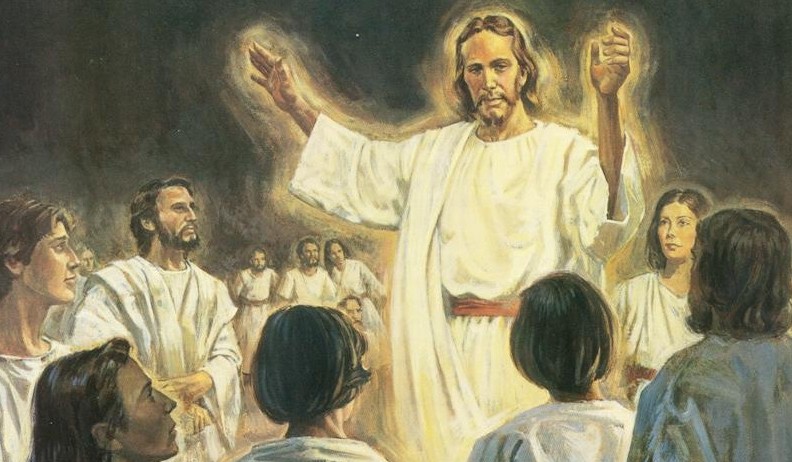 In the Spirit World