
Question
Gramps,
Will people living on the Earth today see the second coming of Jesus Christ?
Tracey
Answer
Tracey,
It’s the kind of question that comes up in quiet conversations after church, during family scripture study, or when the world feels especially chaotic. Wars, natural disasters, political division, moral confusion—it’s understandable why people sometimes wonder if the Second Coming of Jesus Christ is getting close.
From a Latter-day Saint perspective, the answer is both simple and uncertain at the same time.
Yes, there absolutely will be people living on the earth who witness the Savior’s return. But whether any of us personally will be among them is something the Lord has never revealed. And honestly, that uncertainty seems intentional.
Latter-day Saints firmly believe that Jesus Christ will literally return to the earth in glory and power. In LDS theology, the Second Coming is not symbolic or merely spiritual. Christ taught:
“For as the lightning cometh out of the east, and shineth even unto the west; so shall also the coming of the Son of man be.” (Matthew 24:27)
The restored gospel also teaches that we are living in the “last days,” meaning the final gospel dispensation before the Savior returns. Latter-day Saints believe this dispensation began with the Restoration through Joseph Smith.
Modern revelation says:
For the hour is nigh and the day soon at hand when the earth is ripe; and all the proud and they that do wickedly shall be as stubble; and I will burn them up, saith the Lord of Hosts, that wickedness shall not be upon the earth;(Doctrine and Covenants 29:9)
At the same time, “soon” in the Lord’s timing may not look the same as “soon” in ours.
So could the Second Coming happen in our lifetime?
Yes, it’s possible. But faithful Saints have believed that for generations.
Early Church members believed the Savior’s return could be near. Saints living through world wars, economic collapse, pandemics, and global unrest often felt the same way. Every generation tends to notice signs that seem to point toward the end.
And to be fair, many of those signs really are mentioned in scripture.
Jesus warned of “wars and rumors of wars” (Matthew 24:6). He also spoke of earthquakes, deception, wickedness, and tribulation throughout the earth. Latter-day Saints also see the worldwide preaching of the gospel and the gathering of Israel as major signs of the times.
One verse often quoted is:
“And this gospel of the kingdom shall be preached in all the world for a witness unto all nations; and then shall the end come.” (Matthew 24:14)
President Russell M. Nelson has repeatedly taught that the Lord’s work is accelerating in preparation for the Savior’s return. He has said:
“These surely are the latter days, and the Lord is hastening His work to gather Israel.” (Russell M. Nelson, “Hope of Israel,” Worldwide Youth Devotion June 2018
That feeling of spiritual acceleration is one many Latter-day Saints genuinely experience today, especially as missionary work expands worldwide and temples are built at a remarkable pace.
But there’s also an important caution that Church leaders consistently emphasize: we are not supposed to set dates or predict exact timing.
Jesus Himself taught:
“But of that day and hour knoweth no man, no, not the angels of heaven, but my Father only.” (Matthew 24:36)
Because of that, Church leaders have repeatedly encouraged members to focus less on speculation and more on preparation.
President Dallin H. Oaks taught:
“We need to make both temporal and spiritual preparation for the events prophesied at the time of the Second Coming. And the preparation most likely to be neglected is the one less visible and more difficult—the spiritual. A 72-hour kit of temporal supplies may prove valuable for earthly challenges, but, as the foolish virgins learned to their sorrow, a 24-hour kit of spiritual preparation is of greater and more enduring value.” (Dallin H. Oaks, “Preparation for the Second Coming,” April 2004 General Conference)
That really shifts the focus. In LDS theology, prophecy is not meant to create fear or obsession. It’s meant to encourage faithfulness and spiritual readiness.
That’s one reason the signs of the times matter. They are less about building a countdown clock and more about helping people stay spiritually awake.
Jesus compared His coming to the parable of the ten virgins. The wise virgins were ready before the bridegroom arrived. The lesson was never about knowing the exact hour—it was about being prepared whenever it happened.
For Latter-day Saints, that preparation looks a lot like ordinary discipleship: faith in Jesus Christ, repentance, prayer, temple worship, service, following the Holy Ghost, strengthening families, and enduring faithfully through difficult times.
President Gordon B. Hinckley once said:
“We can so live that we can call upon the Lord for His protection and guidance. This is the best security we can have in an uncertain world.” (Gordon B. Hinckley, “If Ye Are Prepared Ye Shall Not Fear,” October 2005 General Conference)
That perspective helps keep things balanced. Latter-day Saints are not taught to obsess over every headline or constantly search for hidden prophetic clues in world events. They are taught to live in a way that keeps them spiritually prepared, whether the Savior comes tomorrow or centuries from now.
Still, many believers do feel that the world is moving rapidly toward conditions foretold in scripture. The global spread of the gospel, the gathering of Israel, and the growing number of temples feel deeply significant to many Church members.
Technology has also changed how people think about prophecy. Events that once would have been impossible for the whole world to witness can now be seen almost instantly across the globe.
Even so, LDS theology leaves room for patience. The Savior may come very soon—or still generations in the future. Either way, the faithful response remains the same.
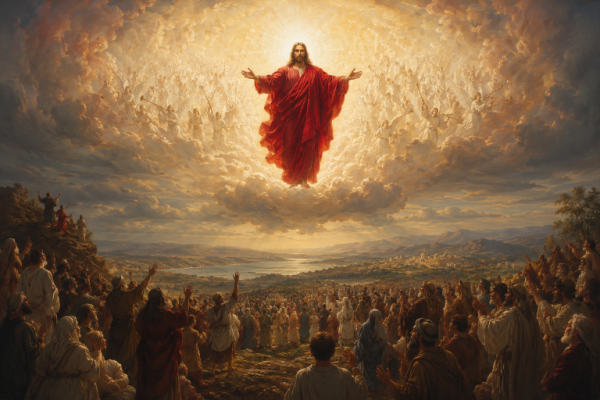
And when Christ does return, Latter-day Saints believe it will be unmistakable.
Scripture describes the Second Coming as a glorious worldwide event filled with power and majesty. The wicked who refuse repentance will mourn, while the righteous will rejoice.
The Doctrine and Covenants teaches:
“For the presence of the Lord shall be as the melting fire that burneth, and as the fire which causeth the waters to boil.” (Doctrine and Covenants 133:41)
Latter-day Saints believe Jesus Christ will personally reign upon the earth during the Millennium—a thousand years of peace.
One of the beautiful things about LDS doctrine is that the Second Coming is not viewed simply as the end of the world. It is viewed as the beginning of a healed world.
So yes, it is entirely possible that some people alive today will witness the Second Coming of Jesus Christ. But whether it will happen during our personal lifetime is something God has chosen not to reveal.
And maybe there’s wisdom in that.
If people knew the exact date, many would probably delay repentance, postpone change, or wait to fully commit themselves to discipleship. Instead, the gospel invites people in every generation to live faithfully now.
Latter-day Saints believe the signs of the times are real. They believe Christ’s return is certain. They believe the world is moving toward prophetic fulfillment.
But ultimately, the most important question is probably not:
“Will we personally see the Second Coming?”
It’s:
“If Christ came today, would we be spiritually ready to meet Him?”
Gramps