
Question
Hello,
Why do we have signs? Specifically, signs of the Second Coming, but more general signs as well: to those who will not believe, no sign will convince them, and to those who do, no sign is necessary. We’re told to watch for the signs of the Second Coming, but also to live in readiness because we won’t expect it anyway (and we could die at any moment). Why bother with signs at all, then? There must be some reason, or God wouldn’t do it.
Thanks,
Rina
Answer
Rina,
Throughout both ancient and modern scripture, the Lord has detailed a series of “signs of the times” that precede His second coming. These are not given to incite fear or speculation, but to provide hope, orientation, and an invitation to prepare spiritually. As B.H. Roberts observed,
“It would accord with our conceptions of justice…and certainly with our ideas of the mercy of God if mankind were warned by special messengers of these threatened judgments.…[T]he Scriptures plainly say as much.”
So what are these signs, and why were they given? According to the teachings of The Church of Jesus Christ of Latter-day Saints, “The signs of the times are given in several places in scripture. Some are in Daniel, some are found in the words of the Savior himself in the gospels, the book of Revelation, multiple places in the Book of Mormon, and the Doctrine & Covenants.” While a full catalog can be found elsewhere, prominent examples include:
– The restoration of Christ’s Church and the gathering of Israel
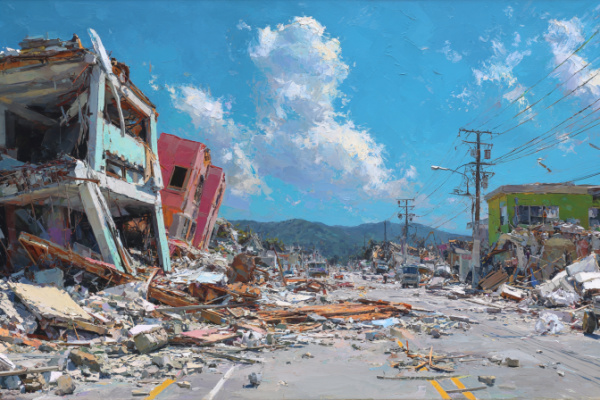
– Wars, rumors of wars, disasters (earthquakes, famines, pestilences)
– The preaching of the gospel in all the world
– Increasing wickedness, “hearts waxing cold”
– Signs in the heavens: the sun darkening, the moon turning to blood, stars falling
– The abomination of desolation (Jerusalem’s tribulations, both ancient and future)
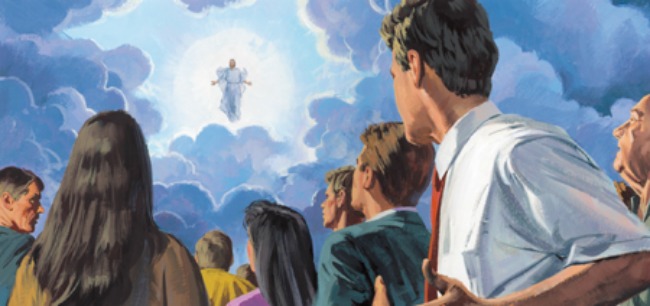
– The grand appearance of the “sign of the Son of Man in heaven,” visible to all
But why do these signs matter? Their ultimate purpose is not to predict a date. So we know when the second coming is approaching. Not so we know when it happens…So we can be reminded of the importance of being prepared for it, whether it occurs in our lives or not.… As long as we are prepared spiritually…and physically, we will have no need for fear. Just as Christ taught in the parable of the fig tree (Matthew 24:32-33), these signs allow disciples to sense when “summer is nigh,” not to calculate the precise hour.
With every dramatic news story, natural disaster, or astronomical phenomenon, speculation surges. But discerning the true signs from “pretended harbingers” requires scriptural literacy and spiritual sensitivity. The signs include the gathering of the elect, wars, famines, earthquakes, iniquity, the gospel preached to all the world, the destruction of Jerusalem, the sun and moon darkened, and finally the sign of the Son of Man…but many are explicitly detailed; for example, solar and lunar eclipses are listed among the signs, but not every full moon or cosmic event is a sign.
The scriptures and modern prophets warn repeatedly against over-interpreting or sensationalizing every event. Regarding the infamous “blood moons,” it was emphasized that, while “living in the latter-days…signs of the Lord’s Second Coming abound…[these are] not markers to help us guess the time…[but] to strengthen our faith that He will come again.” In other words, tracking dates or aligning every comet with prophecy distracts from the central command: to trust, prepare, and be spiritually alert.
It is also important to understand that, as in ages past, the news media is not our only—or even preferred—channel for recognizing God’s hand. Even in a hypothetical world where an electromagnetic pulse disables our electronics, including televisions, computers, and cell phones, the value of the signs persists for followers who know what to look for. Events such as local wars, famines, earthquakes, and even celestial signs remain observable with the naked eye and can be discerned with spiritual eyes. Meanwhile, the ones that you wouldn’t notice right away are the global ones…but you would still find out in time. News found a way to get around the world with little more than diesel engines and the printing press.
Most reassuring of all is the Lord’s promise that the final and greatest sign—the sign of the Son of Man in heaven—will not require an internet connection or even word-of-mouth. Immediately…there shall appear a great sign in heaven, and all people shall see it together (Doctrine and Covenants 88:93). Joseph Smith likened it to the sunrise, “as the light of the morning cometh out of the east,” at first small but “gradually becomes larger until every eye shall see it…Shall the Saints understand it? Oh yes…Shall the wicked understand? Oh no, they attribute it to a natural cause…”
Therefore, the real “deciding factor” in recognizing God’s hand is not technology, but spiritual preparation and sensitivity. As President Uchtdorf counseled,
“We are charged with studying the word of God and heeding the voice of the Spirit, that we may ‘know the signs of the times, and the signs of the coming of the Son of Man.’…[But] rather than dwelling on the immensity of our challenges, would it not be better to focus on the infinite greatness, goodness, and absolute power of our God, trusting Him and preparing with a joyful heart?…Let us set aside our fears and live instead with joy, humility, hope, and a bold confidence that the Lord is with us.”
Amid natural disasters, violence, moral confusion, and news cycles calibrated to instill dread, disciples of Christ are taught to “be not troubled,” for “all I have told you must come to pass” (Matthew 24:6). President Thomas S. Monson said,
“Though the storm clouds may gather, though the rains may pour down upon us, our knowledge of the gospel and our love of our Heavenly Father and of our Savior will comfort and sustain us…There will be nothing in this world that can defeat us…Fear not. Be of good cheer. The future is as bright as your faith.”
Preparation is not only prudent but commanded. Elder Dallin H. Oaks taught,
“While we are powerless to alter the fact of the Second Coming and unable to know its exact time, we can accelerate our own preparation and try to influence the preparation of those around us.…If we would do those things then, why not now? Why not seek peace while peace can be obtained?”
How, then, do we endure—indeed thrive—when “the world seems to be going dark and turbulent”? The answer consistently returns to spiritual fundamentals: study the scriptures, heed living prophets, pray always, stand in holy places, and “watch.” President Hinckley said,
“To know when these events will occur would take from us much of the self-discipline needed to daily obey the principles of the gospel.”
Without a firm date, daily discipleship is revealed for what it is: not a mad dash before a deadline, but a lifestyle, not a last-ditch effort to sweep our mistakes under the rug at the threat of imminent eternal judgment.
Teaching children and youth is no different. Rather than instilling anxiety, parents and leaders are encouraged to point to God’s promises and focus on “Look unto me in every thought; doubt not, fear not” (Doctrine and Covenants 6:36).
Gramps