

Question
Gramps,
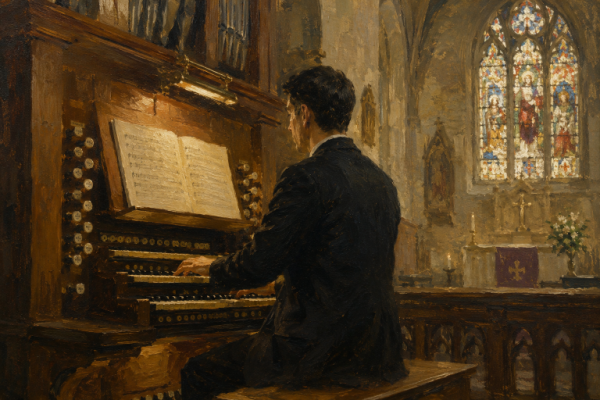
Is it appropriate for an LDS member to play the organ at a different church for compensation on Sundays?
Michael
Answer
Michael,
According to the theology and teachings of The Church of Jesus Christ of Latter-day Saints, the answer often depends on motives, circumstances, and whether the activity aligns with the spirit of keeping the Sabbath day holy.
The Church does not have a specific commandment that forbids a member from playing music for another church on Sunday. In fact, Latter-day Saints generally respect and appreciate sincere worship wherever it is found. The Church’s Articles of Faith declare:
“We claim the privilege of worshiping Almighty God according to the dictates of our own conscience, and allow all men the same privilege.”
That principle has often encouraged positive relationships between Latter-day Saints and other faith communities. Music, especially sacred music, can be a powerful way to build goodwill and uplift others. Many LDS members who are professional musicians have participated in community choirs, weddings, funerals, and religious events of other denominations without conflict with their beliefs.
However, the question becomes more complex when compensation and Sunday observance are involved.
Latter-day Saints believe the Sabbath is sacred. In the scriptures, the Lord taught:
“Remember the sabbath day, to keep it holy.” (Exodus 20:8)
Modern revelation reinforces that principle. In Doctrine and Covenants 59:9-10, the Lord explains the purpose of the Sabbath:
And that thou mayest more fully keep thyself unspotted from the world, thou shalt go to the house of prayer and offer up thy sacraments upon my holy day;
For verily this is a day appointed unto you to rest from your labors, and to pay thy devotions unto the Most High;
For many members, that phrase “rest from your labors” becomes central to the discussion. If playing the organ is simply employment—another professional obligation undertaken primarily for income—some Latter-day Saints might feel uncomfortable with it on Sunday. Church leaders have frequently encouraged members to avoid unnecessary work on the Sabbath whenever possible.
For example, Russell M. Nelson taught:
“In addition to your going to church, partaking of the sacrament, and being diligent in your specific call to serve, what other activities would help to make the Sabbath a delight for you?” The Sabbath Is a Delight
In that same message,Elder Nelson also asked:
“What sign will you give to the Lord to show your love for Him?”
That perspective matters because LDS theology generally addresses Sabbath questions through principles rather than exhaustive regulations. Rather than publishing a list of forbidden activities, Church leaders encourage members to seek the companionship of the Holy Ghost and thoughtfully evaluate whether an activity invites spirituality or distracts from it.
So, could playing the organ at another church actually fit within the spirit of Sabbath worship?
In some cases, many Latter-day Saints would likely say yes.
If the music is sacred and uplifting, and serves to help others worship Jesus Christ, a member might feel that the service itself is spiritually worthwhile. Organ music has historically played an important role in Christian worship, and Latter-day Saints deeply value sacred music themselves. The introduction to the Church hymnbook teaches:
“Music is given of God to further his purposes.”
Someone who prayerfully uses musical talents to bless others could reasonably feel they are offering service rather than merely performing a secular job.
There are also practical realities to consider. Some musicians rely on Sunday religious services as part of their livelihood. Organists and pianists are often hired specifically because churches need trained musicians. LDS theology recognizes that not all work on Sunday is avoidable. Medical workers, emergency personnel, caregivers, and others frequently serve on Sundays out of necessity. While playing organ music may not rise to the same level of necessity, Church teachings generally leave room for individual judgment in employment situations.
At the same time, there are important cautions.
A Latter-day Saint should honestly ask: “Is this drawing me closer to Christ and helping me honor the Sabbath, or is it turning Sunday into an ordinary workday?” That distinction matters. If the commitment regularly interferes with attending LDS meetings, partaking of the sacrament, fulfilling Church callings, or spending meaningful time with family, many would see that as a concern.
The Church’s handbook teaches:
“Those who attend should avoid disruptions or distractions contrary to worship.” General Handbook 38.1.1
Again, the emphasis is on spirit and intent rather than rigid prohibition.
There is also the matter of appearance and priorities. Latter-day Saints covenant to take upon themselves the name of Christ and to be examples of discipleship. If a member accepted Sunday work solely for its financial rewards while neglecting spiritual responsibilities, it could gradually weaken their Sabbath observance. On the other hand, if the opportunity allowed them to share uplifting music, maintain respectful relationships with other Christians, and still faithfully honor their own worship commitments, many leaders would likely view the situation differently.
Interestingly, LDS history includes examples of cooperation and friendship with other faiths. Church leaders have often encouraged members to participate in community efforts that promote goodness and faith in God. Gordon B. Hinckley stated:
“We simply say to those who may be of other faiths or of no faith, ‘You bring with you such truth as you have and let us see if we can add to it.’” Teachings of Presidents of the Church: Gordon B. Hinckley, Chapter 20
That attitude has shaped much of the Church’s interfaith approach. Playing sacred music in another Christian setting would not automatically be viewed as disloyal to LDS beliefs. In fact, many members would see it as an opportunity to demonstrate kindness, professionalism, and Christian fellowship.
Ultimately, LDS theology places significant responsibility on personal revelation. A member facing this question would likely be encouraged to pray, study the scriptures, and, if uncertainty persisted, seek counsel from local priesthood leaders. Different circumstances may lead faithful members to different conclusions.
One organist may decide that accepting compensation for Sunday worship services feels incompatible with how they personally honor the Sabbath. Another may feel peace in using God-given talents to assist reverent worship while still keeping covenants and attending their own meetings. Both individuals could be acting sincerely within the framework of LDS teachings.
That balance between commandments and individual spiritual guidance is an important part of Latter-day Saint belief. President David O. McKay often quoted the statement:
“No other success can compensate for failure in the home.” Teachings of Presidents of the Church: David O. McKay, Chapter 16
That reminder often influences how LDS members evaluate Sunday commitments. Even good activities can become spiritually unbalanced if they consistently crowd out worship, family, or rest.
So, is it appropriate for an LDS member to play the organ at another church for compensation on Sundays?
According to LDS theology, it is neither inherently forbidden nor automatically encouraged. The appropriateness depends largely on the spirit in which it is done, the effect it has on Sabbath worship and family life, and whether the individual feels they are honoring the Lord through the decision.
For Latter-day Saints, the deeper question is usually not simply “Am I allowed to do this?” but rather, “Will this help me keep the Sabbath holy and draw closer to Jesus Christ?” When approached prayerfully and sincerely, that question often leads to the clearest answer.
Gramps