
Question
Gramps,
Joseph Smith was foreordained to become a prophet. Did he become a prophet when he had the First Vision or when he received the Priesthood? Thank you.
Bonnie
Answer
Bonnie,
In the Book of Mormon, Joseph of Egypt prophesied:
“A seer shall the Lord my God raise up, who shall be a choice seer unto the fruit of my loins” (2 Nephi 3:6).
A few verses later, he added:
“His name shall be called after me; and it shall be after the name of his father” (2 Nephi 3:15).
Latter-day Saints understand these verses to refer specifically to Joseph Smith Jr. That means Joseph’s prophetic mission did not begin accidentally or unexpectedly. He was foreordained by God before he was born.
But that leads to an interesting question: When did Joseph Smith actually become a prophet? Did it happen when he experienced the First Vision in 1820? Or did it happen later when priesthood authority was restored?
According to LDS theology and doctrine, the answer is not entirely one or the other. The First Vision marked Joseph’s divine calling as a prophet, while the later restoration of priesthood authority enabled him to officially carry out that prophetic mission in its fullness.
The Restoration unfolded step by step.
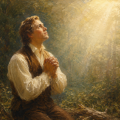
Joseph’s First Vision in the spring of 1820 was undeniably prophetic in nature. As a fourteen-year-old boy seeking truth and forgiveness, Joseph entered a grove of trees to pray. There he saw God the Father and Jesus Christ.
Elder Craig C. Christensen stated plainly:
“Joseph Smith saw God, the Eternal Father, and Jesus Christ.”
That moment changed religious history forever. Heaven opened again after centuries of apostasy, and revelation resumed through a living prophet.
President Gordon B. Hinckley emphasized just how foundational this event was when he taught:
“Our whole strength rests on the validity of that vision.”
Likewise, President Ezra Taft Benson declared:
“It was the greatest event that has ever happened in this world since the resurrection of the Master.”
Those are powerful statements. Church leaders consistently point to the First Vision as the beginning of the Restoration and the beginning of Joseph Smith’s prophetic ministry.
In many ways, Joseph fits the biblical pattern of prophetic calling. Moses encountered God at the burning bush before leading Israel. Isaiah saw the Lord in vision before being commissioned. Jeremiah was foreordained before birth and called while still young.
Joseph’s First Vision follows that same pattern. He did not simply receive a personal spiritual experience. He received a revelation for the world. He was told that the existing churches lacked the fullness of Christ’s gospel and that God would restore truth again through him.
That is what prophets do.
However, LDS doctrine also places enormous importance on priesthood authority. While Joseph had been called by God through revelation and vision, the authority necessary to officially act in God’s name for the Church had not yet been restored.
That came later.
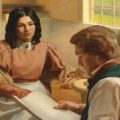
In 1829, Joseph Smith and Oliver Cowdery prayed about baptism while translating the Book of Mormon. In response, John the Baptist appeared and restored the Aaronic Priesthood. Joseph Smith—History records his words:
“Upon you my fellow servants, in the name of Messiah I confer the Priesthood of Aaron” (Joseph Smith—History 1:69).
Shortly afterward, Peter, James, and John restored the Melchizedek Priesthood.
Elder David A. Bednar explained:
“Ancient prophets and apostles personally conferred priesthood authority upon Joseph Smith.”
This restoration of priesthood authority mattered deeply because, in LDS theology, God’s Church must operate through divinely authorized priesthood keys and ordinances. A person may receive revelation without a priesthood office, but official authority to administer ordinances and govern the Church is conferred through the priesthood.
That distinction helps answer the question.
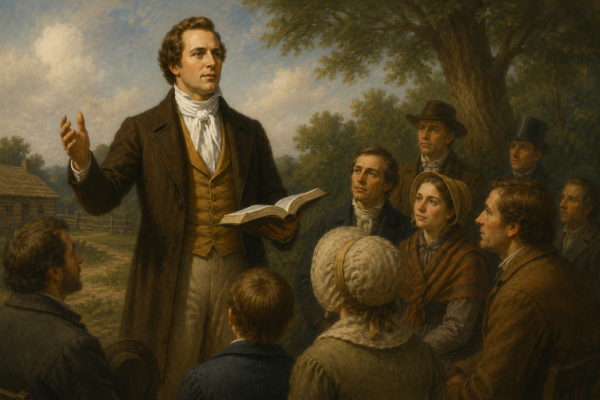
Joseph Smith was called as a prophet through the First Vision, but he received the priesthood authority necessary to formally organize and lead the restored Church later through heavenly messengers.
The Restoration itself unfolded gradually. It did not all happen in a single moment.
After the First Vision came Moroni’s visits. Then came the translation of the Book of Mormon. Then the restoration of priesthood authority. Finally, the Church was formally organized on April 6, 1830.
Even then, revelation and priesthood keys continued to unfold over time.
The Book of Mormon describes this pattern beautifully:
“I will give unto the children of men line upon line, precept upon precept” (2 Nephi 28:30).
That phrase perfectly describes the Restoration process.
President Ezra Taft Benson once referred to the coming forth of the Book of Mormon and said:
“The only thing that preceded it was the First Vision.”
In other words, the First Vision was the opening event that launched everything else.
The official Restoration proclamation issued by the First Presidency and Quorum of the Twelve Apostles summarizes it this way:
“We affirm that under the direction of the Father and the Son, heavenly messengers came to instruct Joseph and reestablish the Church of Jesus Christ.”
Notice the sequence there. First came the appearance of the Father and the Son. Then came additional heavenly messengers and the restoration of the priesthood. Together, these events formed the Restoration.
This is why many Latter-day Saints would say Joseph became a prophet in calling at the First Vision and became fully empowered to function as the prophet of the restored Church through priesthood restoration.
The two events are not competing answers. They are connected parts of the same divine process.
Without the First Vision, there would have been no Restoration to begin with. Without priesthood authority, the Restoration could not have been formally established and administered.
Together, they show how God prepares, calls, authorizes, and guides His servants.
Perhaps there is something meaningful in the fact that Joseph’s prophetic role unfolded gradually. The Restoration itself was never intended to be a single dramatic event and then finished. It was, and still is, an ongoing work directed by Jesus Christ.
Joseph Smith grew into his prophetic ministry line upon line, just as the restored Church itself continued to grow under divine revelation.
Gramps