

Question
Gramps,
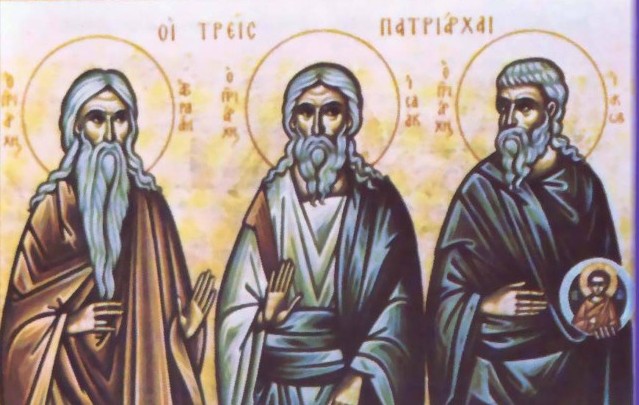
My patriarchal blessing states,” Your lineage is of the House of Israel of Abraham, Isaac, and Jacob.” No specific lineage is mentioned. Do I need to get a blessing, or is it okay?
Thank you very much.
Richard
Answer
Richard,
A patriarchal blessing is a sacred revelation given by an ordained patriarch by inspiration. It is intended to provide guidance, comfort, promises, and insight into the Lord’s relationship with you. While lineage is often declared, the most important purpose of a patriarchal blessing is not genealogical identification but spiritual direction.
The Church teaches that a declaration of lineage identifies the tribe of Israel through which a person receives the blessings of the Abrahamic covenant. However, it is important to remember that all faithful members of the Church become heirs to those covenant blessings through Jesus Christ.
The Apostle Paul taught:
“And if ye be Christ’s, then are ye Abraham’s seed, and heirs according to the promise” (Galatians 3:29).
This principle is especially important in Latter-day Saint doctrine. Whether a person is a literal descendant of Israel or is adopted into the covenant family through baptism and faithfulness, the blessings of Abraham become available to them.
The Church explains:
“All Church members belong to the house of Israel, either by literal descent or by spiritual adoption.”
President Russell M. Nelson taught regarding the gathering of Israel:
“This gathering is all about giving every human soul the chance to accept the gospel of Jesus Christ.”
The focus of covenant lineage is ultimately not tribal identity but covenant responsibility and blessings.
Most patriarchal blessings identify a tribe because that information can provide insight into a person’s role in the gathering of Israel. However, the Lord is not required to reveal every detail in every blessing. Patriarchal blessings vary greatly because individuals vary greatly. Some blessings contain extensive promises, while others are brief. Some include detailed lineage declarations, while others are more general.
President James E. Faust taught:
“When moved upon by the Holy Spirit, the patriarch makes an inspired declaration of the lineage of the recipient.”
For that reason, if your blessing identifies you as being of the House of Israel but does not name a specific tribe, it is reasonable to conclude that the Lord intended the blessing to be given exactly as it was received.
The First Presidency in 1943 wrote:
“Patriarchal blessings contemplate an inspired declaration and statement of the lineage of the recipient.”
Notice that the emphasis is on an inspired declaration. The amount of detail revealed is determined by the Lord, not by our expectations.
Some members wonder whether they should seek another patriarchal blessing to obtain a more specific lineage declaration. The Church has consistently discouraged that practice except in unusual circumstances.
President James E. Faust taught:
“Generally, one patriarchal blessing is adequate, and second patriarchal blessings are not encouraged.”
For most members, the appropriate course is simply to treasure the blessing they have already received and seek understanding through prayer, scripture study, and faithful living.
There is another perspective that may be helpful.
Your blessing specifically states that you are of the House of Israel and connected to Abraham, Isaac, and Jacob. That declaration alone is significant. Those three patriarchs are the recipients of the great covenant through which all nations of the earth are blessed.
The Lord promised Abraham:
“In thy seed shall all the nations of the earth be blessed” (Genesis 22:18).
Through temple ordinances, covenant keeping, and discipleship, faithful Latter-day Saints participate in fulfilling that promise, regardless of whether a specific tribe is mentioned in their blessing.
In practical terms, your responsibilities remain the same. You are invited to help gather Israel, share the gospel, make and keep sacred covenants, serve others, and follow Jesus Christ. Knowing whether your lineage is Ephraim, Manasseh, Judah, or another tribe would not change those responsibilities.
So, do you need another blessing?
According to LDS doctrine and Church practice, the answer is almost certainly no. A lineage declaration that identifies you as part of the House of Israel is meaningful and complete. The absence of a specific tribal name does not indicate that anything is wrong with your blessing or that something was left unfinished.
Instead, it may be helpful to focus on what the blessing does say rather than what it does not say. The Lord has already declared that you belong to His covenant people. That truth carries with it extraordinary promises, opportunities, and responsibilities.
In the end, the most important question is not, “Which tribe am I from?” but rather, “Am I living as a covenant disciple of Jesus Christ?”
That is the purpose of patriarchal blessings—to help us come unto Christ and faithfully follow Him throughout our lives. If your blessing is doing that, then it is accomplishing exactly what the Lord intended.
Gramps