
Question
Gramps,
Hey Gramps,
What are the blessings given to each tribe of Israel? How is it decided what tribe one belongs to?
Elder Pope
Answer
Elder Pope,
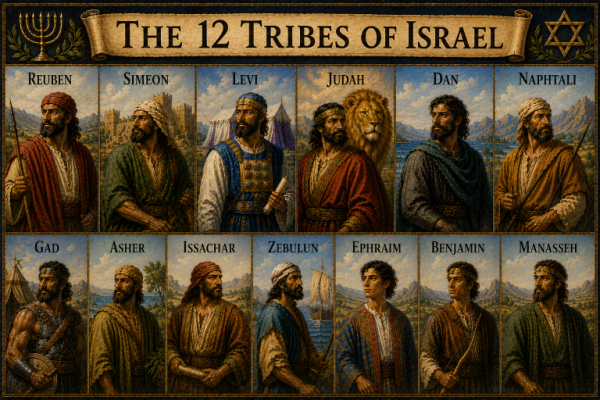
The tribes of Israel trace their origins back to the twelve sons of the prophet Jacob, whose name was changed to Israel. These sons became the heads of the twelve tribes, and their descendants eventually formed the covenant people of God.
Throughout scripture, God made special promises to the house of Israel. These promises included receiving the gospel, being gathered in the last days, inheriting lands of promise, and ultimately receiving the blessings of salvation and exaltation through Jesus Christ. While the tribes have different historical roles and blessings, it is important to remember that all faithful members of the house of Israel have access to every blessing of the gospel through the covenants they make with God.
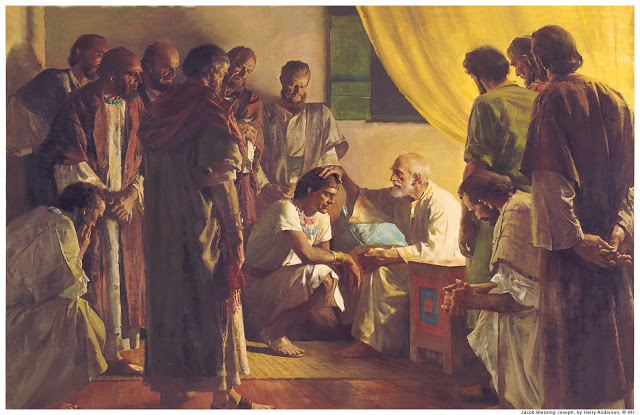
One of the primary sources of tribal blessings is Genesis 49, where Jacob blessed his sons before his death. Another source is Deuteronomy 33, where Moses blessed the tribes. These blessings often describe characteristics, responsibilities, or future events connected to each tribe.
Reuben, Jacob’s firstborn son, was blessed with strength and dignity but lost some privileges because of his transgressions. Simeon and Levi were rebuked for violence, though Levi later became associated with priesthood service. The descendants of Levi eventually served in the temple and performed sacred ordinances for ancient Israel.
Judah received one of the most significant blessings. Jacob prophesied that leadership would come through Judah and that the Messiah would descend from this tribe. Jesus Christ was born through the lineage of Judah, making this blessing especially important.
Zebulun was promised prosperity connected to the sea and commerce. Issachar was described as strong and willing to labor. Dan was said to judge his people and was compared to a serpent, symbolizing both wisdom and caution.
Gad was promised that although he would face conflict, he would ultimately overcome his enemies. Asher was blessed with abundance and prosperity. Naphtali was promised favor and blessings from the Lord.
Joseph received perhaps the most extensive blessing. Through his sons, Ephraim and Manasseh, Joseph received the birthright blessing. Jacob adopted Ephraim and Manasseh as his own sons, effectively creating two tribes from Joseph’s lineage. Joseph’s descendants were promised great blessings, fruitfulness, strength, and a significant role in God’s latter-day work.
Benjamin was described as a fierce warrior and was promised strength and protection.
In LDS theology, special attention is often given to Ephraim and Manasseh. Modern prophets have taught that members of these tribes play a major role in the gathering of Israel during the latter days. Many members of the Church who receive patriarchal blessings are declared to be from the tribe of Ephraim, while others are declared to be from Manasseh or one of the other tribes.
This naturally leads to the question: How is it decided what tribe someone belongs to?
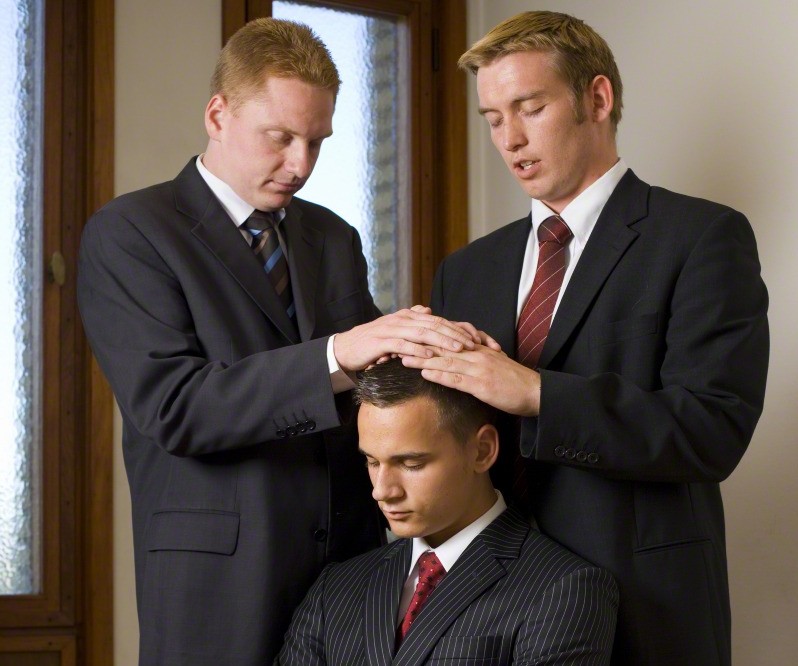
The Church teaches that tribal lineage is typically declared through a patriarchal blessing. A patriarch, acting under inspiration from the Holy Ghost, may identify the tribe through which a person receives their inheritance in the house of Israel.
Some people assume that the declared tribe is always a direct statement of biological ancestry. While that can certainly be the case, Church leaders have explained that lineage can also be understood in a covenant sense. Through adoption into the house of Israel, all who accept the gospel become heirs to the promises made to Abraham, Isaac, and Jacob.
The Apostle Paul taught that those who belong to Christ become Abraham’s seed and heirs according to the promise. Through baptism and covenant relationships with God, individuals become part of Israel regardless of their ethnic background.
Because of this, the tribe identified in a patriarchal blessing may represent actual blood lineage, covenant lineage, or both. President Joseph Fielding Smith taught that the declaration of lineage in a patriarchal blessing identifies the tribe through which a person’s blessings and inheritance in Israel come.
Another interesting point is that many people likely have ancestry from multiple tribes. Thousands of years of migration, marriage, and population movements make it very likely that most people with Israelite ancestry are connected to more than one tribe. The lineage declared in a patriarchal blessing generally identifies the tribe that has particular significance in the Lord’s purposes for that individual.
Ultimately, the most important thing is not which tribe is named but what that lineage represents. Being part of Israel means being part of God’s covenant people. It means accepting Jesus Christ, making and keeping sacred covenants, and helping gather Israel on both sides of the veil.
President Russell M. Nelson has repeatedly taught that the gathering of Israel is one of the most important works taking place on the earth today. Regardless of tribal affiliation, every member of the Church has the opportunity to participate in that gathering by sharing the gospel, serving others, performing temple work, and remaining faithful to the Savior.
So while the scriptures provide glimpses into the individual blessings of the tribes, the greater message is that all of God’s covenant children are invited to receive every blessing He has promised. Whether a person is declared to be of Ephraim, Manasseh, Judah, Benjamin, or another tribe, the ultimate blessing is the same: to come unto Christ, receive His gospel, and inherit all that the Father has prepared for His faithful children.
Gramps