

Question
Gramps,
I tried a new energy drink the other day without reading the ingredients and really enjoyed it. Just for kicks and giggles, I looked at the ingredients and noticed that the caffeine is sourced from coffee beans. Is drinking caffeine sourced from coffee beans the same as drinking coffee itself when it comes to the word of wisdom?
Ryan
Answer
Ryan,
The honest answer is that the Church has never specifically addressed this exact situation. Because of that, it’s important to distinguish between what the Church has officially taught and what members may conclude on their own.
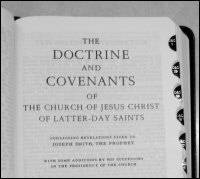
The Word of Wisdom is found in Doctrine and Covenants 89. The revelation instructs the Saints to avoid “wine or strong drink,” tobacco, and “hot drinks” (see Doctrine and Covenants 89:5-9). For many years, Church leaders have consistently taught that “hot drinks” refers specifically to coffee and tea, regardless of whether they are served hot or cold.
The Church History Topic on the Word of Wisdom explains:
“Sources make clear that many early Latter-day Saints understood ‘hot drinks’ to refer to coffee and tea.”
That understanding goes all the way back to Hyrum Smith, who explained the revelation in 1842:
“And again ‘hot drinks are not for the body or belly;’ there are many who wonder what this can mean… I say it does refer to tea and coffee.”
Notice what those statements focus on. They identify coffee and tea as the prohibited beverages. They do not discuss every individual chemical compound or ingredient that might come from those plants.
That brings us to caffeine.
For many years, people—both inside and outside the Church—have assumed that caffeine itself is forbidden. However, the Church has repeatedly clarified that this is not the case.
In an official Newsroom statement correcting media misunderstandings, the Church wrote:
“The Church revelation spelling out health practices (Doctrine and Covenants 89) does not mention the use of caffeine. The Church’s health guidelines prohibit alcoholic drinks, smoking or chewing of tobacco, and ‘hot drinks’—taught by Church leaders to refer specifically to tea and coffee.”
That statement is significant because it makes two things very clear.
First, coffee is prohibited.
Second, the Word of Wisdom itself does not prohibit caffeine.
The Church History Topic adds another important principle. It explains that the revelation “did not anticipate or specifically address many substances that have since become common.” It goes on to say that over time, Church leaders have emphasized the principles behind the revelation and, in some cases, have given additional guidance, such as prohibiting recreational drugs while allowing the proper use of prescription medications.
That historical perspective is helpful because energy drinks, caffeine extraction, and many modern food-processing methods simply did not exist in 1833.
President Boyd K. Packer also reminded members that the Word of Wisdom is more than just a checklist.
He taught:
“The Word of Wisdom was ‘given for a principle with promise.'”
He further observed that there are:
“…many habit-forming, addictive things… not mentioned in the revelation.”
His point was that faithful disciples should not merely ask, “Is this specifically on the forbidden list?” They should also consider whether a product is wise, healthy, or potentially addictive.
That principle applies well to many modern energy drinks. Even if a particular beverage does not violate the Word of Wisdom, it may still contain extremely high amounts of caffeine, sugar, or other stimulants. Each member should exercise good judgment and moderation.
So what about caffeine extracted from coffee beans? This is where we should be careful not to go beyond what the Church has actually said. The Church has never issued an official statement stating that purified caffeine extracted from coffee beans violates the Word of Wisdom. Likewise, the Church has never issued an official statement declaring that it is completely acceptable. In other words, there is no official doctrine on that specific question.
Instead, we know these facts:
- Coffee is prohibited.
- Tea is prohibited.
- The Word of Wisdom does not mention caffeine.
- The Church has not taught that every ingredient originating from a coffee bean is automatically equivalent to drinking coffee.
- The Church has not specifically addressed purified caffeine extracted from coffee beans.
Because of that, faithful members may arrive at different personal conclusions.
Some may decide that if an ingredient originated with the coffee plant, they would rather avoid it entirely. Others may conclude that purified caffeine is not the same thing as drinking coffee because the prohibited beverage itself is absent.
Both individuals can sincerely desire to obey the Lord.
Unless the First Presidency or the Quorum of the Twelve Apostles provides additional guidance in the future, it would be unwise for members to declare either position as official Church doctrine.
Perhaps the best approach is to remember the purpose of the Word of Wisdom itself. The Lord didn’t simply give a list of rules; He gave “a principle with promise” (Doctrine and Covenants 89:3). Those who strive to obey it are promised health, wisdom, knowledge, and spiritual blessings (see Doctrine and Covenants 89:18-21).
So if you accidentally drank an energy drink before realizing its caffeine came from coffee beans, there is no reason to panic. You did not intentionally drink coffee, and the Church has never taught that isolated caffeine derived from coffee beans is equivalent to drinking coffee.
If learning where the caffeine comes from makes you uncomfortable, you can certainly choose another product in the future. If, after studying the issue and prayerfully considering the official teachings of the Church, you feel comfortable using such a product, that remains a matter of personal judgment because the Church has not spoken on the issue.
In the end, discipleship is often about resisting the temptation to add rules that the Lord has not given while also seeking the guidance of the Holy Ghost in areas where the Lord has left room for personal judgment. By following the clear teachings of the Word of Wisdom and exercising wisdom in our choices, we can honor both the letter and the spirit of the Lord’s law.
Gramps