
Question
Gramps,
I have always taught my children that God is mighty to save—that people who have not accepted Jesus Christ in this life still have a meaningful opportunity to accept Him in the next. Because of that, I’ve shared my belief that many—perhaps even most—of God’s children will ultimately accept the gospel, receive temple ordinances, and inherit the celestial kingdom.
Recently, my son, while serving his mission, expressed this view to some of his companions. They disagreed. Do we know how many will?
Karl
Answer
Karl,
The short answer is that we have not been given a specific percentage or number. The Church of Jesus Christ of Latter-day Saints has not revealed that, for example, 50 percent, 75 percent, or some other percentage of God’s children will ultimately enter the celestial kingdom. We do, however, know quite a bit about what God has provided for His children, and several Church leaders have expressed a very hopeful view of what will happen when the gospel is preached to those who did not have an opportunity to receive it during mortality.
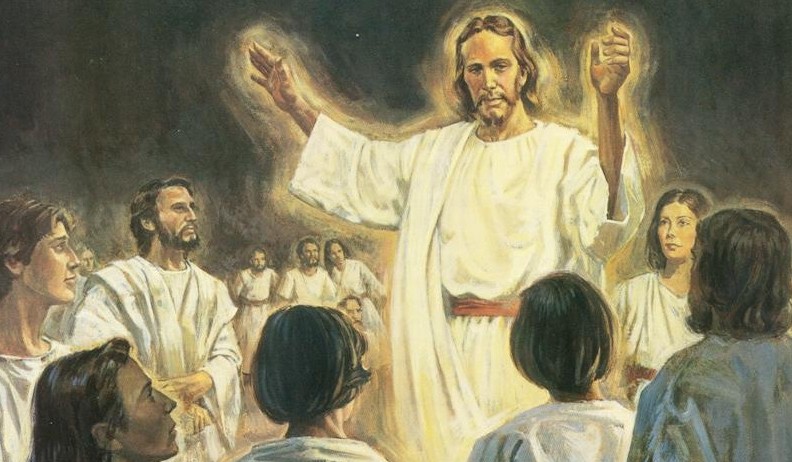
The doctrine begins with the fact that this life is not the only time in which people can hear the gospel. The Church teaches that those who die without having had an opportunity to accept the gospel can be taught in the spirit world. Doctrine and Covenants 138 describes the Savior organizing righteous spirits to preach the gospel to those in spiritual prison.
Doctrine and Covenants 138:30-32 explains that the gospel was preached to “all the spirits of men,” including those who had died without an opportunity to hear it during mortality. The Church’s teachings on the spirit world likewise explain that the gospel is taught to those who did not have an opportunity during mortality to receive it and its saving ordinances.
This is important because it means God judges people fairly. A person who has never heard about Christ is not judged in exactly the same way as someone who understood the gospel clearly and deliberately rejected it.
In fact, Doctrine and Covenants 137 gives us an extraordinary example of this principle. Joseph Smith saw his brother Alvin in the celestial kingdom, even though Alvin had died before the Restoration and before baptism was restored. The Lord explained:
“All who have died without a knowledge of this gospel, who would have received it if they had been permitted to tarry, shall be heirs of the celestial kingdom of God.”
The revelation then teaches that God will judge people according to the desires of their hearts and the opportunities they had been given.
That principle is enormously important. God knows His children perfectly. He knows what a person would have done if circumstances had been different. Someone isn’t condemned simply because of the time, place, family, culture, or circumstances into which he or she happened to be born.
But what about people who have died without accepting the gospel? Will they actually accept it when they are taught after death?
This is where some statements from Church leaders become particularly interesting.
President Wilford Woodruff expressed a very hopeful view of missionary work in the spirit world. He taught that when the gospel was preached to those who had died without receiving it, “very few, if any,” would fail to accept it.
The Church has preserved President Woodruff’s statement in its teaching materials on family history and the redemption of the dead.
That is a remarkably strong statement. It certainly gives Latter-day Saints reason to have hope for those who did not accept the gospel during mortality.
President Lorenzo Snow expressed a similar belief.
“A wonderful work is being accomplished in our temples in favor of the spirits in prison. I believe, strongly too, that when the Gospel is preached to the spirits in prison, the success attending that preaching will be far greater than that attending the preaching of our Elders in this life. I believe there will be very few indeed of those spirits who will not gladly receive the Gospel when it is carried to them. The circumstances there will be a thousand times more favorable.”
President Brigham Young likewise taught that an enormous number of people would have received and obeyed the gospel if they had been given the opportunity. He spoke of “thousands and millions” of the inhabitants of the earth who would have accepted the gospel had they been given the privilege.
These statements are fascinating because they show that the hopeful idea you have taught your children isn’t simply something someone invented recently. There is a long history of Church leaders expressing confidence that large numbers of God’s children will respond positively when they finally receive an opportunity to hear and understand the gospel.
There is, however, an important distinction we need to make. These statements from Church leaders should not be turned into a revealed percentage. President Woodruff did not say that the Lord had revealed that 99 percent of people would accept the gospel. President Snow did not establish a numerical doctrine about the celestial kingdom. They were expressing their understanding and hope concerning the response of people in the spirit world.
So we can say that Church leaders have taught very optimistically about the number of people who will accept the gospel after death, while also saying that the Lord has not revealed an exact number or percentage of His children who will ultimately inherit the celestial kingdom.
There is another important point. Being given the opportunity to accept the gospel is not the same thing as being forced to accept it.
Latter-day Saint doctrine strongly emphasizes agency. Temple ordinances performed for the dead do not force a deceased person to become a member of the Church or to accept the gospel. The ordinances make the blessings available, but the individual can still accept or reject them. That means we shouldn’t teach that everyone automatically goes to the celestial kingdom simply because temple work is eventually performed for them.
At the same time, we shouldn’t assume that someone who didn’t accept the gospel during mortality is therefore lost. The restored gospel presents a much more hopeful picture.
Jesus Christ’s Atonement reaches beyond the grave. The gospel is preached in the spirit world. Saving ordinances can be performed vicariously in temples. People retain their agency after death. And God judges His children according to the light, knowledge, opportunities, and desires of their hearts.
So, where does that leave the question your son was discussing with his missionary companions? It would not be correct to say that we know most of God’s children will enter the celestial kingdom. We haven’t been given that revelation.
But it would also be inaccurate to suggest that Latter-day Saint teachings give us no reason to believe that many people will accept the gospel after death. Quite the opposite. Presidents Wilford Woodruff, Lorenzo Snow, and Brigham Young all expressed remarkably hopeful views about how people who receive the gospel respond in the spirit world.
Perhaps the safest way to express the belief is this:
We don’t know exactly how many of God’s children will ultimately accept the gospel and inherit the celestial kingdom. But we do know that God provides every person with a fair opportunity to receive the gospel, either in this life or the next. And several Church leaders have expressed the belief that very large numbers of people will accept that opportunity when they finally receive it.
That leaves the final choice where it belongs—with each individual and with God, who knows perfectly what is in every heart.
And I think that is one of the most beautiful parts of the Restoration. We don’t have to decide ahead of time who is “too far gone.” We don’t have to assume that someone’s lack of opportunity in this life means a lack of opportunity forever.
We can trust in the Savior’s Atonement, do our part in gathering Israel and performing temple ordinances for the dead, and leave the final judgment to Jesus Christ.
We don’t know exactly how many will accept Him.
But we do know that God is mighty to save, and He has provided a way for all of His children to hear the gospel and receive its saving ordinances.
Gramps