
Question
Gramps,
How did the Giants get reintroduced into the earth after the flood mentioned in Numbers 13:32-33?
John
Answer
John,
The first thing to understand is that Latter-day Saint scripture does not say that the pre-Flood giants survived Noah’s Flood. Genesis 6:4 tells us that “there were giants in the earth in those days,” shortly before the Flood. The Book of Moses likewise describes the widespread wickedness of the people before the Flood and the destruction that followed.
According to the LDS understanding of the Flood, Noah, his family, and those with him in the ark were preserved, while the wicked inhabitants of the earth were destroyed. There is no scriptural account of a separate group of giants escaping the Flood.
So, how do we understand the giants mentioned in Numbers?
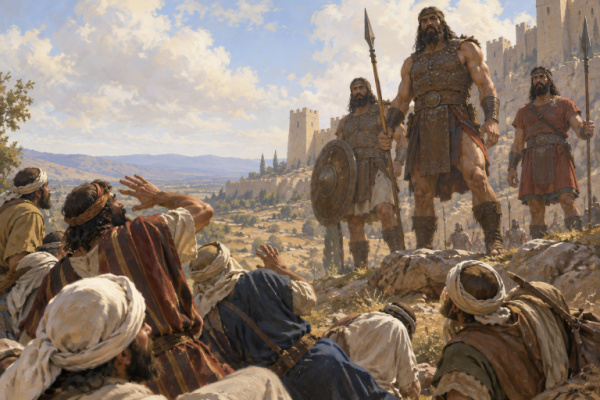
One possibility is that the word “giants” is being used to describe people who were exceptionally tall, strong, or imposing. The Israelite spies certainly viewed the inhabitants of Canaan as intimidating. They said, “We were in our own sight as grasshoppers,” which shows how small and powerless they felt in comparison.
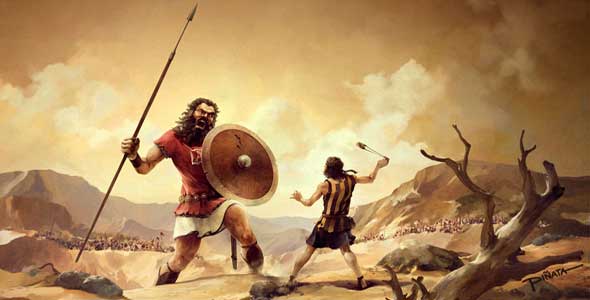
The Bible mentions several groups associated with unusually large or powerful people. The Anakim are mentioned in Numbers, Deuteronomy, and Joshua, while the Rephaim appear in several Old Testament passages. Goliath is probably the most familiar example. He lived long after the Flood and was described as an exceptionally large man, yet the Bible doesn’t say that he was descended from the pre-Flood giants.
It is also possible that characteristics associated with great physical size were passed down through Noah’s family and reappeared in later generations. From a biological standpoint, inherited physical traits can certainly reappear among descendants. However, the scriptures don’t specifically say that this happened with Noah’s family, so we shouldn’t treat that explanation as LDS doctrine.
Another possibility is that the people called “giants” in Numbers simply belonged to later populations known for their unusual height. There is no requirement in scripture that every person described as a giant had to belong to the same lineage as the giants mentioned in Genesis.
The purpose of Numbers 13 is also important. The chapter isn’t primarily trying to explain where these large people came from. Moses had sent twelve spies into Canaan to examine the land, and ten of them returned frightened by what they had seen. They focused on the strength of the inhabitants and the fortifications of their cities, while Joshua and Caleb trusted that the Lord could help Israel overcome those obstacles.
This is why the “grasshoppers” comparison is so significant. The spies weren’t simply reporting measurements. They were describing how overwhelmed they felt. The people of Canaan looked enormous compared with the Israelites, and fear led them to believe the Israelites had no chance of succeeding.
The Book of Mormon also gives us examples of people who were described as exceptionally large or powerful. In the final Jaredite battles, for example, Coriantumr and Shiz are portrayed as extraordinarily strong warriors. So Latter-day Saint scripture certainly allows for the existence of unusually large human beings without requiring that they be survivors of the pre-Flood world.
The safest conclusion, then, is that the giants in Numbers 13 were people of extraordinary size or strength who lived after the Flood, but scripture doesn’t tell us exactly how their physical characteristics arose or whether they had any connection to the pre-Flood giants.
We should also remember that the word “giants” in our English Bibles reflects ancient terminology that may not carry exactly the same meaning we give it today. It doesn’t necessarily mean that these people were a separate supernatural race. They may simply have been unusually large human beings who appeared particularly formidable to the Israelites.
So I wouldn’t say that LDS doctrine teaches that giants survived Noah’s Flood. Rather, the scriptures tell us that there were giants before the Flood and that later Israelites encountered people they described as giants. The Bible doesn’t fill in the genealogical connection between those two accounts.
And perhaps the most important part of the story isn’t actually the size of the people in Canaan. It’s the way Israel responded to them.
The ten spies looked at the giants and concluded that they couldn’t possibly succeed. Joshua and Caleb looked at the same giants but remembered the Lord’s promises. Their difference wasn’t in what they saw—it was in how they viewed it.
Sometimes the obstacles in front of us can look like giants, too. Numbers 13 reminds us that even when something appears much bigger and stronger than we are, it isn’t bigger than God.
Gramps