
Question
Gramps,
Did the Holy Ghost actually go into the body of the dove at Jesus ‘ baptism?
Jennie
Answer
Jennie,
The narrative of Jesus Christ’s birth introduces the first scriptural instance of the Holy Ghost’s involvement with the Savior’s earthly mission. As recorded in Matthew 1:18, “Now the birth of Jesus Christ was on this wise: When as his mother Mary was espoused to Joseph, before they came together, she was found with child of the Holy Ghost.” This passage affirms that the conception of Jesus was blessed and sanctified by the Holy Ghost.
Elder Bruce R. McConkie offered further insight by emphasizing the nature of this event. He clarified that while Jesus is metaphorically “found with child of the Holy Ghost,” the more accurate understanding is that Mary was found with child “by the power of the Holy Ghost.” In his words: “Just as Jesus is literally the son of Mary, so he is the personal and literal offspring of God the Eternal Father, who himself is an exalted personage having a tangible body of flesh and bones…Matthew’s statement, ‘she was found with child of the Holy Ghost,’ properly translated should say, ‘she was found with child by the power of the Holy Ghost.’”
This moment sets the stage for a broader understanding of how the Holy Ghost was indeed present and actively participating in the great events that marked Jesus Christ’s life and ministry from the very beginning.
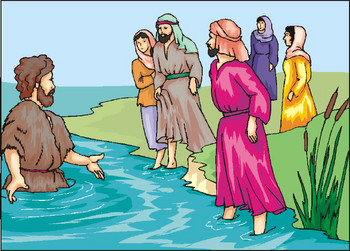
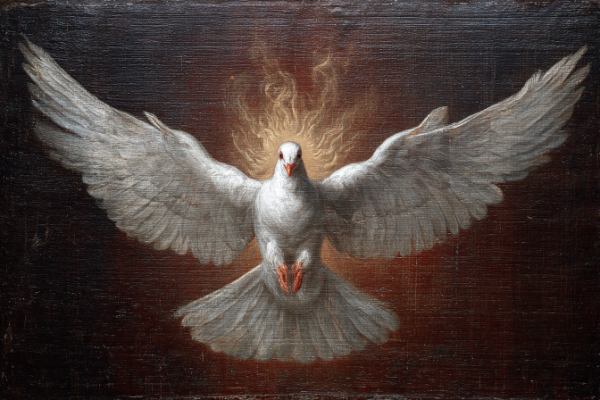
A pivotal account concerning the Holy Ghost during Christ’s ministry is found at the baptism of Jesus. Luke 3:22 records, “And the Holy Ghost descended in a bodily shape like a dove upon him, and a voice came from heaven, which said, Thou art my beloved Son; in thee I am well pleased.” This event, witnessed by many, including John the Baptist, represents a powerful public confirmation of divine approval of Jesus.
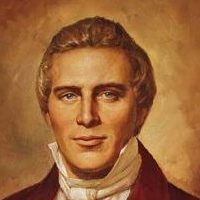
Understanding the “sign of the dove” has been a topic of doctrinal clarification. The Prophet Joseph Smith provided an important distinction: “The sign of the dove was instituted before the creation of the world, a witness for the Holy Ghost, and the devil cannot come in the sign of a dove. The Holy Ghost is a personage, and is in the form of a personage. . . . The Holy Ghost cannot be transformed into a dove, but the sign of a dove was given to John to signify the truth of the deed, as the dove is an emblem or token of truth and innocence.”
Elder Bruce R. McConkie expounded on this, noting that this symbolic act was given as a witness to the divinity of Jesus’s baptism, and that “the sign of the dove” served as a God-ordained symbol to communicate the presence and approval of the Holy Ghost to observers. As Joseph Smith emphasized, “the Holy Ghost cannot be transformed into a dove; but the sign of a dove was given to John to signify the truth of the deed.”
The sign of the dove is thus not the Holy Ghost Himself, but a visual manifestation reserved for critical occasions, allowing witnesses to recognize divine presence without misunderstanding the actual immaterial nature of the Holy Ghost. It is a symbol, a manifestation, or an effect of the Presence of the Holy Ghost. It is not the Holy Ghost itself. No more than a ray of sunlight is the sun. One can cause the other to appear. Unlike the sun and its rays, the Holy Ghost can be present without the Sign of the Dove appearing. That is reserved for when God feels it is necessary.”
The influence of the Holy Ghost did not end with Christ’s birth or baptism. The scriptural witness affirms ongoing interaction between the Savior and the Holy Ghost. Immediately after His baptism, Luke 4:1 recounts, “And Jesus being full of the Holy Ghost returned from Jordan, and was led by the Spirit into the wilderness.” This passage directly testifies that Jesus Himself, though the Son of God, received guidance and spiritual companionship from the Holy Ghost while in mortality.
Members of the Church understand this relationship as pivotal. Just as we as mortals rely on the promptings, comfort, and direction of the Holy Ghost, so did the Savior during His time on earth. This consistent companionship attests to the universality and necessity of the Spirit’s role, even for the Only Begotten Son.
The Holy Ghost was present when Christ was on the earth. In fact, Christ relied heavily on the Spirit of the Holy Ghost to guide him just as we rely on the Holy Ghost in our own lives.” The clear implication is that the Holy Ghost’s roles—Comforter, Teacher, Testifier—were all operational during Christ’s mortal life, manifest in His experiences and teachings.
Essential to understanding the Holy Ghost’s presence is grasping His spiritual nature. Doctrine and Covenants 130:22 clarifies, “The Holy Ghost has not a body of flesh and bones, but is a personage of Spirit. Were it not so, the Holy Ghost could not dwell in us.”
Because the Holy Ghost is a spirit, He is not bound by the physical limitations of a body, granting Him the ability to dwell within, inspire, and guide individuals simultaneously across the globe. As a result, while Jesus Christ and Heavenly Father possess tangible, resurrected bodies, the Holy Ghost’s lack of a body is integral to His mission—He must remain a personage of spirit to fulfill His role as universal Comforter and Testifier.
The experiences of Mary, John the Baptist, and Jesus Himself show that the Holy Ghost was actively engaged in the great events of Christ’s time on earth. Importantly, these accounts also illustrate the continuity of the Holy Ghost’s mission—to comfort, guide, and bear witness of the truth.
Just as the Holy Ghost guided and bore witness to Jesus’s divinity in mortality, he fulfills the same mission among disciples today. His influence is critical for spiritual growth, moral decision-making, and personal revelation. The manifestations experienced during Christ’s ministry assure every believer that the companionship of the Holy Ghost is both attainable and essential throughout our mortal journey.
As we study these sacred events and invite the Holy Ghost into our hearts, we strengthen our testimony that the third member of the Godhead remains as vital to our spiritual journey today as he was in the days of Jesus. Let us strive to recognize, honor, and be guided by the Holy Ghost, ever grateful for the inspiration, comfort, and witness He offers.
Gramps