

Question
Gramps,
I was told by my Bishop that I didn’t have to pay tithe off my Social Security check because I paid my tithe when I was working. I pay my tithe when I get my retirement checks on the 1st of every month. I hope you can help me with this issue.
Richard
Answer
Richard
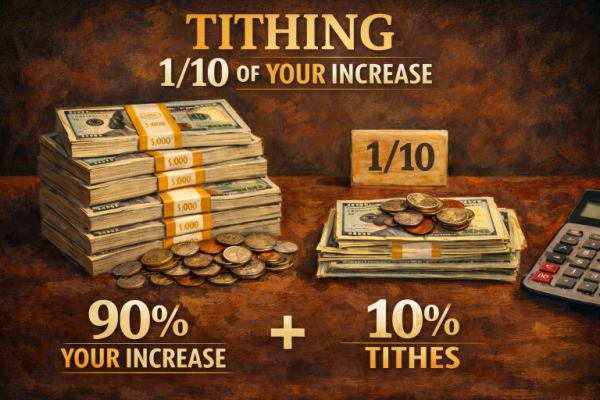
In The Church of Jesus Christ of Latter-day Saints, the foundation for tithing comes from Doctrine and Covenants 119, where the Lord defines it as “one-tenth of all their interest annually.” Over time, Church leaders have clarified that “interest” means income or an increase. But what’s really important—and sometimes overlooked—is that the Church has deliberately not created a strict, universal formula for what counts as “increase” in every situation.
One of the most helpful statements on this came from the First Presidency in 1970, during the administration of President Joseph Fielding Smith. In that letter, they wrote:
“The simplest statement we know of is the statement of the Lord himself, namely, that the members of the Church should pay ‘one-tenth of all their interest annually,’ which is understood to mean income.”
Then they added something that really shapes how we apply tithing:
“Each member of the Church is entitled to make his own decision as to what he thinks he owes the Lord and to make payment accordingly.” (First Presidency Letter, March 19, 1970).
That’s a powerful idea. It means that while the principle of tithing is fixed, the application involves personal honesty and accountability before God. The Church reinforces that same idea today in its official handbook, which teaches: “Members are responsible for determining what constitutes their increase and how they pay tithing” (General Handbook 34.4.1). So from the highest levels of Church leadership down to local instruction, the message is consistent—this is a commandment that involves personal judgment guided by the Spirit.
President Gordon B. Hinckley echoed that same principle when he said, “The Church has never given a definition of what constitutes a tithe. That is left to the individual” (Church News interview, August 1990). That may feel a little surprising at first, but it actually shows a deep level of trust. The Lord expects us to act with integrity, not just follow a rigid checklist.
When you look at Social Security through that lens, your bishop’s counsel makes a lot of sense. Social Security isn’t exactly new earnings in the way a paycheck is. It’s tied to wages you earned over many years, money that was already part of your increase at the time. If you were paying a full tithe during those working years, then one very reasonable conclusion is that you’ve already been faithful with that income. From that perspective, it wouldn’t be necessary to pay tithing on it again.
At the same time, it’s also easy to see why some members choose to continue paying tithing on their Social Security or retirement income. For them, it feels like a current increase, something they are receiving now, and they want to continue the habit of giving one-tenth as an expression of gratitude and faith. That approach also fits within the doctrine, because the Church allows for that personal determination.
Elder Dallin H. Oaks has taught principles that help strike the right balance in situations like this. In various teachings on commandments and personal responsibility, he has emphasized that we shouldn’t try to minimize what we give just to get by, but we shouldn’t feel compelled to do more than the Lord requires. There’s a middle ground of honest, thoughtful obedience, and that’s exactly where this question sits.
Even further back, President Lorenzo Snow strongly emphasized the importance of tithing as a standing law for the Saints, but his focus was on faithfulness and willingness rather than on technical calculation. That same spirit continues today. The Lord is less concerned with whether every dollar is categorized perfectly and more concerned with whether we are sincere, willing, and honest in our devotion.
So when you look at your situation, there really isn’t a “you’re doing it wrong” conclusion here. If you follow your bishop’s counsel and decide not to pay tithing on Social Security because you already paid it when you earned that income, you can honestly consider yourself a full tithe payer. That conclusion is supported by the First Presidency’s teaching, the current Church Handbook, and long-standing practice in the Church.
On the other hand, if you continue paying tithing on your retirement checks because it feels right to you spiritually, that is also a faithful and acceptable choice. It reflects a generous heart and a desire to stay consistent in your devotion. The doctrine allows for that too.
What really matters—according to all these sources—is your honesty before the Lord. That’s the common thread in everything the prophets and leaders have taught. This isn’t about finding a loophole or meeting a minimum requirement. It’s about being able to say, with a clear conscience, that you are living the law of tithing in good faith.
A simple way to approach it is to ask yourself whether you feel at peace when you declare yourself a full tithe payer. That quiet assurance is often the Spirit confirming that you’re on the right path. And based on everything you’ve shared, it’s clear that your desire is to do what’s right—not just what’s easy.
So the reassuring bottom line is this: your bishop’s guidance is doctrinally sound, your current practice is also faithful, and the decision ultimately rests between you and the Lord. With the backing of the First Presidency, modern prophets, and the Church Handbook, you can move forward with confidence, knowing you’re acting in accordance with doctrine either way.
Gramps