
Question
Gramps,
I’m not sure there is an answer, but I thought I would see if you may have additional insight regarding partaking of the sacrament as it relates to proxy baptism. Here on Earth, each Sunday we have the opportunity to renew our own baptismal covenants as we partake of the sacrament. When we perform proxy baptism in the temple for those who have passed on, do they somehow have or need the opportunity to receive the sacrament and renew covenants that were made on their behalf?
Kenny
Answer
Kenny,
When we perform proxy baptisms in the temple, we’re acting on behalf of those who have passed on without the opportunity to receive that ordinance in mortality. This idea isn’t something that appeared out of nowhere—it actually has roots in the New Testament. In the Bible, 1 Corinthians 15:29 mentions people being “baptized for the dead,” which Latter-day Saints understand as evidence that proxy ordinances were practiced among early Christians. Modern revelation builds on that foundation. In Doctrine and Covenants 128:15, we’re taught, “For we without them cannot be made perfect; neither can they without us be made perfect.” That verse captures the beautiful connection between the living and the dead—ordinances bind us together across the veil.
At the same time, one principle remains constant: nothing is forced. Every person in the spirit world still has agency. Even though a baptism is performed on their behalf, they must choose to accept it. That’s where another New Testament teaching becomes really important. In the Bible, 1 Peter 3:18–19 and 4:6 teach that Jesus Christ preached to “the spirits in prison” and that the gospel is preached to the dead. That means people beyond the veil are still learning, choosing, and responding to Christ.
So that naturally leads to your question: if someone accepts proxy baptism and enters into that covenant, what about the sacrament? Do they need some equivalent way to renew those covenants?
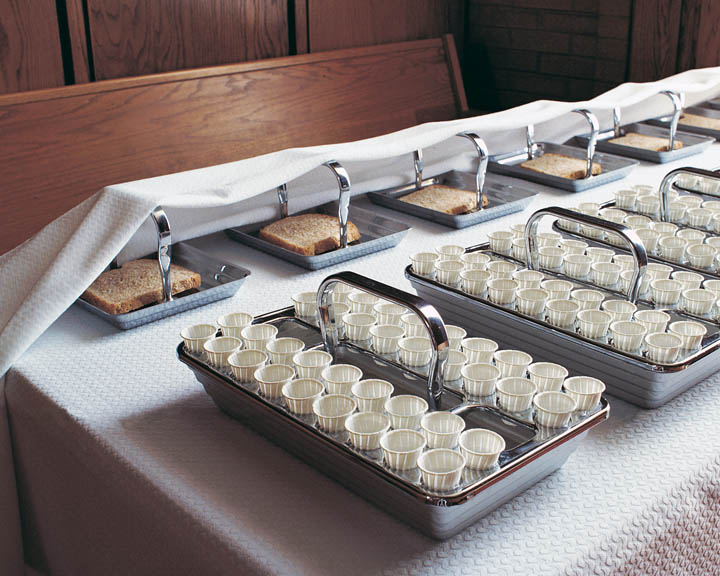
To answer that, it helps to step back and think about what the sacrament actually is. In mortality, the sacrament isn’t a saving ordinance in the same way baptism is. Instead, it’s a sacred opportunity to remember Jesus Christ, renew the covenants we’ve already made, and recommit to following Him. The sacrament prayers themselves, found in Moroni 4–5 of the Book of Mormon, make that clear. They emphasize our willingness to take upon ourselves the name of Christ, to always remember Him, and to keep His commandments.
In other words, the sacrament is less about entering a covenant and more about staying faithful to one.
Because of that, the Church hasn’t taught that there is a direct, organized equivalent of the sacrament performed in the spirit world, as temple ordinances are performed on earth. There’s no doctrine that says proxy sacrament ordinances are required or performed for the dead.
However—and this is where things get really meaningful—the principles behind the sacrament absolutely continue beyond the veil.
In the spirit world, individuals who accept the gospel are not frozen in place; they continue to grow, repent, and draw closer to Christ. Doctrine and Covenants 138:30–34 describes how the gospel is taught among the dead and how they can exercise faith and repentance. That paints a picture of ongoing progression, not a one-time decision.
And that ongoing turning to Christ is exactly what the sacrament represents for us each week.
Here in mortality, we need regular reminders. We’re forgetful, we make mistakes, and we benefit from a weekly opportunity to pause, reflect, and recommit. The sacrament helps us do that. It also comes with a promise—found in Doctrine and Covenants 20:77—that if we are willing to remember Christ and keep His commandments, “they may always have His Spirit to be with them.”
That promise is key. The ultimate purpose of the sacrament is not just the act itself—it’s the companionship of the Holy Ghost and a renewed connection to the Savior.
And God is not limited in how He offers that blessing.
Even though we don’t have evidence of sacrament meetings in the spirit world, we do have strong doctrinal support for the idea that people there continue to exercise faith, repent, and align themselves with Christ. In that sense, they are living the very thing the sacrament points us toward.
You could think of it this way: baptism and other saving ordinances require a physical body and priesthood authority on earth—that’s why we perform them by proxy. The sacrament, however, is a recurring opportunity tied specifically to mortal life, where we’re navigating weakness, temptation, and growth in a fallen world.
That idea is reinforced in Book of Mormon Alma 34:32–33, which teaches that “this life is the time… to prepare to meet God.” Mortality is a unique window where certain practices—like the weekly sacrament—play a central role in shaping us.
But God’s work doesn’t stop at death, and neither does our ability to choose Him.
So, to put it simply: there’s no specific teaching that those who accept proxy baptisms must or will receive the sacrament in the spirit world. But the purpose of the sacrament—remembering Christ, repenting, renewing commitment, and receiving His Spirit—absolutely continues.
Those who accept the gospel beyond the veil are not missing out on something essential. They are still progressing, still choosing Christ, and still drawing on His grace. The form may differ, but the relationship remains the same.
And that highlights something really reassuring about Latter-day Saint doctrine: God’s plan is both structured and merciful. He provides necessary ordinances through priesthood authority when required, and He provides every opportunity for His children to come unto Him—on either side of the veil.
At the center of it all, whether in a chapel on Sunday or in the spirit world, is the same invitation: come unto Jesus Christ, remember Him, and follow Him.
Gramps