
Question
Gramps.
Does Satan have power over things on this Earth?
Spencer
Answer
Spencer,
When considering the power of Satan, it’s important that our understanding is based on scripture and prophetic teachings. According to The Church of Jesus Christ of Latter-day Saints, all true power ultimately originates from God. Even the capacity that Satan wields is subject to God’s will, cosmic laws, and the agency of mankind.
The principal source of Satan’s power stems from his knowledge and ability to tempt, deceive, and persuade. Satan’s power comes from the fact that he has knowledge. He knows how God set things up and how people respond and react to things. The major aspect of his power that we face every day is his ability to tempt us—to slowly pull us away from God and get us doing what he wants us to do. This ability to influence through deception is the adversary’s most formidable tool.
Furthermore, Satan knows more about how things work than we do, and he is not afraid to put that knowledge to use. This is why miracles are not a sure sign that someone is of God.”Just as in ancient times, when Moses faced Egyptian magicians mimicking his miracles, Satan’s knowledge allows him to perform signs and wonders designed to deceive.
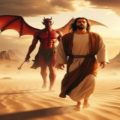
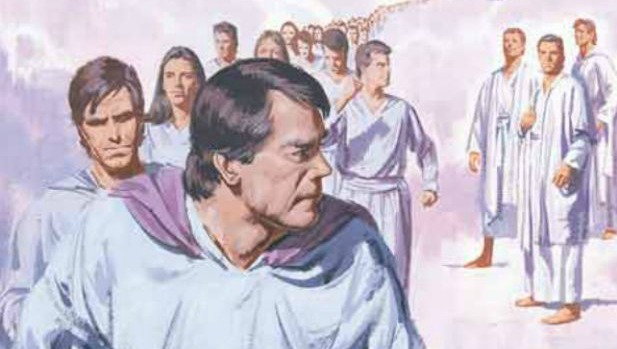
Satan—originally known as Lucifer—rebelled against Heavenly Father’s plan in the premortal existence. He sought to destroy the agency of man, waged war in heaven, and was cast out with a third part of the hosts of heaven (Moses 4:1-4; Revelation 12:7-9). The punishment for this rebellion was separation from God’s presence and denial of mortal bodies or further progression. As such, Satan and his followers became the tempters and adversaries of mankind, operating within the bounds permitted by God.
It is crucial to recognize that Satan’s power is strictly limited. As explained in the Book of Revelation, Satan does nothing except as permitted by God, and even then, his ability is curtailed—sometimes to a certain timeframe, to certain groups (such as only being able to torment the wicked), or limited in scope. God is in control and sets the adversary’s limits.
Brigham Young lamented, “I do not fully comprehend the awful power and influence Satan has upon the earth, but I understand enough to know that it is a marvel that the Latter-day Saints are so good as they are.” However, he also taught, “All the power he has over us is what we give him…”—meaning his capacity to destroy or ensnare is contingent on human consent and disobedience to God’s laws.
A fundamental tenet in Latter-day Saint theology is that “there must be opposition in all things” (2 Nephi 2:11). The very presence of Satan and his ability to tempt are critical to the plan of salvation because they enable genuine choice and growth.
Agency, or the right to choose and experience consequences, is preserved by God as a sacred principle. The entire premortal conflict hinged on this: Lucifer’s proposal would have destroyed agency, offering safety but preventing progression, while Christ accepted the Father’s plan of agency, accountability, and grace. Thus, the adversary is allowed to try and persuade, but never to force. He is bound to honor our moral agency just as Heavenly Father, otherwise… he would be much more involved in our lives than he is now physically.
Elder Richard G. Scott summarized this beautifully: “I testify that neither Satan nor any other power can weaken or destroy your growing character. Only you could do that through disobedience.” The choices we make, not the temptations offered, determine our standing before God.
For growth, spiritual strength, and eventual exaltation, facing and overcoming temptation is necessary. By being subjected to and overcoming the adversary’s influence, we gain moral strength until we can overcome all evil with righteousness. Such opposition is necessary for us to gain the moral power to overcome all evil and thus be prepared to become one with the Savior.
This explains, in part, why both the greatest evil and the greatest good may be found on this earth—Satan’s rebellion set the stage for intense opposition, but also for the arrival of the most righteous spirits and, centrally, for the atoning mission of Jesus Christ.
Satan acts primarily through:
Temptation: Subtly and persistently enticing souls to disobey God’s laws.
Deception: Manipulating truth and presenting evil as good—“the father of lies… transformeth himself nigh unto an angel of light, and stirreth up the children of men unto secret combinations of murder and all manner of secret works of darkness.”
False Miracles and Imitation: Performing signs that mimic God’s power, intended to deceive—just as Pharaoh’s magicians did, though ultimately God’s power prevails.
Spiritual and, more rarely, Physical Coercion: While most interaction is through temptation, there are rare scriptural and historical examples of more direct physical interference, such as demonic possession, or the experience Joseph Smith described before the First Vision. Even here, deliverance comes through calling upon God.
Satan’s tactics focus on eroding agency by creating addiction, mitigating the perception of consequences, clouding judgment, and encouraging rationalization through lies and philosophies of men.
Conversely, protection against the influence of the devil is found by obedience to the commandments and laws of the gospel of Jesus Christ. The faithful shall triumph over all their afflictions and enemies and shall triumph over the devil. There shall be a complete and lasting victory of righteousness over wickedness on this earth, which the power of the Lord Jesus Christ will do.
The real contest in mortality is not whether Satan is strong or cunning—he is. The question is whether we will choose Christ. As Brigham Young declared, the only power Satan has is the power to destroy… but he never can build anything; he is a cheat and a fraud, and all the power he has over us is what we give him.”
Gramps