
Question
Gramps,
What does it mean in 2 Nephi 2:21 when it says because of the transgression of their parents?
Haze
Answer
Haze,
The key is understanding the Fall of Adam and Eve and the difference between inheriting the effects of the Fall and being held responsible for our own sins.
Lehi taught his son Jacob:
“For he gave commandment unto all men that they must repent; for he showed unto all men, that they were lost, because of the transgression of their parents.” (2 Nephi 2:21)
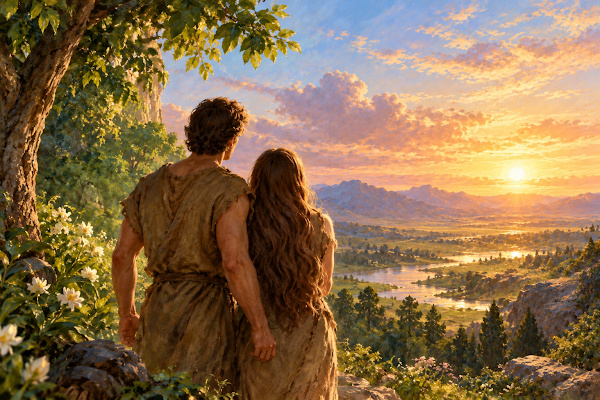
When Lehi speaks of “their parents,” he is referring to Adam and Eve, our first parents in mortality. Their decision to partake of the forbidden fruit brought about what Latter-day Saints call the Fall.
But what does it mean that we were lost because of their transgression?
According to Latter-day Saint doctrine, Adam and Eve lived in the Garden of Eden in a state of innocence. When they partook of the forbidden fruit, they were cast out of the garden and became mortal. The Fall brought two major consequences: physical death and spiritual death.
Physical death means that our bodies are subject to death. We experience aging, sickness, and eventually the separation of our spirits from our bodies. Spiritual death means separation from the presence of God. Because of the Fall, Adam and Eve left the Garden of Eden and could no longer enjoy the same direct presence of God they had experienced there.
As their descendants, we are born into this fallen condition. We live in a mortal world where suffering, temptation, sin, and death are part of the human experience.
The Church explains this in its Gospel Topics article on the Fall of Adam and Eve.
So when Lehi says we are “lost” because of our parents’ transgression, he is explaining that Adam and Eve’s choice changed the conditions under which we would all live. It does not mean that each of us personally committed Adam and Eve’s transgression, nor does it mean that God considers us condemned or unworthy of His love.
This brings us to an important question. Are we punished for Adam and Eve’s sin? The second Article of Faith gives us a very clear answer:
“We believe that men will be punished for their own sins, and not for Adam’s transgression.”
In other words, we are not held personally guilty for Adam and Eve’s choice. We do, however, inherit the mortal condition that resulted from the Fall.
Think about it this way. A child may be born into a world where illness, hardship, and death exist. The child did nothing to create those conditions, but they still affect the child’s life. Likewise, none of us chose to enter a fallen world, but we all experience the consequences of living in one.
Elder Neal A. Maxwell taught that we are not burdened with an inherited sense of original sin for which we can do nothing. His discussion of this principle is referenced in the Church’s Pearl of Great Price Student Manual, in the material accompanying Moses 6:53–54. (See page 40)
This helps us understand that being “lost” does not mean that we are personally guilty of Adam and Eve’s choice. Rather, we are born into circumstances in which we need a Savior. We are accountable for our own choices and need repentance because of our own sins, not because we were born into mortality.
If the Fall brought so many difficulties into the world, why would God allow it to happen?
Lehi answers this question a few verses later. In 2 Nephi 2:22–23, he explains that if Adam had not transgressed, Adam and Eve would have remained in the Garden of Eden, would not have had children, and would have remained in their original state of innocence.
Then Lehi gives us one of the best-known statements in the Book of Mormon:
“Adam fell that men might be; and men are, that they might have joy” (2 Nephi 2:25).
According to LDS doctrine, the Fall was part of God’s plan for our eternal progression. Mortality gives us the opportunity to receive physical bodies, have families, exercise agency, learn from our experiences, and grow spiritually.
Of course, mortality also brings heartache. People experience illness, loss, disappointment, and the consequences of other people’s choices. The gospel does not teach that these things are always easy or that we should pretend they do not hurt. But it does teach that our mortal experience is not the end of the story.
Perhaps the most important part of Lehi’s teaching is that he does not leave us without hope.
In 2 Nephi 2:26, Lehi explains that the Messiah comes to redeem the children of men from the Fall. Through Jesus Christ, all mankind will be resurrected, overcoming physical death. Through His Atonement, we can also be cleansed from our individual sins and return to God’s presence as we repent and follow Him.
This is why the Fall and the Atonement of Jesus Christ belong together in LDS theology. The Fall introduced mortality and separation from God’s presence, but Heavenly Father provided a Savior who could overcome those consequences.
Dallin H. Oaks, while President of BYU, quoted Doctrine and Covenants 18:10, reminding us: “Remember the worth of souls is great in the sight of God.”
That truth matters when we read about being “lost.” Our need for a Savior does not mean we have lost our worth in God’s eyes. We are His children, He loves us, and He provided a way for us to overcome the Fall through Jesus Christ.
When Lehi says we are lost because of our parents’ transgression, he teaches that Adam and Eve’s choice brought about the mortal conditions we all experience. We inherit the effects of the Fall, but we are not held guilty for Adam and Eve’s transgression.
We are here to learn, grow, make choices, repent when necessary, and develop faith in Jesus Christ. God does not expect us to overcome the Fall by ourselves. He knew we would need a Savior, and His plan included Jesus Christ from the beginning.
The Fall explains why mortality includes suffering, temptation, and death. The gospel of Jesus Christ explains why those things do not have to be the end of our story.
Gramps