
Question
Gramps,
Is the Apostle John (As in Peter, James, and John) and John the Beloved the same person?
David
Answer
David,
The gospels paint John, son of Zebedee, as a fisherman called to be one of Jesus Christ’s closest associates—part of the inner circle with Peter and James. The scriptural record, especially in the Gospel of John, depicts a disciple with profound spiritual sensitivity, even referring to him as “the disciple whom Jesus loved” (John 21:20). But it is after the resurrection of Christ that the uniqueness of John’s mission becomes apparent to members of The Church of Jesus Christ of Latter-day Saints.
While the other apostles sealed their testimonies with death, John—as recorded in a stunning promise from the Lord—was offered a different path. According to an early revelation received in this dispensation, John requested to remain and “bring souls” to Christ until He returns in glory—and that wish was granted (see Doctrine and Covenants 7).
Members of the Church thus hold that John has continued working on earth, yet accounts of his post-New Testament labors are rare, fueling both reverence and curiosity. What do we know about the ministry of John the Beloved after Christ’s ascension—and why do accounts of his activities remain so elusive?
Central to understanding John’s unique calling is the account found in the Restoration scriptures. In the Doctrine and Covenants, Joseph Smith revealed a translation of a parchment written by John himself, recounting his request to continue laboring on earth:
And I [John] said unto him: Lord, give unto me power over death, that I may live and bring souls unto thee… And the Lord said unto me: Verily, verily, I say unto thee, because thou desirest this thou shalt tarry until I come in my glory, and shalt prophesy before nations, kindreds, tongues and people.” (Doctrine & Covenants 7:2-4)
To “tarry” means John was changed—translated by the Lord—to remain on earth unburdened by death and physical pain until the Savior’s Second Coming. Translated beings, as defined in Latter-day Saint doctrine, are “changed in mortality so that they do not experience physical pain and whose death and resurrection will be in a ‘twinkling of the eye.”
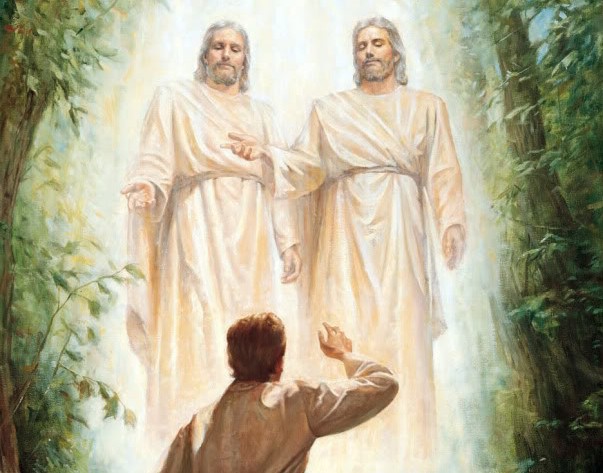
Historically, the most well-known and well-attested post-New Testament appearance of John is associated with the Restoration of the gospel in 1830. Joseph Smith and Oliver Cowdery reported that they were visited by Peter, James, and John, who ordained them to the Melchizedek Priesthood, conferring authority essential to the Church’s organization:
One highly documented sighting was when Joseph Smith and Oliver Cowdery were ordained to the Melchizedek Priesthood by Peter, James, and John. They saw him then, and the marvelous manifestations of that priesthood from that time forward represent incontrovertible evidence of the transfer of priesthood power.
It is natural to wonder why there are not more accounts of John’s post-New Testament labors. The answer, as articulated by Latter-day Saint leaders and scholars, is that John was given a specific mission by the Savior: to go among the “lost tribes of Israel” and prepare them for their eventual return.
This idea finds support in the words of the Prophet Joseph Smith, who, in 1831, declared that John was at that time with the lost tribes preparing them for their return (see History of the Church 1:176, footnote). The scriptures further foretell that the lost tribes will return “from the north countries” (see, for example, Jeremiah 3:18; 16:14-15; 23:7-8; 31:8-9; Ether 13:11; D&C 133:26-34).
A fundamental belief of the Church is the anticipated “restoration of the Ten Tribes,” referring to both a literal and spiritual return to the gospel fold and to their ancient homelands.
Aside from the momentous visitation to Joseph Smith and Oliver Cowdery, rumors and stories occasionally arise of John visiting various individuals or “stakes of Zion.” Yet, as the sources clarify, these are unconfirmed and exceedingly rare. The pattern among translated beings is deliberate obscurity; their presence is to fulfill specific divine errands rather than attract public attention.
As for whether John “goes back and forth” between heaven and earth, the doctrine of “tarrying” suggests he remains on earth, continuing his work in mortality—but translated and thus not subject to normal human frailty or death until the Lord comes. If a need arose, it is supposed that he could perform whatever the Lord desires, though the specifics are not revealed.
Tradition teaches that John wrote the Book of Revelation around A.D. 96 while on the Isle of Patmos, his advanced age made possible by his indefinite mortality. As the leader of the ancient Church’s presidency alongside Peter and James, John’s impact has been lasting, whether through scripture or his unseen ministry.
Gramps