

Question
Kia Ora Gramps.
Could you please help to understand what lesson the Lord wanted to teach Jonah about the Gourd and the Worm? I’m having trouble understanding the story. I’ve read that the Lord wanted to show Jonah that He loves all His people. How does that show through the story? What did the Lord mean in Jonah 4:10-11? Many thanks.
Tetoki
Answer
Tetoki,
The story of Jonah is one of the most familiar stories in the Old Testament. Most people remember Jonah as the prophet who was swallowed by a great fish after trying to run away from the Lord. But there is another part of his story that is just as important, and perhaps even more meaningful. It is the account of the gourd, the worm, and the lesson God wanted Jonah to understand.
In Jonah chapter 4, we learn that Jonah was upset because the Lord had decided to spare the people of Nineveh after they repented of their wickedness. Jonah had been sent to warn the people that their city would be destroyed because of their sins. However, when the people listened to his warning, humbled themselves, and turned away from their wickedness, God showed them mercy.
You would think Jonah would have been happy that an entire city had repented and been spared. Instead, he became angry. He apparently wanted to see Nineveh receive the punishment he believed it deserved.
Jonah even acknowledged why he was upset. In Jonah 4:2, he said that he knew the Lord was “a gracious God, and merciful, slow to anger, and of great kindness.” In other words, Jonah knew that God was compassionate. He simply struggled with the fact that God had extended that compassion to people he believed deserved punishment.
This is where the story of the gourd begins.
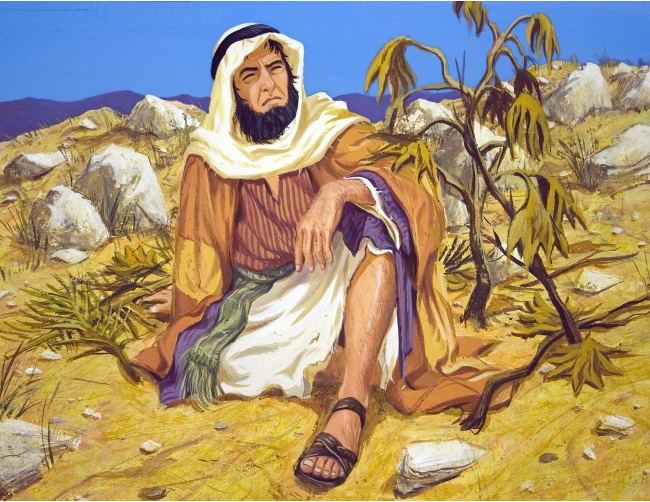
After Jonah left the city, he went outside and made himself a shelter, sitting in the shade and waiting to see what would happen to Nineveh. The Lord caused a gourd plant to grow over Jonah, providing additional shade and making him more comfortable. Jonah was very happy about the gourd. But the next morning, God prepared a worm that damaged the plant, causing it to wither. Then the Lord sent a hot east wind, and the sun beat down on Jonah until he became faint. Once again, Jonah became angry, this time because the plant had died.
The Lord then asked Jonah a question that revealed the entire purpose of the experience. In Jonah 4:10-11, the Lord explained that Jonah had felt sorrow over the gourd, even though he had done nothing to plant it or make it grow. It had appeared quickly and disappeared just as quickly. Yet Jonah was deeply concerned about losing it.
Then God asked whether He should not have compassion on Nineveh, a great city containing more than 120,000 people who did not know their right hand from their left, along with many animals.
This was the lesson God wanted Jonah to understand. If Jonah could feel so much concern over a plant that provided him with temporary comfort, shouldn’t God have even greater concern for the lives of thousands of people? The gourd represented something that benefited Jonah personally. He was happy when it provided shade, but when it disappeared, he became upset. His concern was centered on his own comfort rather than the well-being of others. God was trying to help Jonah see that His love and concern extended far beyond Jonah himself, his personal feelings, or even the people he considered worthy of mercy.
There is an important distinction here. God was not saying that wickedness didn’t matter or that people should never be held accountable for their actions. The people of Nineveh had been warned, and their repentance was an important part of why the Lord spared them. Rather, God was teaching Jonah that repentance should be met with mercy, not resentment.
This is consistent with what we learn throughout Latter-day Saint scripture. The Book of Mormon repeatedly teaches that God desires all people to come unto Him and receive the blessings of repentance. In 2 Nephi 26:33, we read that the Lord invites all people to come unto Him, and that He “denieth none that come unto him.”
God does not limit His love to a particular nation, family, culture, or group of people. His desire is for all of His children to have the opportunity to repent, change, and return to Him.
We see another example of this principle in Alma 42:15, which teaches that mercy comes because of the Atonement of Jesus Christ. God is both just and merciful. He does not overlook sin, but He has provided a way for His children to receive forgiveness through repentance and the Savior’s sacrifice.
There is also a personal lesson in Jonah’s experience that we can apply to our own lives. Sometimes we can become so focused on what we believe other people deserve that we forget how much we depend on God’s mercy ourselves. It is easy to want forgiveness for our own mistakes while struggling to extend the same understanding to someone who has hurt us or made choices we disagree with.
We might also find ourselves becoming more concerned about our own comfort, possessions, and personal circumstances than we are about the needs of people around us. Like Jonah, we can become upset when something that benefits us is taken away, while overlooking the much greater needs of others.
The story of the gourd reminds us that God’s perspective is much bigger than ours. He sees the value of every soul, even those who have made serious mistakes. He wants His children to repent, but He also wants us to develop hearts that are willing to rejoice when others receive forgiveness.
Interestingly, the Book of Jonah does not tell us whether Jonah fully accepted the lesson. The story ends with God’s question, leaving the reader to consider the answer.
Perhaps that is intentional. The question God asked Jonah is one we should consider ourselves. If God is willing to show mercy to people who repent, shouldn’t we be willing to do the same?
The lesson of the gourd and the worm is ultimately about compassion, humility, and learning to see people as God sees them. God was teaching Jonah that people are far more valuable than temporary comforts and that His love extends even to those we might struggle to forgive.
Sometimes the greatest lesson God wants us to learn is not simply how to recognize sin in others, but how to develop a heart that is more compassionate, forgiving, and loving toward them.
Gramps