
Question
Gramps,
On what will we be judged during the final judgment?
Marilyn
Answer
Marilyn,
While scripture sometimes describes the event as a grand courtroom with books opened and the Judge upon the throne (see Revelation 20:12), modern prophets and apostles have expanded this vision.
Some might wonder: if the righteous are resurrected at the dawn of the Millennium and receive a glorified body, isn’t their fate already determined? The answer is: there’s a difference between an informal, “already know” sense of where we stand spiritually and the formal, public declaration of our status—a Heavenly graduation ceremony, so to speak. Like a student who knows they’re passing but still attends the graduation and receives the diploma, so each soul will formally stand before Christ and the Father.
The Final Judgment is not immediate upon death; rather, it follows a series of events that unfold on both individual and cosmic scales. According to scripture and modern prophets, the Final Judgment follows the resurrection and occurs after the conclusion of the Millennial reign of Christ on earth. Before that time, there are several judgments or assessments—such as worthiness interviews for church opportunities, temple recommends, priesthood advancement, and an initial judgment upon entering the Spirit World at death. However, it is the Final Judgment that will assign our eternal glory or reward.
This process isn’t solely punitive or restrictive but rather revealing. Each person’s choices, growth, and repentance shape their eternal state, with the opportunity to be their truest self, forever and without pretense—since none can deceive the perfect judge.
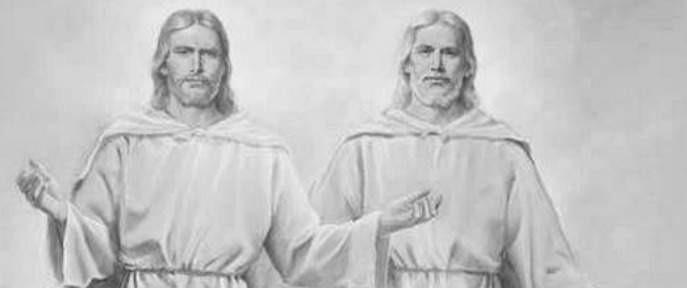
The doctrine is clear: Jesus Christ is our primary judge at the Final Judgment. He is both the Savior who pleads our cause and the divine arbiter of justice and mercy. As Doctrine and Covenants 45:3-5 affirms, Christ is the “advocate with the Father,” not only defending but recommending the faithful for everlasting life based on His atoning sacrifice. Additional scripture and prophetic teachings reveal that other servants—apostles, prophets, and even righteous followers—may serve as witnesses or judges over their respective groups (see Doctrine & Covenants 29:12; 1 Nephi 12:9-10). But the ultimate authority and verdict are Christ’s.
Central to Latter-day Saint understanding of the Final Judgment is the teaching that it will be based on three key records: the Book of Life (the heavenly record), records kept on earth, and the record engraved on the soul itself. This triad ensures both heavenly and earthly comprehensiveness and absolute fairness.
The Book of Revelation describes “books” being opened, with one called the “book of life.” All are “judged out of those things which were written in the books, according to their works” (Revelation 20:12). Joseph Smith clarified that the “book of life” is “the record which is kept in heaven” (Doctrine & Covenants 128:7). Every life, every choice, and every act is somehow inscribed in this divine ledger.
While the specifics of how or by whom these records are kept remain mysteries, the record is described as both personal and precise—nothing is omitted or forgotten unless covered by Christ’s atonement. Orson Pratt described a process where these heavenly books are compared with earthly records for accuracy, testifying before the assembled universe to the justice of the assignments given at judgment.
The “other books” mentioned in scripture represent earthly records—the sum total of our works as seen and recorded by humankind (see Doctrine & Covenants 128:7-8). These could range from official records—laws obeyed or broken, services performed, and baptismal and temple records—to the less tangible, such as journals or even social media posts.
This invites sobering self-reflection: If God were to judge us solely by our social media activity, how would we feel? These records are not the sole determinants of our fate but are substantial witnesses to our character and choices.
Perhaps the most sobering and intimate record is the one each person unknowingly keeps in their own body. Paul taught that the law is “written in their hearts, their conscience also bearing witness…” (Romans 2:15). Church leaders have expanded on this, teaching that our physical bodies become “self-registering machines,” reflecting the spiritual and moral realities of our lives:
President John Taylor observed, “man himself is a self-registering machine, his eyes, his ears, his nose…the senses of the body, are so many media whereby man lays up for himself a record.” (Pres. John Taylor, Journal of Discourses, 26:32.)
Elder Bruce R. McConkie expanded: “In a real though figurative sense, the book of life is the record of the acts…written in their own bodies. Every thought, word, and deed has an effect on the human body; all these leave their marks…” (Elder Bruce R. McConkie, Mormon Doctrine, 97.)
President Spencer W. Kimball said, “no act, good or bad; no thought, ugly or beautiful ever escapes being seen or heard. Each one will make the imprint on the individual and be recorded, to be met and paid for.” (Pres. Spencer W. Kimball, Teaching of Spencer W. Kimball, 155.)
In essence, God can “read us like a book,” seeing past outward appearances to the raw reality of our inner selves.
Latter-day Saint doctrine radically departs from notions of simple binary afterlife fates. Instead, through modern revelation (see Doctrine & Covenants 76, 1 Corinthians 15:40-41), the Church teaches that souls will receive one of three primary kingdoms of glory—Celestial, Terrestrial, or Telestial—each corresponding to one’s desires, efforts, and faithfulness.
Every soul is accounted for according to [their] works, but also according to their personal circumstances, knowledge, and opportunity. “He will judge all men, not according to the narrow, contracted notions of men, but… according to the deeds done in the body,” and, crucially, “not according to what they have not, but according to what they have,” as Joseph Smith explained. Those who lived without law will be judged without law, and those who had the law, by the law.
Historian B. H. Roberts expanded this doctrine, emphasizing that as “men differ in degree of intelligence; in the intensity of their faith; in the hardness of their obedience… there is an infinitude of states of glory, of so called rewards and punishments, in which man will live in the future.” The three primary kingdoms are likened to the sun, moon, and stars, with as much potential variation as there are stars in the sky. (History of the Church (Vol. 4)
A remarkable and merciful aspect of Latter-day Saint belief is the provision for those who, in mortality, did not have the chance to learn or accept the gospel of Jesus Christ. Rather than consigning all such to damnation, the Church proclaims that such individuals will have opportunity in the spirit world to receive the fullness of the gospel and to repent—a doctrine that stands in clear contrast to many Christian traditions. Only those who ultimately and knowingly reject Christ’s mercy with full knowledge are denied the blessings available through Him.
The experience of judgment is also viewed through the lens of a stewardship interview, wherein each is called to account for what they have done with the knowledge, resources, and responsibilities they were given. This is not a cold assessment, but the work of a Judge who “descended below all things” (Doctrine & Covenants 122:8) and who judges not only what we did, but what effort and difficulty it cost us. As such, the degree of difficulty of one’s life—be it mental illness, temptation, or circumstances beyond one’s control—will be weighed with perfect empathy.
Notably, the Church affirms that others will participate in the process, standing as witnesses and even judges. Old and New Testament prophets, Book of Mormon witnesses, and latter-day apostles may, by virtue of their revelatory stewardship, stand by as witnesses to the words and works entrusted to them.
For example, Brigham Young and later prophets have clarified that Joseph Smith—having received and revealed many of God’s commandments in this dispensation—will play a judicial role as a witness for or against those who received his teachings. This is not to supplant Christ as Judge, but to ensure that those who delivered God’s word are accounted for in the process.
One of the most profound questions is who will be judged as righteous and who as wicked. The Church teaches that only Christ sees the heart as it truly is (see 1 Samuel 16:7). Outward appearances can be deceiving—even those who appear righteous may not be, and vice versa. The standard isn’t simply church membership or outward observance, but the condition of the heart and the sum of one’s sincere efforts to do good and receive Christ.
Scripture and prophetic teaching are unanimous: the Final Judgment, like the Atonement itself, is global and eternal in scope—covering every soul to ever live on this and other worlds under Christ’s stewardship. Each will stand before the bar of God and receive a just and merciful assignment.
Sometimes people assume there is only one judgment event; however, Latter-day Saint doctrine distinguishes between intermediate or particular judgments (such as what happens at death or at the beginning of Christ’s Millennial reign) and the Final Judgment at the end of the Millennium, which determines one’s eternal state. Each is designed to administer justice and mercy at the appropriate time in God’s plan.
Most importantly, Latter-day Saint doctrine teaches that the end goal is not simply sorting but saving, not merely judging but redeeming as many as will receive Christ. Each day, our thoughts, actions, and desires help inscribe our unique story in the records of heaven, earth, and our own souls. The invitation, then, is to write a story—day by day—worthy of joy at that final accounting and of a place in the Father’s loving presence.
Gramps