
Question
Gramps,
I’ve been a member of The Church of Jesus Christ of Latter-day Saints my whole life. I have heard attacks and arguments by other Christians that have caused confusion and hurt in my heart. I love this church, and I know it is true. One of the hurtful arguments I’ve heard was that the angel Moroni was actually an evil spirit or a devil. I wish to study this further, but I would like some help answering this question: Was Moroni an angel from God? How do I explain to others?
Kason
Answer
Kason,
That is a serious accusation, especially for someone who has grown up in the Church, loves the gospel, and has a testimony of the Restoration. Hearing someone describe a messenger we believe was sent from God as an evil spirit can be confusing and hurtful. So, how do we answer that accusation? Was Moroni really an angel sent from God, and what evidence do we have to support that belief?
According to Latter-day Saint doctrine, the answer is yes. We believe Moroni was a heavenly messenger sent by God to prepare the way for the Restoration of the gospel of Jesus Christ.
To understand why, it helps to remember who Moroni was. Moroni was an ancient prophet who lived on the American continent. He was the son of Mormon, the prophet who compiled much of the record that would eventually become the Book of Mormon. Moroni lived during a time when his people had become wicked, and he eventually found himself alone as the last survivor of his people. Before his death, he completed his father’s record, added his own writings, and buried the plates in the Hill Cumorah to preserve them for future generations.
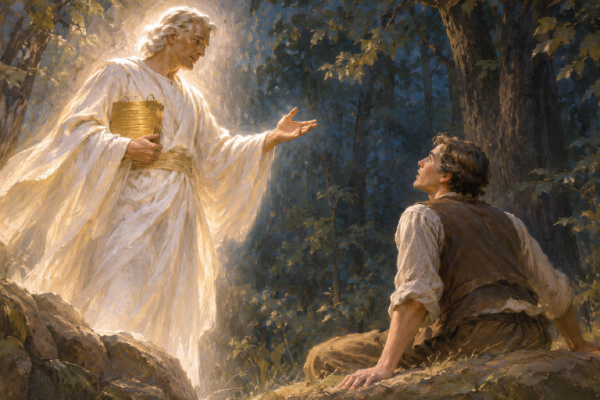
Centuries later, on September 21, 1823, Moroni appeared to Joseph Smith as an angel. Joseph recorded that Moroni introduced himself by name and explained that God had a work for Joseph to accomplish. He told Joseph about the ancient record buried in the hill and explained that it contained the fulness of the everlasting gospel. Moroni visited Joseph several times that night and returned the following morning again. Over the next several years, he continued to instruct Joseph and prepare him to receive the plates.
Joseph was very clear about the identity of this heavenly visitor. In Joseph Smith—History 1:33, he recorded:
“He called me by name, and said unto me that he was a messenger sent from the presence of God to me, and that his name was Moroni.”
Those are important words. Joseph did not describe Moroni as an unknown spirit or an evil influence. He identified him as a messenger sent from God’s presence. In Doctrine and Covenants 128:20, Joseph again referred to Moroni as an angel from heaven who declared the fulfillment of prophecy and the Book of Mormon’s coming forth.
Modern Church leaders have continued to affirm Moroni’s identity and mission. In his October 2014 General Conference address, Elder Neil L. Andersen specifically discussed Moroni’s first appearance to Joseph Smith. He explained:
“On his first visit to the Prophet Joseph Smith at age 17, an angel called Joseph by name and told him that he, Moroni, was a messenger sent from the presence of God and that God had a work for him to do.”
But perhaps one of the strongest reasons we believe Moroni was sent from God is the message he delivered. Moroni did not come to teach Joseph to worship him, follow him instead of Jesus Christ, or turn people away from God. His message centered on the Restoration of the gospel and the coming forth of another testament of Jesus Christ. The Book of Mormon repeatedly teaches about the Savior, His Atonement, His Resurrection, repentance, faith, baptism, and God’s plan of salvation.
In October 2021, Elder David A. Bednar addressed Moroni’s first visit in his General Conference talk, “With the Power of God in Great Glory.” He pointed out the significance of the message Moroni delivered:
“Significantly, the Book of Mormon was one of the first topics addressed in Moroni’s message.”
Elder Bednar continued:
“The Book of Mormon is another testament of Jesus Christ and the great tool of conversion in the latter days.”
He also explained that Moroni’s introduction of the Book of Mormon to Joseph Smith initiated the latter-day work of salvation and exaltation.
Think about that for a moment. If Moroni had been an evil spirit attempting to lead Joseph away from God, why would his message have been centered on Jesus Christ and the principles of His gospel? The title page of the Book of Mormon explains its purpose very clearly: it was written to convince Jew and Gentile that Jesus is the Christ, the Eternal God, manifesting Himself unto all nations.
Moroni also delivered the prophecy recorded in Doctrine and Covenants 2 concerning Elijah’s return and the turning of the hearts of the children to their fathers. That prophecy was later fulfilled when Elijah appeared to Joseph Smith and Oliver Cowdery in the Kirtland Temple (Doctrine and Covenants 110:13-16). Once again, Moroni’s message was connected to the work of God and the restoration of priesthood keys and temple ordinances.
Some Christians may respond that an evil spirit could pretend to teach good things in order to deceive people. The Bible itself warns us to be discerning. 2 Corinthians 11:14 teaches that Satan can transform himself into an angel of light. We should not ignore that scripture, but neither should we automatically conclude from it that every heavenly visitation is evil. The Bible also contains many accounts of angels sent by God to deliver important messages. We need to examine the message, its purpose, and its fruits rather than simply assume that a messenger must be evil because we disagree with the experience being described.
It is important, however, to understand why some Christians question Moroni’s identity. Many traditional Christians believe that the Bible contains everything necessary for our faith and that the apostolic age established the foundation of Christian revelation. Some interpret passages such as Galatians 1:8, where Paul warns against accepting a different gospel even if it is delivered by an angel from heaven, as grounds for being especially cautious about claims of additional scripture or angelic visitations. From their perspective, questioning Joseph Smith’s experience is not necessarily meant to be hurtful; it may stem from a sincere desire to protect what they believe is biblical Christianity.
As Latter-day Saints, we can respect that concern without agreeing with their conclusion. We interpret Galatians 1:8 as a warning against accepting a message that contradicts the true gospel of Jesus Christ, not as a declaration that God would never again send an angel or provide additional revelation. After all, the Bible itself records numerous occasions when God sent angels to deliver important messages. We also believe that the Lord’s work did not end with the deaths of the original apostles. Amos 3:7 teaches that the Lord reveals His secrets to His servants the prophets, and we believe that principle continues today.
There is also an important distinction between believing that an angel appeared and believing that everything someone claims about an angel must be true. Latter-day Saints do not teach that people should blindly accept every supernatural experience. We believe spiritual experiences should be examined through prayer, scripture, the guidance of the Holy Ghost, and their consistency with the teachings of Jesus Christ. We can acknowledge that another Christian approaches this question differently while explaining why our own study and testimony lead us to a different conclusion.
Jesus taught in Matthew 7:16 that we can recognize things by their fruits. Similarly, Moroni 7:12-17 teaches that good comes from God, while evil comes from the devil. When we examine the message Moroni delivered, we find an invitation to believe in Jesus Christ, repent, receive baptism, and come unto Him. We find a record that testifies of the Savior and invites people to seek a personal witness from Heavenly Father.
President Gordon B. Hinckley made a particularly meaningful connection between Moroni and the angel described in Revelation 14:6. In his October 1995 General Conference address, “Stay the Course—Keep the Faith,” he said:
“John the Revelator ‘saw another angel fly in the midst of heaven, having the everlasting gospel to preach unto them that dwell on the earth, and to every nation, and kindred, and tongue, and people’ (Rev. 14:6). That angel has come. His name is Moroni. His is a voice speaking from the dust, bringing another witness of the living reality of the Lord Jesus Christ.”
That gives us a reasonable response when someone claims Moroni was the devil. We can simply ask, “What specifically did Moroni teach that would lead someone away from Jesus Christ?” It is a fair question. Someone who does not believe in the Restoration may disagree with our understanding of the Book of Mormon, but disagreement alone does not prove that the messenger was evil.
Ultimately, we cannot force another person to accept Joseph Smith’s testimony, and we don’t need to become defensive when someone challenges our beliefs. We can explain what Joseph recorded, share the scriptures, and allow others the opportunity to study and consider the evidence for themselves.
I especially love that Moroni’s final invitation in Moroni 10:3-5 points us back to Heavenly Father. He invites us to read the record, ponder God’s mercies, and ask God in the name of Jesus Christ whether these things are true. Moroni does not ask us to accept his word without question. He encourages us to seek a witness from God.
President Thomas S. Monson also emphasized the importance of receiving our own testimony of the Book of Mormon. In a Church message about knowing the Book of Mormon is true, he taught:
“And from the pages of the Book of Mormon comes Moroni’s promise that through prayer, real intent, and faith in Christ, we may know the truth of these promises ‘by the power of the Holy Ghost’ (see Moroni 10:4–5).” “Precious Promises of the Book of Mormon“
When someone tells you that Moroni was an evil spirit, remember that you do not have to defend your faith through an argument. You can calmly explain what Joseph Smith testified, what Moroni taught, and what the Book of Mormon invites every person to do. You can also bear your testimony of what you have learned through prayer and study.
We should never be afraid of honest questions or sincere investigation. Studying difficult questions can strengthen our understanding of what we believe. At the same time, we should remember that Christians who disagree with our beliefs may be just as sincere in their love for Jesus Christ as we are. We do not have to question someone’s devotion to the Savior simply because they interpret scripture or understand revelation differently. We can respect their convictions while remaining confident in our own.
Ultimately, our testimony of Moroni should lead us to a greater testimony of Jesus Christ. We believe Moroni was an angel of God because we believe he was part of the Lord’s work of bringing forth another witness of His Son and restoring His gospel to the earth. His message was not about glorifying himself but about pointing the world toward the Savior.
We can stand firmly in our beliefs without being unkind to those who disagree. We can listen, explain, share scriptures, and bear testimony without turning a religious discussion into an argument. We may not convince everyone, but we can leave others with a better understanding of what Latter-day Saints believe and why.
For those of us who have received a personal witness of the Restoration, Moroni’s invitation in Moroni 10:3–5 remains just as meaningful today as it was when he first extended it. He invites us to seek our own witness from Heavenly Father through the Holy Ghost. And ultimately, that is where our confidence should rest: not in winning an argument, but in our relationship with God and our testimony of His Son, Jesus Christ.
Gramps