
Question
Gramps,
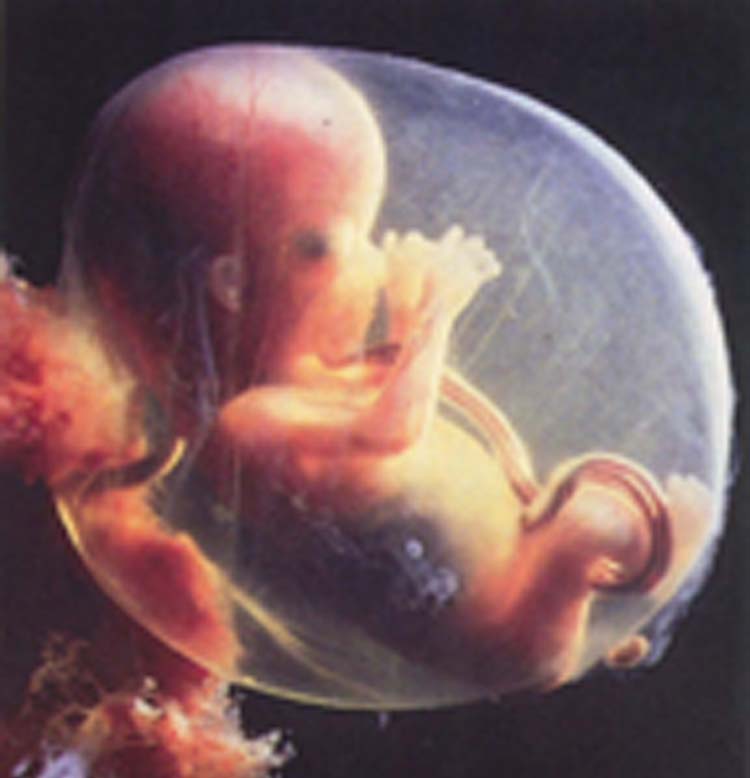
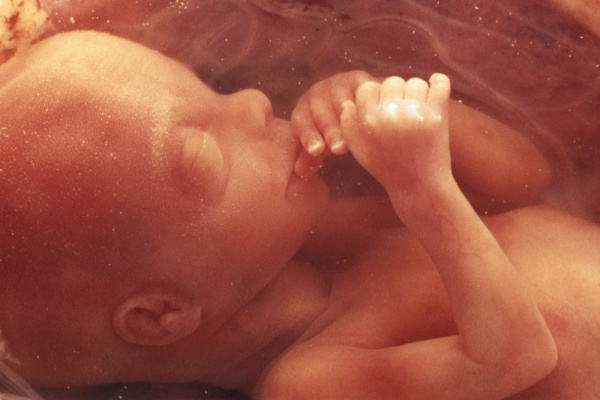
We are taught that stillborn children and children dying before the age of accountability receive exaltation in the Celestial Kingdom. What happens to the millions of children who are aborted? Must Heavenly Father redirect their spirits again for an earthly experience, or was the fetal body sufficient?
Debbie
Answer
Debbie,
I do have to say that I don’t have 100% knowledge on how it all works with babies who have been aborted. I can share what I’ve learned in researching the subject. It’s hard to answer that question without first discussing the implications of abortion itself. I would never want anyone to think that, “It’s okay to get an abortion, as that baby will get another chance, or that baby at least got a body.”
The Church asserts that our spirits existed long before we were born on earth. This pre-mortal existence is clearly referenced in passages such as Jeremiah 1:5:
Before I formed thee in the belly I knew thee; and before thou camest forth out of the womb I sanctified thee, and I ordained thee a prophet unto the nations.”
Such verses demonstrate that God knows and sets forth the destiny of His children before physical conception, indicating the infinite worth of every individual.
The principle of a spirit entering a mortal body to begin life’s journey is central to the Plan of Salvation. The process of acquiring a physical body is not arbitrary; it is the fulfillment of divine intent. This belief shows why the Church values the unborn child with profound reverence: Any person who prevents a spirit child of God from entering into mortality, or to terminate one’s mortal experience—abortion and murder—would be guilty of the grossest crimes.
Yet, with all this emphasis on the spirit’s journey, there remains a sacred silence about the *exact* moment when the spirit enters the body. The exact time that the pre-mortal spirit enters the mortal body is not specified in divine revelation. It may not be at the same time for every person. This absence of specificity is echoed by Church authorities and in recognized reference works such as the Encyclopedia of Mormonism, which confirms that no definitive doctrine has been given.
Elder Bruce R. McConkie, a prominent theologian in the Church, suggested that the spirit “enters the body at the time of quickening, months prior to the actual normal birth.” He connected this interpretation to the narrative in Luke 1:41, noting that John the Baptist “leaped” in his mother’s womb, suggesting the presence of an indwelling spirit. Even so, the Church counsels humility and caution in forming doctrinal certainties where God has not explicitly spoken.
The Church’s reverence for life flows from its understanding of God’s creative power and the eternal destiny of His children. This perspective shapes the Church’s perspective on abortion, parenthood, and the sanctity of each life, regardless of circumstances.
From the very beginning, God has placed the highest honor—and weightiest responsibility—upon the power to give life. The Law of Moses not only prohibited murder but also prescribed penalties for actions leading to the loss of unborn life. The reverence for life is further deepened by recognizing that part of the reason we value life so much is that we, in a small way, share in the ongoing creative process that began before the Earth’s foundations were formed. God guards his powers carefully, and abusing the creative powers each of us has within us is a very serious matter in his eyes.
The Church teaches that bringing children into the world is not merely a biological event, but a sacred partnership with God—a stewardship over eternal souls. Thus, willfully hindering this process without grave cause is considered a serious moral wrong. The concept is deeply tied to the belief in eternal progression: one of our main purposes in this life is to obtain a physical body. The entire purpose of our procreative abilities is to further the accomplishment of God’s will for us all … to bring our fellow brothers and sisters into the stage of life essential for eternal progression.
The Church teaches that abortion involves profound spiritual consequences. Abortion and murder are grouped together as violations of the most fundamental command against taking innocent life. However, the Church’s view is not without nuance. In cases where the mother’s life is at serious risk or in rare and tragic circumstances, the Church counsels that decisions must be made prayerfully and with input from trusted spiritual leaders and medical professionals. Even then, the seriousness of abortion as a moral question is not diminished: “Even in these [exceptional] cases, the Church gives a solemn warning that even considering an abortion in such a case must be done prayerfully and with sufficient counsel from not only doctors but Bishops as well.”
The message is clear: every potential child is known, loved, and intended by God; interfering with that process touches on sacred territory.
The principle of valuing life from its earliest stages is not a modern invention. It has roots in Christian tradition, stretching back to the time of the apostles and early theologians.
Early Christians distinguished themselves from surrounding cultures by their unique reverence for unborn life. As Tertullian, an influential early Christian writer, declared:
In our case … murder being once for all forbidden, we may not destroy even the foetus in the womb … to hinder a birth is merely a speedier man-killing; nor does it matter whether you take away a life that is born, or destroy one that is coming to the birth. That is a man which is going to be one; you have the fruit already in its seed … Now we allow that life begins with conception, because we contend that the soul also begins from conception.
Such statements reinforce that the Christian imperative to protect life, regardless of stage or circumstance, has always been a mark of discipleship. The Church of Jesus Christ of Latter-day Saints, while unique in its doctrines of pre-mortal existence, stands in continuity with these early Christians in its respect for the sacredness of every life.
Elder Neil L. Andersen spoke about cherishing life during the April 2025 General Conference session. He said:
The Church of Jesus Christ of Latter-day Saints believes in the sanctity of human life. Therefore, the Church opposes elective abortion for personal or social convenience, and counsels its members not to submit to, perform, encourage, pay for, or arrange for such abortions.
Despite the weight of tradition and modern prophetic teaching, some questions remain unanswered in mortality. The Church teaches that “there are many unanswerable questions related to the details of the spirit world and its interface with mortality…. Sometimes there is just not enough information available to answer all the questions that could come into our minds.” Humility, faith, and compassion are therefore emphasized when dealing with deeply personal and complex issues of life, death, and choice.
So to answer your question:
Even when loss occurs—through miscarriage, stillbirth, or abortion—the Church reassures its members of God’s perfect justice and mercy. All premortal spirits who have been obedient will obtain the promised reward of a physical body. No plans of men or Satan can stop the will of God from being fulfilled. My personal thought is that even a fetal body would be enough.
Gramps