

Question
Gramps,
What does it mean to build the kingdom of God on earth? Is it spreading the gospel? Is it becoming a Zion people? Or is it something else?
Debbie
Answer
Debbie,
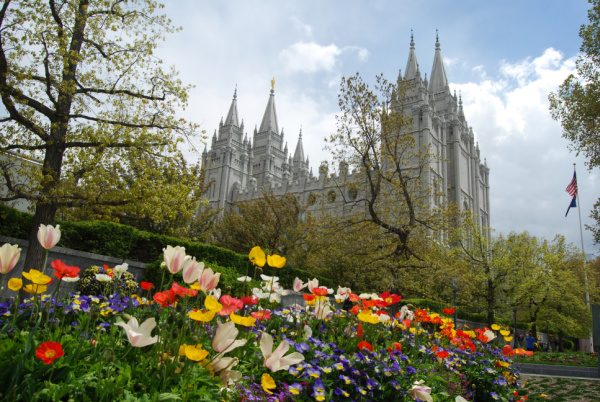
Countless times through history, humans have gazed into the vastness of the night sky and wondered: Where is the Kingdom of God? What is it like? Members of The Church of Jesus Christ of Latter-day Saints have the distinctive doctrine that the Kingdom is not merely “out there” but seeks to shape lives, families, and even societies on earth now, all the while preparing humanity for an exalted future. Latter-day Saint teachings blend awe-inspiring cosmic visions with practical daily living, combining ancient prophecy, modern revelation, and ordinances to offer a comprehensive portrait of God’s kingdom. This reality is both earthly and eternal.
Latter-day Saint doctrine teaches that the Kingdom of God is ultimately the government and order of God—a realm where His will is perfectly done, “in heaven” and eventually, “on earth as it is in heaven,” as Christ taught in the Lord’s Prayer. This Kingdom is not subject to the rise and fall of earthly nations, nor does it pass away as empires do: it is eternal and everlasting.
Joseph Smith, the founding prophet of the Church, taught that the Kingdom of God was established on earth from Adam’s time and reestablished in various dispensations through prophets such as Moses and Abraham, and in the last days, through the Restoration. Wherever there is an authorized servant of God administering sacred ordinances, there is the Kingdom of God. As one 19th-century summary expresses: “Whenever men can find out the will of God, and find an administrator legally authorized from God, there is the Kingdom of God; but where these are not, the Kingdom of God is not. All the ordinances, systems, and administrations on the earth are of no use to the children of men, unless they are ordained and authorized of God; for nothing will save a man but a legal administration; for none other will be acknowledged either by God or angels.”
Latter-day Saints have carefully distinguished between the Church and the Kingdom. The Church is the ecclesiastical body of those who have accepted the restored Gospel of Jesus Christ and participate in its ordinances and covenants. In contrast, the Kingdom, as taught by Joseph Smith and later Church leaders, encompasses the broader government of God over the entire world—a political as well as spiritual order, presided over by Jesus Christ as “King of kings.” The Church of Jesus Christ of Latter-day Saints, in its purity, is “the kingdom of God on the earth” today, with Christ acting as its head through living prophets. However, the political Kingdom of God will one day extend over the earth during the millennial reign of Christ, embracing all nationalities, faiths, and peoples willing to accept divine law.
Central to Latter-day Saint teachings is the understanding that the Kingdom of God has a mission that is both individual and universal. The Church’s purpose is “to invite all to come unto Christ, and be perfected in him” (Moroni 10:32; see also Doctrine and Covenants 20:59). In recent revelations, the Church’s divinely appointed responsibilities have been described as:
– Helping members live the gospel of Jesus Christ
– Gathering Israel through missionary work
– Caring for the poor and needy
– Enabling the salvation of the dead via temple work
This Kingdom is not founded merely for the spiritual improvement of the individual, but for the perfection and uniting of families, the redemption of ancestors, and carrying of peace, justice, and mercy to “every kindred, tongue, and people.”
A core, unique doctrine is the destiny of God’s children to become “kings and queens, priests and priestesses, unto the Most High”—words that echo repeatedly in Latter-day Saint scripture and temple rites. As expressed in Doctrine and Covenants 132:19, those who enter and keep sacred temple covenants “shall inherit thrones, kingdoms, principalities, and powers, dominions, all heights and depths…to their exaltation and glory in all things, as hath been sealed upon their heads, which glory shall be a fulness and a continuation of the seeds forever and ever.”
This is not about dominion for dominion’s sake; rather, it is linked to the divine potential of every child of God. As “spirit children” of the Father, humans inherit the capability to grow, progress, and “mature to the stature of their parent,” if faithful to the Gospel. The highest blessings of the Kingdom are received not through arbitrary appointment, but through obedience to laws, purity of heart, and completion of essential ordinances—especially those performed in the temple.
Ultimately, the Kingdom of God as established on the earth is a preparation for the return of Jesus Christ and His millennial reign. He will rule “from David’s throne” in a realm where “the increase of his dominion and peace” will have “no end” (Isaiah 9:7; see also D&C 65:2–6). Latter-day Saints look to the day “in the which the Son of Man shall come down in heaven, clothed in the brightness of his glory, to meet the kingdom of God which is set up on the earth.” Every act of temple-building, missionary work, service to others, and keeping of covenants is regarded as vital preparation for this crowning fulfillment.
How can you personally help build the Kingdom of God here on earth?
To build the Kingdom of God within the LDS faith, one must first focus on personal spiritual growth through prayer, scripture study, and righteous living. Then, you can build the kingdom at home by having family prayer and home-centered gospel study, and within the church community by serving faithfully in callings and attending meetings. You also contribute to its growth externally by sharing the gospel with others, honoring your covenants, and living a Christlike example in your community and workplace.
- Live righteously: Repent of sins and strive to live according to the Savior’s teachings and commandments.
- Pray and study: Engage in personal prayer and daily scripture study to deepen your connection with God.
- Follow the prophet: Listen to and follow the counsel of modern prophets and apostles.
- Keep covenants: Understand and live your baptismal covenants, striving to be worthy of and use your temple recommend.
- Practice family prayer and study: Hold family home evenings and conduct family prayers together.
- Teach children: Pass on eternal truths to your children and spend time with them in wholesome activities.
- Demonstrate your values by: Showing Christian values to your family and living by the fruit of the Spirit.
- Serve others: Serve faithfully in your church callings, and reach out to others in need within and outside the church.
- Share the gospel: Share the gospel with friends and neighbors to invite them to the church.
- Contribute financially: Pay a full and honest tithing and contribute to the work of the Lord.
- Be an example: Live a Christlike example at your job and in your community.
Gramps
Related Posts
 Can one who was excommunicated and restored to full membership hold leadership positions?
 Who is the British actor that portrays Christ in church videos?
 Was the idea that Blacks were less valiant in the pre-existence ever true?
 Why aren’t there more “Joe the Plumber” types called to be General Authorities?