
Question
Gramps,
What happened at Mountain Meadows?
Frank
Answer
Frank,
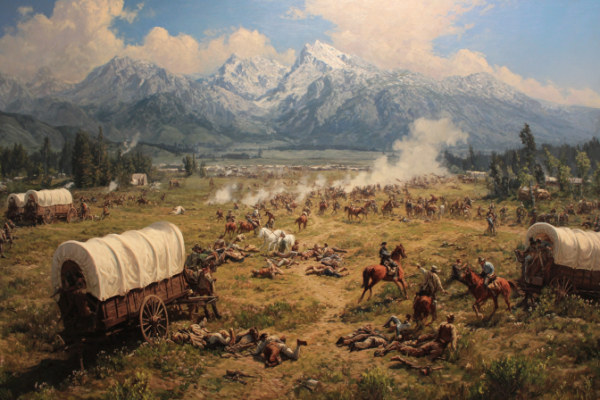
The cataclysm began in early September 1857, as the Baker-Fancher wagon train—consisting of 120–150 emigrants—paused at Mountain Meadows roughly 35 miles southwest of Cedar City, Utah. Their party was on the southern route to California, avoiding Sierra snows, but their timing could not have been worse. Southern Utah was on edge: U.S. Army troops were reportedly marching toward Utah, tensions with the federal government had reached a fever pitch, and leaders in Salt Lake City had instructed Latter-day Saints across the territory to prepare for war, store crops, and resist perceived enemies.
On September 7, John D. Lee, a local Church leader and major in the Iron County Militia, led a coalition of Latter-day Saint militiamen and Paiute Indians in an attack on the camped wagon train. The violence began with a siege, as the party huddled behind their wagons for days, desperately digging trenches for cover and running out of ammunition and water. The attackers initially disguised themselves as Indians to obscure their identity, but after several days of fighting, the militiamen realized that the emigrants had seen white men among the attackers.
On September 11, the situation shifted from a standoff to a massacre. Under a flag of truce, Lee approached the wagon train and negotiated a supposed safe surrender, promising protection if they disarmed. The surrender was a ruse: when the emigrants were separated into groups and led away, a signal was given, and the combined militia and Paiute force fell upon the unarmed party, killing men, women, and most children. Only 17 young children were spared and taken in by local Latter-day Saints families before their eventual return to Arkansas.
The horror of the massacre shocked many in Utah and beyond. When the news reached Utah settlements, the reaction among the Latter-day Saints was one of horror and disgust. None would condone the massacre, and even its perpetrators wept. However, suspicion immediately fell on Latter-day Saints, particularly as reports filtered back to the East of white involvement and cover-up efforts. Investigations followed, but bringing the responsible parties to justice would prove elusive for decades, with only John D. Lee eventually tried, convicted, and executed in 1877.
The massacre did not arise in a vacuum. Years of persecution and violence against the Church in Missouri and Illinois left deep scars and fostered a siege mentality among Utah’s Latter-day Saints. In 1857, as tensions with the U.S. government boiled over into the so-called Utah War, Church leaders gave fiery sermons calling for resistance to federal oppression and for defending the faith “until there is not a drop of blood in my veins.” Rhetoric sometimes invoked the idea of “blood atonement” for those viewed as enemies of the Church, further escalating fears and hardening hearts.
Rumors abounded that some among the Baker-Fancher party had boasted of killing Joseph and Hyrum Smith, or had poisoned wells and animals along the route—accusations now viewed with skepticism, but which inflamed local fears at the time. The Church’s advice to refrain from selling food to outsiders created tensions with emigrant parties, already desperate for supplies.
Why did a botched assault transform into a calculated slaughter of nearly an entire wagon train, sparing only the tiniest children? Key testimony at John D. Lee’s second trial sheds light on the rationale presented by the perpetrators: The emigrant party’s members had recognized white participants in the attacks, making it impossible to conceal Mormon involvement. As one militia member recalled, “It seemed to become necessary to kill all to silence the rest … to decide what to do in the dilemma.” Jacob Hamblin, another witness, testified that the massacre was carried out “to cover up Mormon involvement in the violence that had broken out between the two groups.”
Once it was known that the perpetrators were not just Paiutes but included settlers serving in the Church-led Iron County Militia, local leaders such as Isaac C. Haight and Major John M. Higbee orchestrated an elaborate scheme of a feigned surrender in order to annihilate all those who could testify to their identities.
The militia’s role was explicit and highly organized. Isaac C. Haight (the stake president and mayor of Cedar City) directed John D. Lee and other militia to initiate the attack, then escalated efforts as the siege dragged on and evidence of their involvement became evident. Affidavits and later confessions describe councils in Cedar City and Parowan where local leaders voted—sometimes reluctantly—for the massacre. Approximately 50 to 70 militia members participated directly.
Though Paiute Indians took part in both the siege and the slaughter, modern scholarship, as well as Paiute oral history, contend that the local Latter-day Saint militia orchestrated and commanded the event.
The most direct responsibility lies with members and leaders of the Iron County Militia: William H. Dame, Isaac C. Haight, John M. Higbee, and John D. Lee were all indicted for their roles in planning, ordering, and executing the massacre. Lee, who led the initial attack, feigned negotiations and personally participated in the final slaughter, was the only individual successfully prosecuted. Others, such as Haight, Dame, and Higbee, evaded capture or prosecution for years and were never convicted in a court of law.
Some broader complicity falls on the communities of Cedar City, Parowan, and other settlements whose leaders participated in council decisions, marshaled militia units, or, in some cases, provided quarter to survivors.
Contemporary reports—including affidavits by participants and later statements by Native American leaders—differ on the extent of Paiute Indian involvement. Most historians agree they participated as allies in the massacre but were neither its main instigators nor its primary commanders. Modern Paiute accounts, however, assert little if any involvement, contending the focus on Indian participation served to obscure white responsibility.
Central to the enduring controversy is the question: Was Brigham Young, then president of the Church and governor of Utah territory, directly or indirectly responsible? At the time, and in some later histories, accusations abounded that he ordered or implicitly sanctioned the massacre. William Bishop, Lee’s defense attorney, famously accused Young of controlling affairs in Utah so absolutely that “his word was law” and implying that any acts by Church members ultimately redounded to him.
However, the preponderance of historical evidence points the other way. On September 10, 1857—one day before the massacre—Brigham Young sent a letter to Isaac C. Haight instructing local leaders: “You must not meddle with them. The Indians we expect will do as they please, but you should try and preserve good feelings with them.” No direct evidence has surfaced showing Young’s involvement in the planning or ordering of the massacre. In subsequent statements and depositions under oath, Young repeatedly denied any prior knowledge or approval, stating, “The horrifying event transpired without my knowledge … and the recurring thought of it ever causes a shudder in my feelings.”
It is true that Young’s inflammatory rhetoric, combined role as ecclesiastical and civil leader, and siege mentality created an environment where local leaders may have felt empowered or pressured to “act on behalf of the kingdom.” But actual responsibility for planning and carrying out the massacre rests with Iron County Militia leaders, who made critical decisions in the isolation and confusion of southern Utah, often in direct opposition to Young’s specific instructions for restraint.
Some within the local councils opposed the original attack, with a few urging that Brigham Young be consulted further. James Haslam, a messenger, was indeed dispatched to Salt Lake City, but his return came after the massacre’s tragic outcome.
After the massacre, a combination of silence, collusion, and fear prevented legal accountability for most perpetrators. Only John D. Lee was executed—his second trial resulted in a conviction, and he was shot by a firing squad near the massacre site in 1877. In his final words, he declared himself “a victim … sacrificed to satisfy vindictive feelings.” Other indicted men, including Dame, Haight, and Higbee, went into hiding or were never brought properly to trial.
In subsequent years, the Church has issued public apologies and acknowledged the tragedy and suffering caused by the massacre. Official histories now recognize that local leaders, not Brigham Young or top Church leadership, orchestrated and perpetrated the atrocity. The Church has also formally stated that the Paiute people were unfairly burdened with the principal blame, correcting decades of misattributions.
Despite these efforts, public suspicion and accusations have, at times, lingered—not least because of the unique overlap between Church ecclesiastical and civic authority on the Utah frontier. The massacre remains seared into the American memory as a horror, but also as an important warning about zealotry, unchecked authority, and the consequences of dehumanizing outsiders.
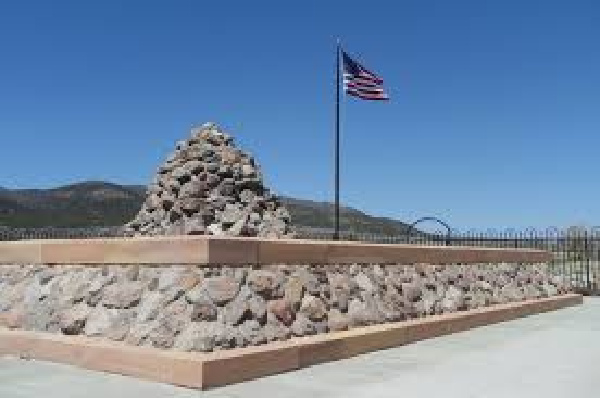
Over time, the descendants of both victims and participants have worked toward reconciliation. In 1990, a memorial was dedicated at Mountain Meadows by descendants of both the victims and the perpetrators, symbolizing healing and unity. The massacre site remains sacred ground—a place both for solemn remembrance and for acknowledgment of painful history.
By confronting and understanding tragedies like the Mountain Meadows Massacre, both members of the Church and the wider world can honor the memory of the innocent, seek truth, and commit to peace. Remembering the massacre is not only a warning of past sin, but also an invitation to individual and collective accountability, healing, and reconciliation.
Facts and quotes taken from:
The Mountain Meadows Massacre (Research)
Gramps