

Question
Gramps,
What is happening in 2 Nephi 14:1 and what does it mean?
Sally
Answer
Sally,
To fully understand the meaning of 2 Nephi 14:1, it is essential to consider the context in which it was written. The verse is part of a larger discourse that Nephi, a prophet in the Book of Mormon, attributes to Isaiah. This discourse reflects the challenges faced by the people of Israel during a time of great upheaval and moral decline. In the chapters leading up to 2 Nephi 14, Nephi quotes Isaiah’s prophecies concerning the fate of Jerusalem and the surrounding nations, emphasizing themes of judgment, destruction, and eventual restoration.
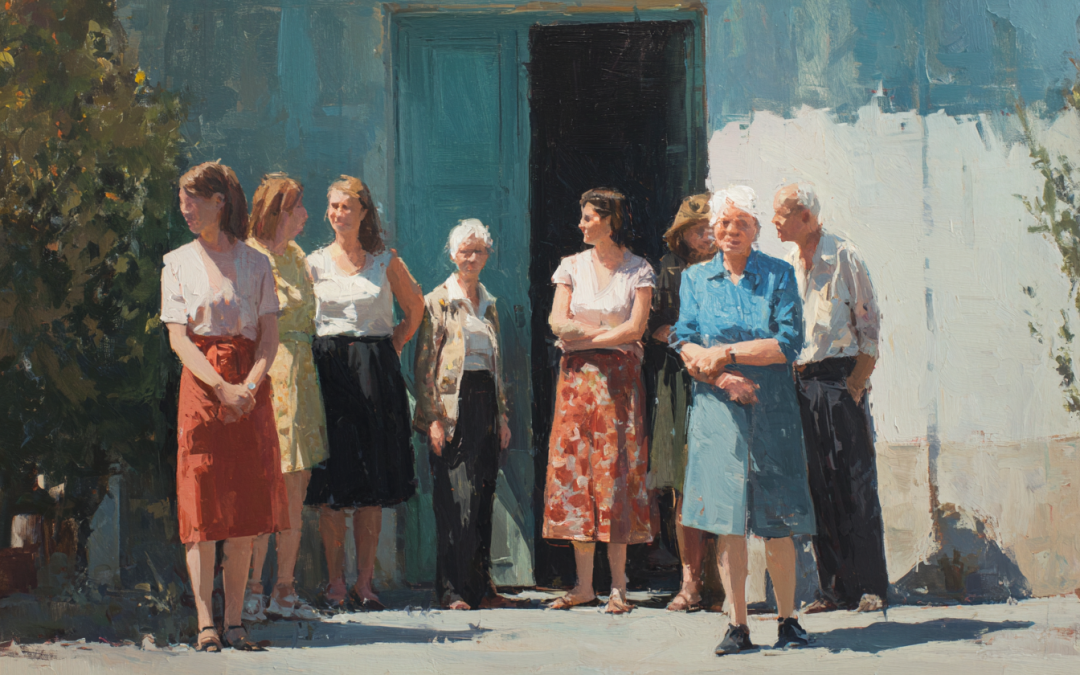
The historical background of Isaiah’s prophecies is critical to understanding the significance of 2 Nephi 14:1. During Isaiah’s time, the Kingdom of Judah was facing threats from powerful empires, including Assyria. The social fabric of society was fraying, and many men were falling in battle, leading to a demographic imbalance. Isaiah 3:25 states, “Thy men shall fall by the sword, and thy mighty in the war” [1]. This context sets the stage for the imagery used in 2 Nephi 14:1, where the scarcity of men leads to a desperate situation for women.
The phrase “in that day” in 2 Nephi 14:1 refers to a future time of great distress and upheaval, often interpreted as a period of judgment and tribulation. This prophetic day is characterized by societal chaos, where traditional roles and norms are upended. The imagery of seven women clinging to one man symbolizes the desperation of women in a society where men are scarce, highlighting the breakdown of social order and the need for stability and protection.
The phrase “seven women shall take hold of one man” is rich in symbolism and meaning. It reflects not only the dire circumstances of the time but also the cultural and societal implications of such a scenario.
So many men will be killed in the destruction and wars that accompany the Second Coming that there will be an incredible difference in the number of living males and females. The culture of Isaiah, understandably, is reflected in his prophecies in the statement, ‘only let us be called by thy name to take away our reproach.’ Anciently, a woman who could have no children was described with the unflattering adjective, “barren.” This was because great emphasis was placed on marriage and a woman’s ability to have children.
“…’seven women’ (meaning simply a lot of women) will request a man’s hand in marriage. Economic problems will be such that these women will be willing to provide their own food and clothing, contrary to the usual marriage customs. According to the Hebrew scriptures (Exodus 21:10), a man was required to provide a wife with food and clothing; but in this case Isaiah observes that the women are willing to waive that right. Having a good knowledge of the importance of marriage, they request a man to take away their reproach. In Isaiah’s day and, indeed, in many parts of the Near East today, it was and is a disgrace to remain unmarried.” (Book of Mormon compendium, by Sidney Sperry, chapter 11, 2 Nephi14)
President Wilford Woodruff also had this to say regarding this:
I had been reading the revelations…[when] a strange stupor came over me and I recognized that I was in the Tabernacle at Ogden. I arose to speak and said…I will answer you right here what is coming to pass shortly….I then looked in all directions…and I found the same mourning in every place throughout the Land. It seemed as though I was above the earth, looking down to it as I passed along on my way east and I saw the roads full of people principally women with just what they could carry in bundles on their backs…It was remarkable to me that there were so few men among them…Wherever I went I saw…scenes of horror and desolation rapine and death…death and destruction everywhere. I cannot paint in words the horror that seemed to encompass me around. It was beyond description or thought of man to conceive. I supposed that this was the End but I was here given to understand, that the same horrors were being enacted all over the country…Then a voice said ‘Now shall come to pass that which was spoken by Isaiah the Prophet That seven women shall take hold of one man…'(Journal of Wilford Woodruff, June 15, 1878 as taken from Isaiah: Prophet, Seer, and Poet, by Victor L. Ludlow, p. 109)
In times of crisis, traditional gender roles can shift dramatically. The verse illustrates a scenario where women, typically seen as dependent on men for protection and provision, are forced to take on a more assertive role. They express a willingness to provide for themselves, stating, “We will eat our own bread and wear our own apparel.” This shift can be interpreted as a commentary on the resilience and adaptability of women in the face of adversity.
However, it also raises questions about the nature of relationships and societal expectations. The desire of the women to be called by the man’s name indicates a longing for social legitimacy and protection, even as they assert their independence. This reflects the complexities of gender dynamics, particularly in times of societal upheaval.
From a theological perspective, the verse serves as a reminder of the fragility of human society and the need for divine intervention. The scarcity of men and the ensuing desperation of women can be seen as a metaphor for spiritual desolation. In the face of such turmoil, the hope for restoration is found in the subsequent verses of Isaiah, which speak of the “branch of the Lord” and the promise of a holy remnant. This hope is crucial for understanding the overall message of Isaiah and, by extension, 2 Nephi 14:1.
While 2 Nephi 14:1 paints a bleak picture of societal collapse, it is essential to recognize the hope that follows in the prophetic narrative. Immediately after this verse, Isaiah speaks of a future restoration, where those who remain in Zion will be called holy and will experience the blessings of the Lord. This theme of hope amidst despair is a recurring motif in the scriptures, reminding readers that even in the darkest times, there is a promise of redemption and renewal.
Zion, in the context of Isaiah’s prophecies, represents a place of safety, peace, and divine favor. The call to “stay close to the Stakes of Zion” serves as a reminder for individuals to seek refuge in their faith and community during turbulent times.
Gramps
Related Posts
 Why are the biblical passages cited in the Book of Mormon essentially identical with those in the Bible?
 What evidence is there that steel was used on the American continent during Book of Mormon times?
 How do I best prepare myself for the return of my missionary boyfriend?
 According to the Book of Mormon, when did the Lamanites skin turn a dark color?