
Question
Gramps,
Abraham was told he was among the noble. Who are the noble spirits? How do we know if we are among the noble?
Shasta
Answer
Shasta,
One of the most fascinating passages in scripture is found in the Book of Abraham. Before Abraham was born, the Lord showed him a vision of the premortal life. In that vision, Abraham saw countless spirits and learned something remarkable about some of them.
The Lord said:
22 Now the Lord had shown unto me, Abraham, the intelligences that were organized before the world was; and among all these there were many of the noble and great ones;
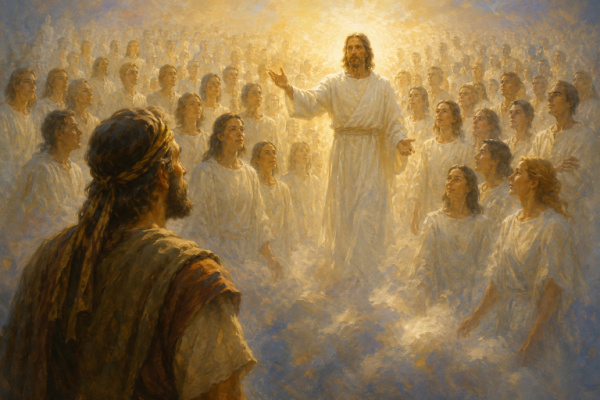
23 And God saw these souls that they were good, and he stood in the midst of them, and he said: These I will make my rulers; for he stood among those that were spirits, and he saw that they were good; and he said unto me: Abraham, thou art one of them; thou wast chosen before thou wast born. (Abraham 3:22-23)
This raises two common questions. Who are these “noble and great ones”? And how do we know if we are among them?
The scriptures teach that the “noble and great ones” were spirits who distinguished themselves in the premortal life. Although we are not told exactly what made them noble, they had demonstrated faithfulness and righteousness before coming to earth. Because of that faithfulness, some were foreordained to fulfill important responsibilities during mortality.
Abraham was one of them. The prophet Jeremiah was another. The Lord told Jeremiah:
Before I formed thee in the belly I knew thee; and before thou camest forth out of the womb I sanctified thee, and I ordained thee a prophet unto the nations. (Jeremiah 1:5)
Neither Abraham nor Jeremiah was guaranteed success simply because they were foreordained. They still had to exercise faith, repent, and remain true throughout their lives.
The Prophet Joseph Smith taught:
“Every man who has a calling to minister to the inhabitants of the world was ordained to that very purpose in the Grand Council of heaven before this world was.” (History of the Church, 6:364; also published in Teachings of the Prophet Joseph Smith, p. 365.)
The restored gospel makes an important distinction between foreordination and predestination. Foreordination is an opportunity—not a guarantee.
That means Abraham still had to choose faithfulness throughout his life. The same is true for every one of us.
Elder Steven R. Bangerter taught during the April 2024 General Conference:
“Foreordination does not guarantee that you will receive certain callings or responsibilities. These blessings and opportunities come in this life as a result of your righteous exercise of agency, just as your foreordination in your premortal life came as a result of righteousness.” (Foreordained to Serve)
The Church also reminds us:
“The doctrine of foreordination applies to all members of the Church, not just to the Savior and His prophets.”
That means every disciple of Jesus Christ came to earth with divine gifts, opportunities, and a purpose. While our foreordination may differ from person to person, each of us has been given opportunities to help build the Lord’s kingdom.
So how do we know if we were among the “noble and great ones”? The honest answer is that most of us simply do not know.
The Lord revealed Abraham’s premortal identity because it was directly connected to his mission. Jeremiah received a similar revelation because it related to his prophetic calling.
For most members of the Church, the Lord has not revealed whether they were specifically among those described in Abraham’s vision.
Some patriarchal blessings mention premortal faithfulness or foreordination, while many do not. A patriarchal blessing is personal revelation, but it is not intended to tell us everything about our premortal life.
The good news is that the Lord can help us understand His purposes for us. Elder Steven R. Bangerter taught:
“As you seek to know and do the will of God, He will reveal your divine potential and the work He would have you do.”
That doesn’t necessarily mean the Lord will tell us whether we were specifically among the “noble and great ones.” More often than not, He reveals what we need to know as we faithfully seek His guidance. Through personal revelation, our patriarchal blessings, the gift of the Holy Ghost, and opportunities to serve, He gradually helps us discover our divine identity and purpose.
Doctrine and Covenants 121:34 reminds us:
Behold, there are many called, but few are chosen.
Every one of us has agency. Every one of us must choose whether to follow Jesus Christ regardless of what opportunities may have been prepared for us before birth.
Elder Bangerter also quoted President Russell M. Nelson, who said to the youth of the Church:
“Our Heavenly Father has reserved many of His most noble spirits—perhaps, I might say, His finest team—for this final phase. Those noble spirits, those finest players, those heroes, are you.” (Worldwide Youth Devotional, “Hope of Israel,” June 3, 2018)
President Nelson’s statement was intended to inspire Latter-day Saints to recognize the sacred privilege and responsibility of living during the gathering of Israel. While it suggests that many faithful spirits have been reserved for the latter days, it does not mean we should speculate about our premortal status or compare ourselves with others. Instead, it should motivate us to live in a way worthy of the opportunities the Lord has given us.
President Russell M. Nelson has also taught:
“The Lord loves effort because effort brings rewards that can’t come without it.” (Accomplishing the Impossible: What God Does, What We Can Do)
Whether we were among the noble and great ones in Abraham’s vision is far less important than whether we are striving to become noble disciples of Jesus Christ today.
Every day we keep our covenants, repent, serve others, study the scriptures, and follow the Savior, we are becoming the kind of sons and daughters our Heavenly Father desires us to become.
One day, perhaps after this life, we may learn more about our premortal experiences. Until then, the Lord has given us everything we need to know. He knows us. He loves us. He prepared us for mortality, and He invites each of us to fulfill our divine potential.
In the end, the best evidence that we have a noble heritage is not that someone tells us we were noble before birth. It is that we faithfully choose Jesus Christ today.
That is what truly makes a person noble.
Gramps