

Question
Gramps,
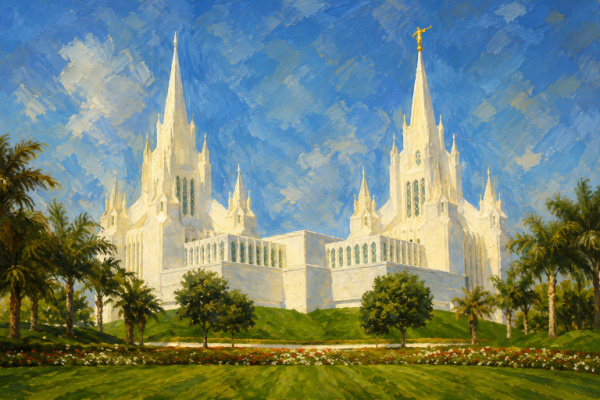
I have a wife who attends church to support me. She has a huge issue about millions of dollars being spent on the building of each new temple in light that this money could feed and care for so many. Why does the Mormon church feel the necessity to put so much money into building each temple, rather than more modest costs and facilities to accomplish the same thing?
David
Answer
David,
It’s a fair question. After all, temples can cost millions of dollars to build, and the Church continues to announce new ones around the world. To someone unfamiliar with Latter-day Saint beliefs, it can seem like an enormous investment in buildings that aren’t open to the general public.
The answer comes down to what Latter-day Saints believe temples are and why they exist.
Latter-day Saints believe a temple is much more than a church building. Meetinghouses are where members gather every Sunday for worship, but temples are considered the Lord’s house—a sacred place set apart for making covenants with God and receiving ordinances believed to be necessary for eternal life.
The Lord declared in a revelation to Joseph Smith:
“Organize yourselves; prepare every needful thing; and establish a house, even a house of prayer, a house of fasting, a house of faith, a house of learning, a house of glory, a house of order, a house of God.” Doctrine and Covenants 88:119
Later He gave another command:
“Build a house to my name, for the Most High to dwell therein.” Doctrine and Covenants 124:27
To Latter-day Saints, these aren’t simply suggestions. They are commandments. Building temples is viewed as part of the Lord’s work on the earth.
Unlike many religious buildings that are primarily designed for weekly worship services, temples are dedicated to sacred ordinances.
These include:
- Endowments
- Eternal marriages (sealings)
- Baptisms for deceased ancestors
- Other ordinances performed by proxy for those who have died without the opportunity to receive them during mortality
Members believe these ordinances have eternal significance. They are not seen as symbolic traditions but as sacred covenants that help prepare people to return to God’s presence.
President Russell M. Nelson has taught:
“Everything we believe and every promise God has made to His covenant people come together in the temple.” (The Temple and Your Spiritual Foundation)
Because temples are believed to bless generations of families, Latter-day Saints see them as long-term investments in eternal blessings rather than simply construction projects.
Another reason temples cost more than ordinary buildings is that they are intended to serve for many decades, often well over a century.
Many temples are built with durable stone, high-quality craftsmanship, and materials chosen to withstand the test of time rather than requiring frequent replacement. While each temple is unique, the goal is generally to create a beautiful, reverent environment worthy of its sacred purpose.
This follows a biblical pattern.
When Solomon built the temple in Jerusalem, enormous resources were devoted to its construction. The Old Testament describes precious metals, costly wood, finely crafted artwork, and skilled labor being used throughout the building (see 1 Kings chapters 5–8).
Latter-day Saints don’t believe beauty is extravagant when it honors God. Instead, they see it as an expression of reverence.
Sometimes people assume that money spent on temples comes at the expense of humanitarian aid. According to the Church, that isn’t the case.
The Church regularly reports its humanitarian and welfare efforts around the world. These include:
- Disaster relief
- Food assistance
- Clean water projects
- Refugee support
- Wheelchairs and medical supplies
- Education programs
- Employment assistance
- Bishops’ storehouses and welfare farms
- Fast offering assistance for members and others in need
In recent years, the Church has reported providing billions of dollars in humanitarian assistance and helping millions of people worldwide through thousands of charitable projects.
The Church sees these efforts and temple construction as complementary rather than competing priorities. One addresses physical needs, while the other addresses what members believe are eternal spiritual needs.
You can read more about the Church’s humanitarian efforts here:
Another common misconception is that governments or outside organizations pay for temples. Temples are funded by the Church, primarily through voluntary tithes and offerings from faithful members worldwide.
Latter-day Saints believe tithing is a commandment found throughout scripture.
The Lord said:
“Bring ye all the tithes into the storehouse… and prove me now herewith.” Malachi 3:10
Modern revelation likewise teaches:
“This shall be the beginning of the tithing of my people.” Doctrine and Covenants 119:4
Church leaders have repeatedly taught that tithing funds are used carefully to accomplish the Lord’s work, including the building and maintenance of temples and meetinghouses, missionary work, education, and other Church purposes.
For much of Church history, members often traveled hundreds—or even thousands—of miles to reach the nearest temple. Some saved money for years just to make one trip.
Today, Church leaders are working to bring temples closer to members worldwide.
President Russell M. Nelson has explained:
“We want to bring temples closer to the expanding membership of the Church.” (Let Us All Press On)
Having more temples means more members can participate in temple worship without spending days traveling or incurring significant expense.
For members living in developing countries or on islands, a nearby temple can make a tremendous difference.
Ultimately, the question isn’t really about money. It’s about priorities.
If temples are simply impressive religious buildings, then spending millions of dollars on them probably seems unnecessary.
But if they truly are houses of the Lord where sacred covenants unite families eternally and provide saving ordinances for both the living and the dead, then investing in temples makes perfect sense from an LDS perspective.
Latter-day Saints believe Jesus Christ is at the center of temple worship. Everything done there points people to Him, His Atonement, and the covenants that allow individuals and families to receive eternal blessings.
That belief explains why the Church continues to build temples across the world. Members don’t see them as monuments to wealth but as sacred places where people can draw closer to God.
For Latter-day Saints, temples represent one of the greatest investments the Church can make—not because of the buildings themselves, but because of what they believe happens inside them.
Gramps