
Question
Gramps,
I have read somewhere that there has always been a Melchizedek Priesthood holder on the Earth. This makes partial sense to me and helps explain how Lehi apparently had this priesthood. It seems likely that this has been true for much of history, but there are still gaps. Oh, wait, I just figured it out with the Jaredites and the Nephites! I’d still like to know more about this and how priesthood keys fit in, as they still had to be restored, even though John and the Three Nephites were on the Earth.
Brian
Answer
Brian,
For many members of The Church of Jesus Christ of Latter-day Saints, the concepts of priesthood authority, the Great Apostasy, and the subsequent Restoration are central pillars of faith and theology. Yet, questions often arise regarding the presence of translated beings, such as the Three Nephites and John the Beloved. If such individuals, who possess priesthood power, were still on the earth during the Apostasy, why then was a restoration necessary, and why was Joseph Smith chosen to usher in this new dispensation?
The narrative of the Three Nephites, as described in the Book of Mormon, and John the Beloved from the New Testament, is both inspiring and mysterious. According to scriptural accounts, these individuals were granted by Jesus Christ the rare privilege of remaining on earth without tasting death, to continue ministering until His Second Coming. This blessing made them “translated” beings, meaning they were changed such that they would not experience pain or death until their earthly missions were complete.
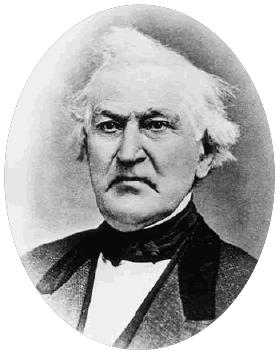
A natural question arises: If these men remained as priesthood holders on the earth, was the saving power of the priesthood ever fully withdrawn? In response, various Church leaders and scholars have addressed this point directly. For example, President J. Reuben Clark once suggested, “His priesthood has always been here on the earth, and that it will continue to be so until the end comes.” Elder Harold B. Lee clarified that while dispensational priesthood authority was withdrawn from the general body of the Church during periods of apostasy, translated beings, such as John the Beloved and the Three Nephites, acted as a “check against Satan” and a means of maintaining a thread of authority on earth. However, these specific holders did not function publicly or direct the affairs of the Savior’s Church among men during the Apostasy. Rather, their ministry was unique and hidden, lacking the authority to preside over or restore the Church’s organizational structure.
Hoyt W. Brewster later noted that John the Beloved, in particular, was assigned to minister among the lost tribes of Israel and prepare them for their eventual return. References from Latter-day Saint leaders and historical documents confirm that in 1831, Joseph Smith declared that John was among the lost tribes, fulfilling a unique prophetic mission that did not involve the open administration of priesthood ordinances to the general population.
To understand the necessity of restoration, one must distinguish between possessing priesthood authority and holding priesthood keys. As explained by Joseph Smith, “The keys have to be brought from heaven whenever the Gospel is sent. When they are revealed from heaven, it is by Adam’s authority.” In the absence of priesthood keys—governing or presiding authority—there can be no valid restoration of Church ordinances or organization.
Thus, despite the continued existence of beings with priesthood authority on the earth, none were authorized by God to reorganize His Church or confer priesthood keys upon others. The Three Nephites, John the Beloved, and the lost tribes possessed authority but not the specific keys necessary for the Restoration. They remained hidden, set apart for special missions, but not empowered to reestablish the full church structure or oversee priesthood operations.
The Restoration, therefore, required divinely authorized messengers empowered with the requisite keys. This is why, in 1829, the angelic ministrations of John the Baptist (holding the keys of the Aaronic Priesthood) and the ancient apostles Peter, James, and John (holding the keys of the Melchizedek Priesthood) were sent to Joseph Smith and Oliver Cowdery. With this restoration, the fullness of priesthood authority was returned, complete with all keys necessary for the administration of saving ordinances, governance of the Church, and the furtherance of the Lord’s work on earth.
Another doctrinal principle clarified by this discussion is why saving ordinances must be performed by mortals. While translated or resurrected beings may possess priesthood power, the performance of ordinances such as baptism, confirmation, and priesthood ordination is restricted to living mortals. As stated by Church scholars and reinforced in teachings by Church leaders, “Baptism, confirmation, ordination to the priesthood are earthly ordinances that must be performed by mortals living on the earth.”
This principle expresses the Church’s emphasis on vicarious ordinances for the dead, a work only the living can perform on behalf of those who have passed on. Even during the Millennium, when resurrected beings participate in the work, it is mortals who must physically perform the ordinances. Thus, the priesthood authority held by the Three Nephites or John the Beloved was insufficient to break the silence of the Apostasy or initiate the Restoration—they were not mortals living among the people, nor authorized to organize the Church or confer keys.
It was Joseph Smith’s privilege, through direct angelic ministration, to receive both priesthood authority and priesthood keys. He and Oliver Cowdery were visited by John the Baptist, who conferred upon them the Aaronic Priesthood. Shortly thereafter, Peter, James, and John bestowed the Melchizedek Priesthood. This foundational act authorized them to perform all the necessary ordinances and establish the Lord’s church anew on the earth in its full organization.
This marvel was foreseen by prophets both ancient and modern. James E. Talmage noted, “The restoration was effected by the Lord through the prophet, Joseph Smith, who, together with Oliver Cowdery, in 1829, received the Aaronic Priesthood under the hands of John the Baptist, and later the Melchizedek Priesthood under the hands of the former-day apostles, Peter, James, and John. By the authority thus bestowed, the Church has been again organized with all its former completeness…”
Moreover, the Restoration included additional heavenly visitations. In 1836, at the dedication of the Kirtland Temple, Joseph Smith and Oliver Cowdery were visited by Moses, Elias, and Elijah, who restored additional priesthood keys necessary for the gathering of Israel, the Abrahamic covenant, and the work of family history and sealing. The visit of Elijah, in fulfillment of Malachi’s prophecy, sparked new interest worldwide in genealogy—a spiritual and practical development.
Gramps