
Question
Gramps,
I’m confused about the Godhead. Heavenly Father is our God, but so is Jesus? Are they both God?
Josh
Answer
Josh,
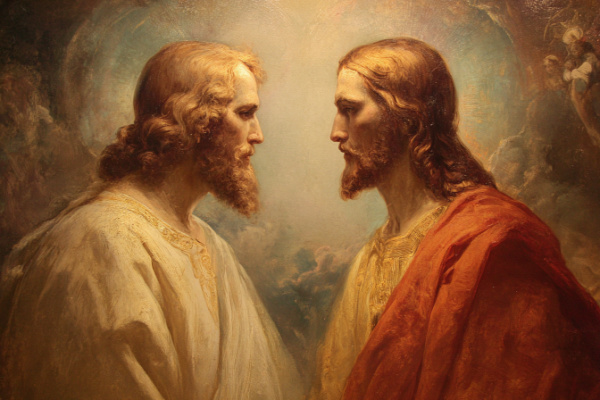
One of the most distinctive teachings of The Church of Jesus Christ of Latter-day Saints is its doctrine of the Godhead. Unlike mainstream Trinitarian Christianity, which holds that the Father, Son, and Holy Ghost are three persons of one immaterial substance, the restored gospel teaches that the Father and the Son are two separate and distinct personages, though perfectly united in purpose, love, and will.
The Book of Mormon and the Bible support this distinction. For example, Jesus often prays to the Father, addressing Him as a separate being (Matthew 26:39). At Christ’s baptism, the voice of the Father is heard from Heaven while Jesus stands in the water, and the Holy Ghost descends like a dove (Luke 3:22). Christ taught, “I ascend unto my Father, and your Father; and to my God, and your God” (John 20:17), clearly distinguishing Himself from the Father. Even when scriptures seem to blend their identities, Latter-day Saint teachings clarify that these references are not meant to deny their separateness in person, but to teach something deeper about their oneness and Christ’s unique relationship to us.
It is clear, then, that the Church affirms two separate, divine personages: God the Eternal Father and His Son Jesus Christ. Yet, questions often arise when Latter-day Saints or other readers encounter scriptures that refer to Jesus as “the Father.” Consider these examples:
Isaiah 9:6 (also rendered in 2 Nephi 19:6 in the Book of Mormon): “And his name shall be called Wonderful, Counsellor, The mighty God, The everlasting Father, The Prince of Peace.”
Ether 3:14 (Book of Mormon): “Behold, I am he who was prepared from the foundation of the world to redeem my people. Behold, I am Jesus Christ. I am the Father and the Son. In me shall all mankind have life, and that eternally, even they who shall believe on my name; and they shall become my sons and my daughters.”
Mosiah 15:2–4 (Book of Mormon): “[Christ,] being the Father and the Son—The Father, because he was conceived by the power of God; and the Son, because of the flesh; thus becoming the Father and Son—And they are one God, yea, the very Eternal Father of heaven and of earth.”
Why do these passages call Jesus “the Father,” and how do Latter-day Saints harmonize this with belief in two separate divine beings? The answer lies in the unique roles Christ fulfills. Scriptural and prophetic explanations describe three senses in which Jesus rightfully bears the title “the Father”:
Jesus Christ perfectly represents the Father to humankind. As the authorized representative (to use legal language, “the power of attorney”), He acts and speaks for the Father so completely that His words are the Father’s words and His actions are the Father’s will. This is known in Latter-day Saint theology as the “Divine Investiture of Authority.” Elder James E. Talmage described it this way:
“Our Father in Heaven has allowed Jesus to speak to various prophets as if he were the Father. In the legal profession, this is a well-understood practice referred to as the ‘power of attorney.’ Jesus stated, ‘I am come in my Father’s name.’” (See James E. Talmage, Articles of Faith, Appendix 2, p. 470.)
Elder Bruce R. McConkie affirmed, “Most scriptures that speak of God or the Lord do not even bother to distinguish the Father from the Son, simply because it doesn’t make any difference which God is involved. They are one. The words or deeds of either of them would be the words and deeds of the other in the same circumstance.” Thus, when Jesus is called the “Father,” it is often in His role as the perfect stand-in for the Father, reflecting their absolute unity of purpose.
The scriptures teach that Jesus Christ is the Creator under the direction of God the Father. The Gospel of John proclaims, “All things were made by him [the Word]; and without him was not anything made that was made” (John 1:3). Since, as Creator, He is the father of heaven and earth, He can be referred to as “the Father” in this specific sense.
Perhaps the most intimate way in which Christ is “the Father” refers to our relationship with Him through the new birth of the gospel covenant. When we accept Christ and are baptized, we are “born again”—spiritually begotten of Christ. King Benjamin in the Book of Mormon taught those who entered into a covenant to follow God, “because of the covenant which ye have made ye shall be called the children of Christ, his sons, and his daughters; for behold, this day he hath spiritually begotten you; for ye say that your hearts are changed through faith on his name; therefore, ye are born of him and have become his sons and his daughters” (Mosiah 5:7). As the author of our salvation and the one whose atoning sacrifice makes possible our spiritual transformation, Christ becomes, in a very real sense, our spiritual Father.
The charge is sometimes made—by readers or even by critics—that Latter-day Saint scripture is confusing because it, at times, seems to conflate the identities of the Father and the Son. This is especially so with phrases like “one God.” However, careful reading and additional revelation clarify that the oneness spoken of is not a oneness of substance or person, but a unity in attributes, purpose, mind, and love. Jesus Himself prayed “that [His disciples] may be one, as we are” (John 17:11), expressing the aspiration that we too should unify our will with His and the Father’s—not that we become the same being.
The Book of Mormon, which is sometimes criticized for its references to the Father and Son as “one God,” actually clarifies this doctrine better than many traditional readings of the Bible. For example, Abinadi in Mosiah 15 explains that Christ is both the Father and the Son because he “was conceived by the power of God” (thus, the Father) and “because of the flesh”—thus becoming the Son. The two roles are unified in the mission and work of Christ, but this does not mean that God the Father and Jesus Christ are the same individual. Rather, they are one in mind, mission, and love.
Given Jesus’ divine status and work as our Savior and Redeemer—indeed, as “God the Son”—should He be worshipped in the same manner as God the Father? Do members of the Church direct prayers to both God the Father and Jesus Christ? This is an important practical and doctrinal issue.
Latter-day Saint doctrine teaches that ultimate worship—especially prayer—is directed to God the Father, in the name of Jesus Christ. This pattern is based upon Christ’s own teachings. He directed His disciples to pray, “Our Father which art in heaven” (Matthew 6:9), and similar instructions were given to the Nephites (see 3 Nephi 13:5–13). Even when the resurrected Lord appeared personally, He explained that prayer was directed to Him only because He was present in their midst (3 Nephi 19:22), and that the established pattern remains to pray to the Father in the name of the Son.
This does not mean that Jesus Christ is not worshipped, revered, or honored. Latter-day Saints worship Christ for His role as Savior and Redeemer. Worship, in the sense of expressing love, gratitude, and awe, absolutely encompasses Jesus. We worship Christ for His role as our Savior and Redeemer. We do not worship Christ through prayer, but rather through an ongoing effort to embody His teachings and to follow His example. We revere, honor, and express our gratitude to Him through the Sacrament (which sounds a lot like worship to me). But above all else, we worship God the Father for His divine plan and His role as our Eternal Father.
Thus, while public and personal prayer is reserved for God the Eternal Father, worship in a broader sense encompasses both the Father and the Son, each for their respective roles.
Another distinctive doctrine in the Latter-day Saint tradition impacts the question of divine fatherhood: the belief that God the Father was once as we are, and that we—even as mortals—can, through Christ, become “heirs of God and joint-heirs with Christ” (Romans 8:17), inheriting all that He has and becoming like Him. This is not to say that we will supplant or be equal to God, but rather that the relationship of loving Father to child is extended and even magnified throughout all eternity.
This understanding shapes worship practices, the concept of the divine family, and the relationship between Heavenly Father, Jesus Christ, and all faithful followers. God the Father still maintains His paternal relationship with His exalted children. If anything, this relationship is amplified as it is strengthened through covenant keeping, as Joseph Smith taught.
To deepen your understanding, study the scriptures and modern prophets, and seek personal revelation—trusting that, as you do, the loving and personal nature of God’s fatherhood will become ever more real.
Gramps