

Question
Gramps,
Do you think people who have died get to Paradise and realize there, the mistakes they have made in this life– like how badly they treated someone– and feel remorse for it once they are through the veil? And are they given the opportunity to repent from that? I am hoping this is the case. Thank you for your time and consideration.
Edith
Answer
Edith,
One of the comforting teachings of The Church of Jesus Christ of Latter-day Saints is that death is not the end of our existence, nor does it necessarily end our opportunity to learn and grow. When we pass through the veil, our spirits continue to live in the spirit world, where we remain conscious individuals with our personalities, memories, agency, and ability to learn. Because of that, it is reasonable to wonder whether someone who treated another person badly during mortality might come to recognize what they did after death, feel genuine remorse, and desire to repent.
According to Latter-day Saint doctrine, there is good reason to have hope that this can happen.
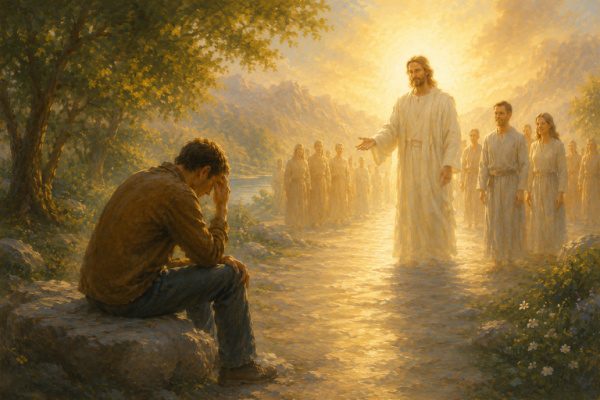
The Book of Mormon teaches that after death, our spirits enter the spirit world. Alma explained that the spirits of the righteous are “received into a state of happiness, which is called paradise,” while those who rejected righteousness experience a different condition (Alma 40:11–14). However, the spirit world is not simply a place where everyone waits for the Resurrection without learning or changing. Modern revelation teaches that the gospel is actively taught there.
Doctrine and Covenants 138 gives one of the clearest descriptions of what happens in the spirit world. In a vision, President Joseph F. Smith saw that Jesus Christ organized righteous spirits to carry the gospel to those who had died without receiving it. These spirits were taught “faith in God, repentance from sin, vicarious baptism for the remission of sins,” along with other principles of the gospel (Doctrine and Covenants 138:33).
President Russell M. Nelson addressed this subject directly while serving as a member of the Quorum of the Twelve Apostles. He asked:
“Each living person can repent. But what about those who have died? They also have opportunities to repent.”
He then quoted Doctrine and Covenants 138, explaining that the gospel of repentance is preached among the spirits of the dead and that “the dead who repent will be redeemed.”
That statement is important because it makes clear that repentance is not something that simply becomes impossible the moment someone dies. This does not mean that people can knowingly reject God, mistreat others, and simply plan on fixing everything after death. The scriptures strongly warn against procrastinating repentance. But the doctrine of salvation for the dead clearly shows that God’s work of teaching His children and inviting them to come to Christ continues in the spirit world.
That may also help answer the question of whether someone can recognize after death how badly they treated another person.
Imagine someone who spent years being cruel, selfish, neglectful, manipulative, or simply unwilling to acknowledge the pain they caused. In the face of mortality, people can become very good at justifying their behavior. Pride, anger, jealousy, fear, resentment, or misunderstanding can make it difficult for us to see ourselves clearly. Sometimes a person genuinely does not understand how deeply their actions affected someone else. In other cases, they may know they caused pain but refuse to admit responsibility.
Death does not erase those choices, but passing through the veil may eventually bring a clearer understanding of them.
Alma taught that we do not become completely different people simply because we die. He warned that “that same spirit which doth possess your bodies at the time that ye go out of this life” continues with us afterward (Alma 34:34). In other words, death itself does not instantly transform a selfish person into a loving person or a prideful person into a humble one. Our character matters, and the habits and desires we develop during mortality continue to matter.
At the same time, the spirit world provides opportunities for teaching, learning, and repentance. A person who spent their mortality misunderstanding God, other people, or even themselves may eventually encounter truths they previously ignored or could not see. It seems reasonable that this greater spiritual understanding could include recognizing the consequences of how they treat others.
The scriptures frequently link spiritual awakening to greater awareness of our own sins. Alma the Younger provides a dramatic example. After being confronted by an angel, he suddenly understood the seriousness of what he had done and remembered his sins with overwhelming clarity. He described himself as being “racked with eternal torment” and said his soul was “harrowed up” by the memory of his sins (Alma 36:12–17). Alma had not physically died, but his experience illustrates an important principle: when our spiritual understanding changes, our view of our own behavior can change dramatically as well.
Repentance also involves more than simply realizing we were wrong. President Joseph F. Smith taught:
“When we commit sin, it is necessary that we repent of it and make restitution as far as lies in our power.”
He went on to explain that there are times when we cannot personally repair everything our actions have caused. In those circumstances, we must rely upon the grace and mercy of Jesus Christ. He asked, “Who shall repair the wrongs they have done to themselves and to others, which it seems impossible for them to repair themselves?” His answer was the Atonement of Jesus Christ.
That teaching is especially meaningful when the person who caused the hurt has already died. Sometimes there is no longer a mortal opportunity to apologize, repair a relationship, or undo the consequences of something that happened years ago. But that does not mean repentance or the healing power of Christ’s Atonement has become meaningless.
The scriptures also suggest that ultimately we will see ourselves and our choices with greater clarity than we sometimes do now. Alma taught that our “words, our works, and our thoughts” will be part of our judgment (Alma 12:14). King Benjamin spoke of people having a “lively sense” of their own guilt (Mosiah 2:38). Excuses and rationalizations that seemed convincing during mortality may eventually look very different when we see ourselves and our actions more clearly.
Someone may spend years saying, “I didn’t do anything wrong,” “They deserved it,” or “They were the problem.” But God knows exactly what happened. He knows not only what someone did but why they did it, what they understood at the time, what opportunities they had to choose differently, and how their actions affected other people.
We should be careful, however, about claiming that we know exactly what a particular deceased person is currently thinking or feeling. The Church does not teach that everyone immediately passes through the veil and suddenly understands every mistake they ever made. Unless God reveals something about a particular individual, we simply do not know their present spiritual condition. What we can say is that Latter-day Saint doctrine leaves room for continued learning, increased understanding, remorse, and repentance after death.
This can be especially comforting when someone has died without ever making things right. Perhaps they never apologized for the way they treated someone. Maybe they never acknowledged the damage they caused, or they died still believing they had done nothing wrong. When that happens, the person who was hurt may be left without the conversation, apology, or acknowledgment they hoped would someday come.
The doctrine of the spirit world gives us reason to believe that death does not necessarily leave those misunderstandings frozen forever. A person who could not or would not recognize the truth here may eventually come to understand things differently. If that understanding produces genuine sorrow for wrongdoing and a desire to turn toward Christ, repentance is part of the gospel being taught in the spirit world.
There is an important caution in all of this. Amulek warned, “do not procrastinate the day of your repentance until the end” (Alma 34:33). We should never assume that we can knowingly mistreat people, refuse to repent, and simply fix everything after death. The kind of person we become during mortality matters, and deeply rooted attitudes and desires do not automatically disappear when the body dies.
Still, that warning does not mean God’s mercy ends at the grave. The entire Latter-day Saint doctrine of salvation for the dead teaches that God’s work continues in the spirit world. People can hear the gospel, exercise agency, and repent, while saving ordinances can be performed on their behalf on earth.
So, could someone who has died eventually realize how badly they treated another person and feel remorse for it? Latter-day Saint doctrine gives us good reason to believe that such recognition is possible. Could that person desire forgiveness and turn toward Jesus Christ? Again, there is reason for hope. We simply do not know exactly how or when that process takes place for any particular individual.
Ultimately, that person is in the hands of a Savior who understands the entire story. Jesus Christ knows what happened, what was intended, what pain was caused, and what was in the hearts of everyone involved. His judgment is perfectly just, but His Atonement also makes repentance, mercy, and healing possible.
For someone who was hurt and never received an apology or acknowledgment during this life, that can be a comforting thought. The person who hurt us may have passed beyond our ability to speak with them, but they have not passed beyond God’s ability to teach them. There is reason to hope that truths they could not see here can eventually become clear and that someone who did not understand the hurt they caused in mortality may someday recognize it, feel genuine sorrow, and turn to Christ.
We cannot know everything happening on the other side of the veil, but we can trust that God has not forgotten either the person who caused the hurt or the person who experienced it. His plan provides for truth, justice, mercy, learning, repentance, and ultimately the healing made possible through Jesus Christ.
Gramps