

Question
Gramps,
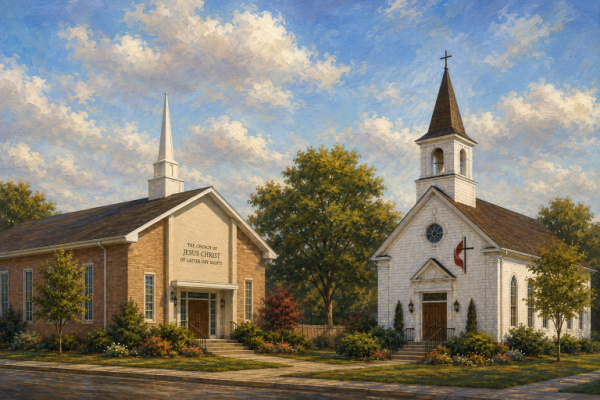
During his investigation of a church to join and the First Vision as a 14-year-old, Joseph Smith said that “in process of time [his] mind became somewhat partial to the Methodist sect, and [he] felt some desire to be united with them” (Joseph Smith History 1:8). So do the Methodist Church and The Church of Jesus Christ of Latter-day Saints have similarities with each other?
Jacob
Answer
Jacob,
The Methodist Church and The Church of Jesus Christ of Latter-day Saints (often called the LDS Church) have very different histories and beliefs, but they also share more in common than many people realize. If you’ve ever wondered whether the two churches are similar, the answer is yes—in some important ways. At the same time, there are also major differences that set them apart.
Understanding both the similarities and differences can help us better appreciate each faith without assuming they teach exactly the same things.
Both Churches Believe in Jesus Christ
One of the biggest similarities is that both churches teach that Jesus Christ is the Savior of the world. Methodists and Latter-day Saints believe that Jesus was born of Mary, lived a perfect life, performed miracles, died for our sins, and rose again on the third day. Both encourage their members to follow Christ’s teachings, love God, serve others, and prepare for eternal life.
Latter-day Saints often point to the Savior’s own invitation:
“Come unto me, all ye that labour and are heavy laden, and I will give you rest.” (Matthew 11:28)
Likewise, Methodists place Christ at the center of their worship and discipleship.
President Dallin H. Oaks has encouraged Latter-day Saints to treat people of all faiths with kindness and respect while remaining true to their own beliefs. He taught:
“As followers of Christ, let us follow Him by forgoing contention and by using the language and methods of peacemakers.” (Alive in Christ)
That counsel applies well to conversations between Latter-day Saints and Methodists. We can appreciate shared beliefs while respectfully acknowledging our differences.
A Strong Focus on Personal Faith
Both churches emphasize that faith should be more than something practiced on Sunday. Members are encouraged to pray regularly, study the scriptures, attend church, and develop a personal relationship with God.
Latter-day Saints hold family prayer, family scripture study, and home-centered gospel learning as important parts of daily life. Many Methodist families practice similar habits through personal devotion, Bible reading, and prayer.
Both traditions also encourage members to rely on God’s grace as they strive to become better disciples.
Both Encourage Service
Service is another area where the two churches are remarkably similar.
Methodists have long been known for hospitals, schools, disaster relief, and local outreach. Likewise, The Church of Jesus Christ of Latter-day Saints places tremendous emphasis on caring for those in need.
King Benjamin taught:
“When ye are in the service of your fellow beings ye are only in the service of your God.” (Mosiah 2:17)
Both churches encourage members to volunteer, donate to humanitarian causes, help neighbors, and care for the poor. While the programs may differ, the desire to follow Christ by serving others is shared by both faiths.
Both Value Families
Both Methodists and Latter-day Saints teach that families are important and that parents have a responsibility to teach their children about God.
Latter-day Saints place particular emphasis on the eternal nature of families through temple sealings, while Methodists generally believe family relationships continue to have great spiritual significance but do not teach eternal marriage in the same way.
Even though their doctrines differ, both churches encourage strong marriages, loving homes, and raising children with Christian values.
Both Believe in Moral Living
The two churches also share many moral values. Members of both churches are encouraged to live honest, moral, and compassionate lives. They teach forgiveness, kindness, integrity, sexual purity, and caring for others.
Latter-day Saints follow the Word of Wisdom, which includes abstaining from alcohol, tobacco, coffee, tea, and harmful drugs. Most Methodist congregations do not prohibit alcohol in the same way, although many encourage moderation or abstinence depending on local traditions.
Despite these differences, both churches encourage members to make choices that honor God and bless their families.
Important Differences
While there are many similarities, there are also significant doctrinal differences.
Perhaps the biggest difference is authority.
Latter-day Saints believe that after the deaths of the original apostles, priesthood authority was lost from the earth during what they call the Great Apostasy. They believe Jesus Christ restored His original Church through the Prophet Joseph Smith, including priesthood authority, apostles, prophets, and additional scripture.
The Church explains this belief by saying:
“Members believe The Church of Jesus Christ of Latter-day Saints is a restoration of the Church originally established by Jesus Christ during His mortal lifetime. Part of that restoration includes living prophets and apostles.”
Methodists do not share this belief. They see themselves as part of the broader Christian tradition that has continued from the time of Christ without the need for a complete restoration.
Another major difference involves scripture.
Methodists generally use the Bible alone as their scriptural authority.
Latter-day Saints accept the Bible but also believe God has revealed additional scripture through the Book of Mormon, the Doctrine and Covenants, and the Pearl of Great Price.
The two churches also differ in their understanding of God.
Methodists generally teach the traditional doctrine of the Trinity—that the Father, Son, and Holy Spirit are one God in three persons.
Latter-day Saints believe that Heavenly Father, Jesus Christ, and the Holy Ghost are three distinct divine beings who are perfectly united in purpose and will. This understanding comes from modern revelation as well as from passages such as the Savior’s baptism, in which the Father speaks from heaven while the Holy Ghost descends like a dove (Matthew 3:16–17).
Temples Are Another Difference
Methodist churches do not have temples like those found in The Church of Jesus Christ of Latter-day Saints.
For Latter-day Saints, temples are sacred houses of the Lord where members participate in ordinances such as eternal marriage, proxy baptisms for deceased ancestors, and other sacred covenants. Weekly worship services, however, are held in meetinghouses rather than temples.
Different Histories
Methodism began in the 1700s through the ministry of John Wesley, who sought to renew spiritual commitment within the Church of England. Over time, Methodism became its own Christian denomination with congregations around the world.
The Church of Jesus Christ of Latter-day Saints was organized in 1830, following Joseph Smith’s testimony that Jesus Christ had restored His original Church through modern revelation.
Although the two movements developed independently, both began during periods of religious revival and emphasized sincere personal conversion and devoted Christian living.
President Dallin H. Oaks once observed that followers of Christ should strive for “cooperation and mutual respect” with those of other faiths while remaining faithful to the revealed truth. That perspective reflects the Church’s approach to interfaith relationships today.
So, Are They Similar?
From an LDS perspective, the Methodist Church and The Church of Jesus Christ of Latter-day Saints share many Christian values. Both encourage faith in Jesus Christ, prayer, scripture study, repentance, service, moral living, and strong families. Members of both churches strive to become better disciples and to bless the lives of those around them.
At the same time, Latter-day Saints recognize important doctrinal differences involving priesthood authority, modern prophets, additional scripture, temples, and the nature of God. These beliefs are foundational to the restored gospel and distinguish The Church of Jesus Christ of Latter-day Saints from Methodism and other Christian denominations.
In the end, the similarities are meaningful because they reflect a shared desire to follow Jesus Christ. The differences are equally important because they shape how each church understands God’s plan, His authority, and the way He continues to guide His children. Recognizing both allows for respectful conversations and greater appreciation of the sincere faith found in both traditions.
Gramps