
Question
Gramps,
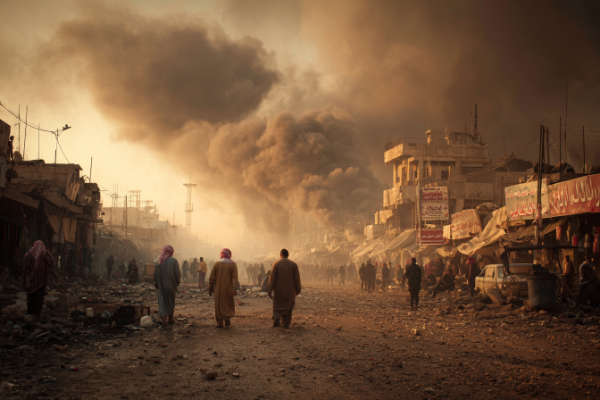
There’s so much going on in the Middle East. So much hatred toward Christians and other religions. Will we ever be able to teach the gospel there successfully?
Carol
Answer
Carol,
The restored Church’s mission has, from the beginning, been global in its ambitions—charged to preach to every continent, climate, nation, and people. The promise is bold. Joseph Smith declared:
“The Standard of Truth has been erected; no unhallowed hand can stop the work from progressing; persecutions may rage, mobs may combine, armies may assemble, calumny may defame, but the truth of God will go forth boldly, nobly, and independent, till it has penetrated every continent, visited every clime, swept every country, and sounded in every ear, till the purposes of God shall be accomplished, and the Great Jehovah shall say the work is done.”
The Middle East presents unique challenges to this global vision: entrenched religious traditions, political complexities, and in some cases, legal barriers to proselytizing. Some may wonder, given these obstacles, how the gospel can ever be preached openly and comprehensively there before the Second Coming.
Yet, both scripture and Church leaders consistently assure that no human obstacle can frustrate God’s purposes. As noted in modern revelation, the preaching of the gospel before the end will not just be desirable but inevitable—each person will hear in his own tongue. This is further reinforced in Revelation 14:6, where John prophesied that “an angel will come from heaven bringing with him the everlasting gospel,” to be preached to everyone on earth, proof that the world would, at that time, be without the fullness of the gospel, necessitating its restoration and global dissemination.
Church commentary and doctrinal teachings clarify that this includes even the most difficult regions. Elder M. Russell Ballard said:
“Even Joseph’s closest associates in those early years did not fully understand the trials that the Latter-day Saints would endure as the Church rolled forth from its small beginnings in the early 1800s. But Joseph Smith knew that no enemy then present or in the future would have sufficient power to frustrate or stop the purposes of God. We are all familiar with his prophetic words: “The Standard of Truth has been erected; no unhallowed hand can stop the work from progressing; persecutions may rage, mobs may combine, armies may assemble, calumny may defame, but the truth of God will go forth boldly, nobly, and independent, till it has penetrated every continent, visited every clime, swept every country, and sounded in every ear, till the purposes of God shall be accomplished, and the Great Jehovah shall say the work is done” (History of the Church, 4:540)..
History already provides precedent—early Christian missionaries, facing persecution and exile, nevertheless managed to spread the gospel beyond Jewish boundaries to gentile nations, including those of the Middle East. Even as the persecution scattered the faithful, it also opened new avenues for the message to reach distant lands.
In today’s world, the Church operates under manifold constraints while respecting local laws. Formal proselytizing may not yet be possible in every nation, especially in many Middle Eastern countries. However, this does not preclude other forms of gospel influence: humanitarian outreach, personal relationships, digital resources, and the quiet witness of members living and working abroad all contribute to preparing the ground for a more open reception in the Lord’s due time.
Scriptures and prophecies consistently affirm that the gospel will indeed reach every corner of the earth before the Second Coming. Prophetic passages in both the Old and New Testaments—Malachi’s statement about a divine messenger preparing the way, the end-time angel in Revelation, and Christ’s own words in Matthew—come together to form “a mighty compendium of history written in prophecy!”
Amid the present conflict and uncertainty, the Church’s stance is ultimately one of hope, trust, and commitment. The burning of the inhabitants of the earth and the general desolation prophesied in Isaiah will come, but so will the rescue and gathering of the righteous, even among the most unlikely peoples. Even now, as ancient routines repeat and new challenges arise, the work quietly but surely advances, creation of bridges, increased religious dialogue, and preparations for future, divinely appointed opportunities.
In the spirit of Jesus’s own gentle call, “Come and see” (John 1:39), Church members are invited to persevere, remain humble, and trust in God’s timetable and methods—even when the process seems slow or obstacles appear insurmountable. As Elder Lance B. Wickman notes, the true tone of missionary work is set by the Savior’s invitation and His example, one of gentleness, openness, and eternal anticipation.
President Spencer W. Kimball also spoke eloquently in the April 1980 General Conference about this same subject.
Gramps