
Question
Gramps,
What does it mean to be from the tribe of Naphtali? What are my responsibilities and duties?
Clyn
Answer
Clyn,
In Latter-day Saint (LDS) theology, discovering through a patriarchal blessing that you belong to the tribe of Naphtali can feel both meaningful and a little unclear at first. What does that identity actually mean? Does it come with specific duties? And how should it shape the way you live your life?
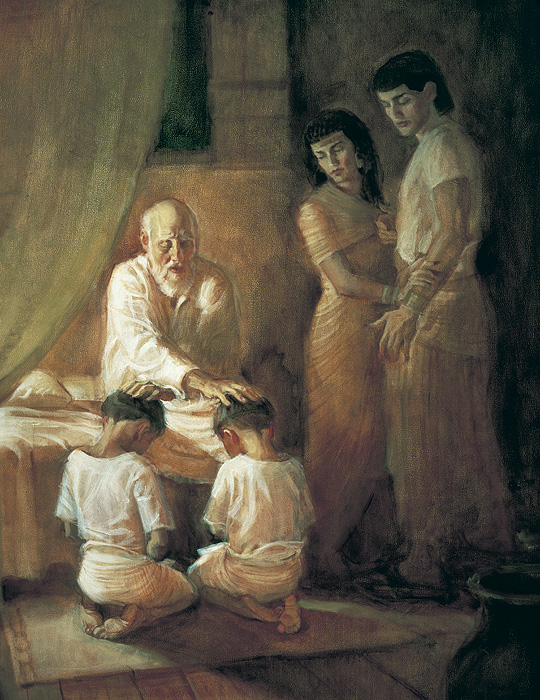
To understand this, it helps to begin with a foundational truth: in LDS doctrine, belonging to a tribe of Israel is primarily about covenant identity rather than strict biological lineage. While some individuals may be literal descendants, many are adopted into the house of Israel as they accept the gospel of Jesus Christ and enter into sacred covenants. This means your tribal identity is less about ancestry and more about your role in God’s ongoing work.
President Russell M. Nelson taught that one of the meanings of the word Israel is “let God prevail” (Let God Prevail, General Conference, Oct. 2020). Seen this way, being part of any tribe—including Naphtali—means choosing to let God guide your life. Your lineage becomes a reminder of who you are spiritually and of whose work you are part.
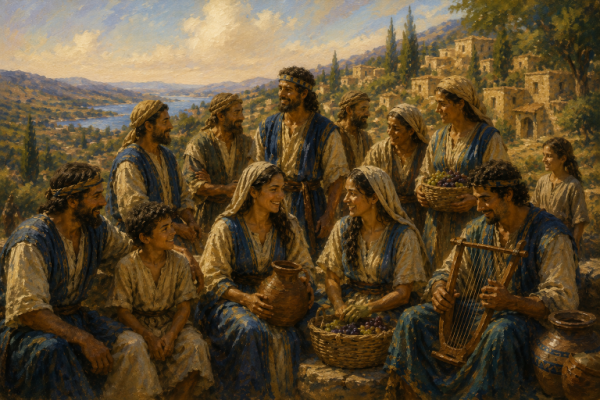
Naphtali itself is one of the twelve tribes of Israel, descended from Jacob’s son. In Genesis 49:21, Naphtali is described as “a hind let loose: he giveth goodly words.” This poetic imagery suggests qualities such as freedom, swiftness, and the ability to speak uplifting or inspired words. In Deuteronomy 33:23, Naphtali is described as being “satisfied with favour, and full with the blessing of the Lord.” While the Church has not given an official list of traits or assignments tied to each tribe, these scriptural descriptions can offer meaningful insight.
If your lineage is Naphtali, you might find that your influence often comes through communication—encouraging others, sharing truth, or helping people feel the Lord’s love. But it’s important not to overgeneralize. Your patriarchal blessing is personal scripture, and it will give more specific direction than any general description of a tribe ever could.
When it comes to responsibilities, the most important thing to understand is this: your core duties are the same as those of any member of the house of Israel. Tribal identity does not create separate assignments—it connects you to a shared covenant mission.
Central to that mission is the gathering of Israel.
President Russell M. Nelson has taught, “Now, participating in the gathering of Israel will require some sacrifice on your part. It may even require some changes in your life. It will definitely take some of your time and energy and your God-given talents.” (Hope of Israel, Worldwide Devotional, June 2018).
Importantly, this work is not limited to formal missionary service. President Nelson also explained, “Anytime you do anything that helps anyone… make and keep their covenants… you are helping to gather Israel” (Hope of Israel teaching excerpt). That means simple, everyday actions matter. A kind word, a testimony shared, or quiet encouragement can all be part of this sacred work.
For someone from Naphtali, that idea connects in a particularly meaningful way. If your tribe is symbolically associated with “goodly words,” then your role in gathering Israel may often come through how you speak, uplift, and communicate truth. Your voice—whether in conversation, teaching, writing, or quiet reassurance—can be a powerful instrument in the Lord’s hands.
But gathering Israel is only part of your responsibility. Equally important is how you live your own life. Being part of Israel means striving to keep your covenants, follow Jesus Christ, and seek the companionship of the Holy Ghost. Your lineage does not guarantee spiritual strength—it invites you to develop it.
President Nelson also emphasized the personal nature of this calling when he said, “You were sent to earth at this precise time… to help gather Israel” (Hope of Israel devotional). This adds another layer of meaning to your identity. You are not just labeled as part of Naphtali—you are placed here with purpose, at a specific time, to contribute to God’s work.
This perspective helps shift the focus from “What does my tribe say about me?” to “How is God inviting me to act?” Your lineage supports your mission, but it does not limit it.
Another important aspect of your duty is to bless others. The Abrahamic covenant promises that through the house of Israel, “all the families of the earth” will be blessed. That means your life is meant to have an outward impact. Whether through service, kindness, teaching, or example, you are part of a larger effort to lift and strengthen those around you.
Again, for someone from Naphtali, this may naturally align with uplifting and strengthening others through words and presence. But these expressions will be unique to you. The Spirit will guide how your gifts are used.
Ultimately, your patriarchal blessing is your best guide. It is a personal revelation tailored to your life. While understanding your tribe can provide helpful context, your blessing will clarify your specific responsibilities, promises, and potential. Returning to it often can deepen your understanding over time.
In the end, being from the tribe of Naphtali is not about fitting into a predefined mold. It is about being part of the covenant family of Israel and participating in God’s work on the earth. It is a reminder that you are known, called, and needed.
And your responsibilities? They are both simple and profound: let God prevail in your life, keep your covenants, bless others, and help gather Israel—one person, one conversation, one faithful act at a time.
Gramps