

Question
Gramps,
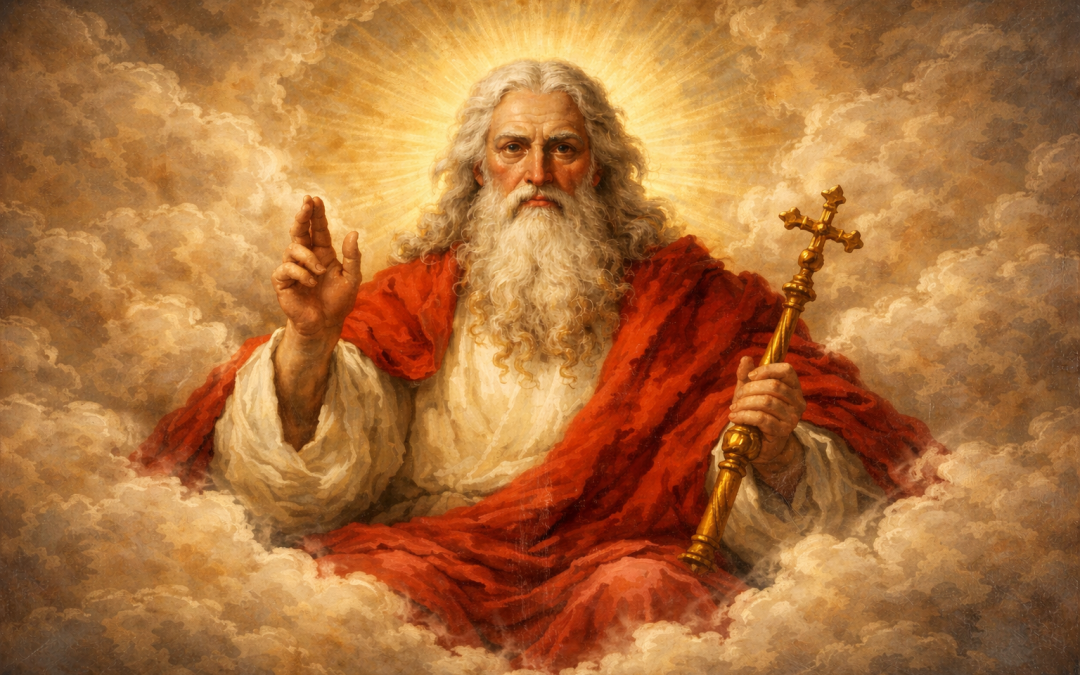
What does it mean when we say God is unchanging?
Sariah
Answer
Sariah,
The unchanging nature of God is a theme that runs from the Old Testament through the Restoration scriptures. “For I know that God is not a partial God, neither a changeable being; but he is unchangeable from all eternity to all eternity,” declares Moroni (Moroni 8:18). This concept is explained by other key verses: “Jesus Christ the same yesterday, and today, and forever” (Hebrews 13:8), and “For I am the Lord, I change not” (Malachi 3:6).
However, the Restoration also introduced intriguing new ideas about the nature of God. Teachings attributed to Joseph Smith, particularly in the King Follett Sermon, suggest: “We have imagined and supposed that God was God from all eternity. I will refute that idea…” Meanwhile, President Lorenzo Snow’s often-quoted couplet asserts, “As man now is, God once was: As God now is, man may be.” How do these statements square with the affirmation that God is unchangeable?
The key to reconciling these points is context—what specifically is meant by ‘unchangeable’? Biblical and Restoration-era prophets nearly always invoke God’s unchangeableness in reference to His character, justice, and purpose, not to the unaltered state of His physical embodiment or His administrative actions.
The key to reconciling these points is context—what specifically is meant by ‘unchangeable’? Biblical and Restoration-era prophets nearly always invoke God’s unchangeableness in reference to His character, justice, and purpose, not to the unaltered state of His physical embodiment or His administrative actions.
Moroni, for example, insists that God is unchangeable in the sense that He administers the same spiritual gifts and keeps His promises: “For do we not read that God is the same yesterday, today, and forever, and in him there is no variableness neither shadow of changing? …He changeth not; if so he would cease to be God; and he ceaseth not to be God, and is a God of miracles” (Mormon 9:7-11,19). If these blessings or miracles are absent, Moroni concludes, the fault lies not with God but with the faithlessness of mortals.
Similarly, in Alma 7:20, Alma testifies that God “cannot walk in crooked paths; neither doth he vary from that which he hath said; neither hath he a shadow of turning from the right to the left, or from that which is right to that which is wrong; therefore his course is one eternal round.” Here, ‘unchangeable’ clearly refers to moral integrity, not physical form.
The doctrine that God the Father once progressed—so central to Latter-day Saint identity—sits alongside equally central claims that the Son (Jesus Christ) is eternally the same. Yet, Jesus’ earthly ministry shows clear physical change:
- He was a premortal spirit, then took upon himself mortal flesh and grew in “wisdom and stature, and in favor with God and man” (Luke 2:52).
- He died, was resurrected with a glorified body, and is now exalted.
If change disqualifies a being from being God, could Jesus qualify? Not according to Restoration scripture. Rather, Jesus remains the same in His faithful execution of the Father’s divine will, in the perfection of His moral nature, and especially in His boundless love for His children.
This same logic applies to doctrines of deification: the plan of salvation is consistent, even as individual identity or state may change. The constant attribute was His righteousness. This is the thing that never changes.
A recurring concern among Saints and critics alike is the adaptation of Church practices—whether the extension of the priesthood to all races, modifications to temple ordinances, or shifts in administrative policies. Critics may ask: if God is unchangeable, why does His Church’s doctrine change?
While God’s basic character and plan of salvation are immutable, the administration of His church is revealed “line upon line, precept upon precept” (Isaiah 28:10; 2 Nephi 28:30). Joseph Smith himself acknowledged that “the doctrines of the gospel of Jesus Christ… were revealed a little at a time, at a sufficient rate that they could be understood, absorbed and put into practice. As the Church grew, more doctrine and church procedures were introduced….”
Section 76 of the Doctrine and Covenants further notes: “Great is his wisdom, marvelous are his ways, and the extent of his doings none can find out… and for ages to come, will I make known unto them the good pleasure of my will concerning all things pertaining to my kingdom.” (Doctrine & Covenants 76:2-10). In other words, continuing revelation is not a sign of divine inconstancy, but of God’s wise adaptation for the growth and capacity of His people.
Much of what appears as change on God’s part often relates to human agency and conditional revelation. The Lord’s promises are usually based on human obedience: “I the Lord am bound when ye do what I say, but when ye do not what I say ye have no promise” (Doctrine & Covenants 82:10). Thus, when mortals fail to uphold covenants, or the world changes, God’s current instructions may adapt to new circumstances—yet always within the bounds of His eternal purposes.
In certain areas, God is conversing with his children, who are mortal, fallible, and changeable. So his words are often conditional. Both blessings and instructions are conditioned on the obedience of those whom He blesses and instructs. If the conditions under which an instruction was given were fulfilled, the word of the Lord would be fulfilled–absolutely and without any question. If conditions were to change… and He fulfilled his promise anyway, He would then be a changeable God, granting blessings where the required conditions had been violated. So, God is unchangeable in power, in righteousness, in love, in kindness–in all his eternal attributes.
Even core practices—such as the temple endowment—have evolved. When Joseph Smith introduced the endowment, he stated, “We have done the best we could under the circumstances in which we are placed,” and tasked later prophets with continuing to refine it. Since its introduction, the endowment has evolved in its language and ritual, aligning more closely with the needs and understanding of modern Saints without diluting its sacred core.
President Henry B. Eyring explained at a devotional at what used to be Safeco Stadium in Seattle,
“God is an unchangeable god. But as the Church moves to every nation and people… we can expect and take joy in new messages coming from God through the prophet. The gospel will not change, but we will need personal revelation to feel the hand of the Lord when practical ways of doing things are changed by the Lord through his prophet.”
That is, living prophets adapt the Church’s practices to meet the current needs of God’s children, guided by the same unfailing divine love.
No aspect of God’s being shines more brightly, or more unchangeably, than His love. The scriptures abound in declarations of everlasting, unalterable divine affection: “Yea, I have loved thee with an everlasting love: therefore with lovingkindness have I drawn thee.” (Jeremiah 31:3).
President Thomas S. Monson affirmed,
“Your Heavenly Father loves you—each of you. That love never changes. It is not influenced by your appearance, by your possessions, or by the amount of money you have in your bank account. … God’s love is there for you whether or not you feel you deserve love. It is simply always there.”
Similarly, Elder Dieter F. Uchtdorf taught: “Though we are incomplete, God loves us completely. Though we are imperfect, He loves us perfectly. … God’s love encompasses us completely.” This is the true heart of divine immutability: God’s standards, purposes, and benevolent will never waver. As Paul proclaimed, “For I am persuaded, that neither death, nor life… nor any other creature, shall be able to separate us from the love of God, which is in Christ Jesus our Lord” (Romans 8:37-39).
The heart of our faith is not in the never-changing administration, but in the ever-faithful character and love of God. As believers wrestle with hard questions and evolving practices, we are encouraged to focus on the doctrine behind the policy and on our testimony of that. … You can focus on gaining a testimony of the change, and from personal experience, I can assure you that it’ll come.
Gramps