
Question
Gramps,
Who are the Lord’s anointed?
Jon
Answer
Jon,
In ancient Israel, anointing was a tangible ritual. Priests and kings received a ceremonial outpouring of oil to set them apart for sacred service. Exodus records the instruction: “And thou shalt put upon Aaron the holy garments, and anoint him, and sanctify him; that he may minister unto me in the priest’s office” (Exodus 40:12-14). The oil was not merely symbolic; it marked one as consecrated for God’s work.
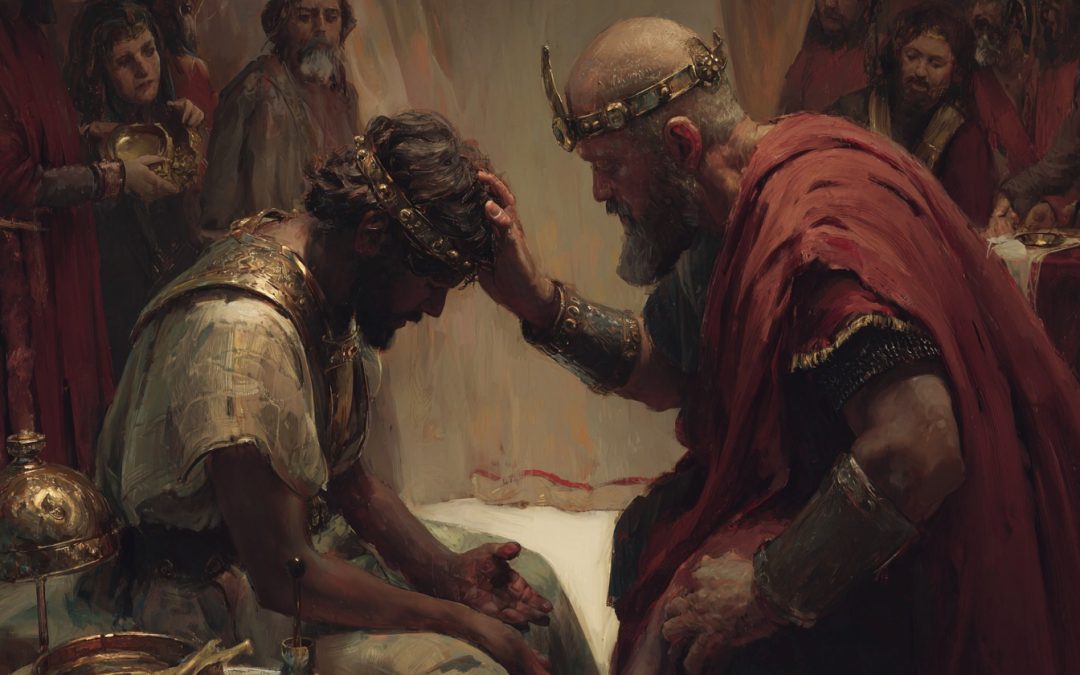
The classic example is the anointing of King Saul and later David by Samuel. Even as Saul lost favor with the Lord, David refused to harm him, echoing repeatedly, “I would not stretch forth mine hand against the Lord’s anointed” (see 1 Samuel 26). To David, the anointing itself carried such weight that, even when the anointed king faltered, the office and promise remained sacred until God Himself intervened.
Prophets, too, were regarded as “anointed.” Psalms 105:14-15 notes both kings and prophets as a distinct, honored class among the people. The same type of divine setting apart that applied to David as king also marked out individuals as bearers of God’s word.
Beyond its ritual elements, anointing also carried deep Messianic significance. The Hebrew “mashiach” (Messiah) means “anointed one,” pointing forward to Christ, whose saving role had been prophesied for centuries. Psalms and the prophets themselves began to connect earthly anointed leaders with the future, ultimate Redeemer—the Anointed One sent to deliver all mankind.
Christians recognize Jesus Christ as “the anointed of the Father,” set apart before the world’s foundation to redeem humankind (see Isaiah 61:1–3; Luke 4:16–22; Acts 4:27; Acts 10:38). His perfect consecration and sinlessness fulfilled all the types and shadows of earlier anointings. Orthodox Christian tradition and scriptures see Him as the ultimate “Christos”—the literal anointed king, priest, and prophet.
This lineage continues in The Church of Jesus Christ of Latter-day Saints, which teaches that anointings continue to set individuals apart for divine purposes:
1. Modern prophets, apostles, and even local leaders are recognized as “the Lord’s anointed” in the sense that they receive divine callings and the laying on of hands. Doctrine and Covenants 121:16 and 135:3 both emphasize sustaining and respecting those called by God, even while acknowledging their human fallibility.
2. The definition of “anointed” broadens further in Latter-day Saint teaching. Any member who participates in temple ordinances, including anointings, is set apart and made holy—literally, a “saint,” or one who is dedicated and set apart for God’s purposes. This echoes the early Christian sense that the righteous, by virtue of their faith and sanctification, become bearers of God’s name and glory.
The Church also instructs members to support inspired leaders, understanding that, though mortal, they are called and anointed to guide the Church. As history shows, “God has called upon and worked through prophets to convey revelation…yet prophets are mortal beings who make mistakes and perceive things through their own experiences. …Despite these human limitations, we are asked to support and sustain the inspired leaders that God has appointed.”
Ancient liturgies, Christian visions, and Latter-day Saint ritual all point toward a vast divine pattern in which God anoints those who will lead, guide, and—ultimately—serve.
Within The Church of Jesus Christ of Latter-day Saints, physical anointing has carried through to modern times, especially within temple worship and priesthood blessings.
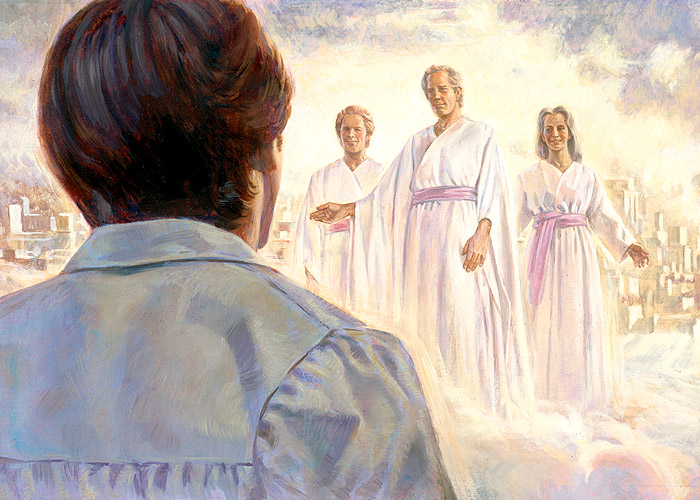
Temple ceremonies continue the ancient practices of washing, anointing, and clothing with sacred purpose. In Exodus, these were reserved for priests; today, every worthy member receives initiatory ordinances as part of their temple worship. The second anointing, a less common and more sacred ordinance, “fulfills some of the blessings promised in the first anointing” and is closely connected to promises of exaltation.
Accounts from Church history describe temple second anointings wherein men are ordained as “kings and priests” and women as “queens and priestesses.” This echoes biblical references to kingship and priesthood as rewards for faithfulness—not just for a chosen few, but potentially for all who attain the highest blessings of the gospel. Policies governing this ordinance have changed over time, but the key principle remains: to be anointed signifies not only authority but also responsibility to lead in righteousness, emulate Christ, and serve others.
Anointing is also intrinsic to priesthood blessings for the sick. Following the New Testament pattern (James 5:14-15), Church members regularly administer healing blessings with oil, accompanied by faith and the sealing of the anointing by Melchizedek Priesthood authority. Such anointings reflect the enduring belief that God’s power works through His servants in tangible, compassionate ways.
Ultimately, the concept of “anointed” extends to all who seek redemption in Christ. Through personal sanctification—made holy by faith, repentance, and dedicated living—saints participate in the very meaning of anointing. Rabbi Johanan’s observation, citing Isaiah 43:7, that the righteous are destined to share in God’s glory and name, resonates strongly with Latter-day Saint theology: that through Christ, all may become heirs, “called by my name, …that he should also share my glory.”
Perhaps the most enduring lesson about the Lord’s anointed comes from David’s respect for Saul. Despite Saul’s unworthiness, David honored the office and the Lord’s choice, trusting that God would act in His own time. As I explained in another Q&A, “Rather than honoring Saul, it seems that David honored the office of king of the people for which Saul had been anointed by a servant of the Lord. …The Lord is in control of His kingdom. Saul suffered the consequences of his own iniquity, and the Lord removed him from office in his own way and in his own time. How appropriate it is for us to follow David’s example and love and sustain those who preside over us as long as they remain in the office of their callings.”
This principle shapes the Church’s teachings on sustaining leaders. Members are asked to support and pray for those called over them, recognizing both the divine call and the human imperfections of the anointed.
Gramps