
Question
Gramps,
What does the Church say about those people who die because of natural disasters? And why does God allow this?
N
Answer
N,
Members of The Church of Jesus Christ of Latter-day Saints believe that our mortal life is not meant to be a paradise devoid of difficulty; rather, it is perfectly suited to the purpose for which God intended this world. The doctrine holds that mortality is a test—a period designed by our Heavenly Father to allow His children the space and agency to develop, learn, choose, and ultimately grow to become like Him.
So why not a perfect world? A perfect, challenge-free world would not allow for agency, growth, or development. How can we be tested if there are no tests or challenges in life? Trials, adversity, suffering, and even natural disasters are not arbitrary punishments but necessary parts of the journey. Without trials or choices, humanity would be reduced to creatures of instinct, incapable of true moral agency or independent growth.
To act for ourselves and not simply to be acted upon is part of God’s higher law for His children. Scriptural passages such as Moses 6:56 and 2 Nephi 2:26 teach that humankind is free “to act for themselves and not to be acted upon.” This autonomy is part of God’s great gift to man—agency—which allows us the dignity to choose between good and evil, to respond to hardship with compassion, to rise above adversity, and to become more than mere products of circumstance.
This principle goes even further: We alone, among all of our Heavenly Father’s creations, have this unique ability to respond with knowledge and wisdom rather than instinct. We are not merely creatures of reflex.
A foundational doctrine in the Church’s faith tradition is the concept of the fallen world, stemming from Adam and Eve’s choices in the Garden of Eden. After the Fall, humankind became subject to physical death, pain, suffering, and separation from God. The consequence is a world in which both moral evil (evil choices made by humans) and natural evil (suffering from natural causes) can occur.
This fallen state is not the result of God creating or willing evil; rather, it’s the necessary environment for learning and growth. To live in a fallen world means that we have become physically and spiritually separated from our Heavenly Father and are subject to physical death and the opposition in both joy and sorrow. The Fall was a divinely orchestrated step, but the introduction of suffering and evil comes from the consequences of agency and separation from God.
Importantly, the Church teaches that our Heavenly Father is incapable of creating evil. The Book of Mormon states: “All things which are good cometh of God; and that which is evil cometh of the devil” (Moroni 7:12). God allows evil so His children can exercise their free agency, while promising comfort, eventual justice, and the compensation of all unfairness.
One reason suffering persists, even among the innocent, is the principle of agency—a divine gift that sustains all human growth and experience. Agency comes with the risk that some will choose evil over good, causing others to suffer.
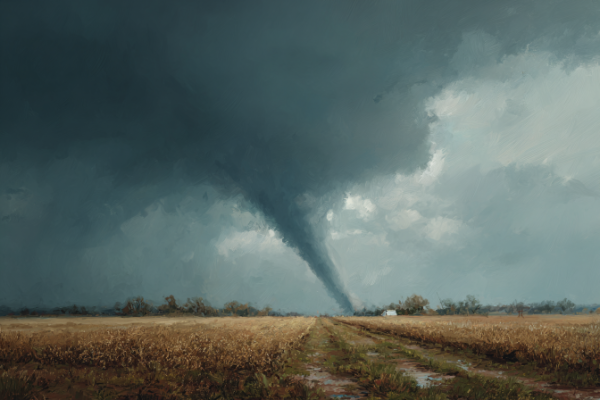
But what of suffering caused by nature—earthquakes, disease, famine—where no human agency is directly involved? Here, the Church’s teachings propose that the laws of nature are a neutral framework. The world, at times, can be a very cruel place. Evil committed by fellow humans is tragic, but it’s easier to comprehend than suffering brought on by nature…If humankind had never originally rebelled, nature would be very different. There would be no natural disasters.
God often does not intervene in the natural course of physical law, for to do so would compromise the very test that mortal life is meant to be. I truly believe that He isn’t sitting on His heavenly throne orchestrating car crashes, illnesses, and so on, but He does allow certain things to happen. … The basic gospel law is free agency and eternal development. For our growth, God will not shield us from every disappointment, temptation, sorrow, or pain. To do so would rob us of the learning and empathy that adversity produces.
Paradoxically, tragedy often reveals humanity’s greatest goodness. The Church teaches that while mortality is filled with calamity, the great secret about humanity is that we alone have the power to rise above it. And if we only focus on the calamities of this world, we will never be worthy of that precious jewel that is called ‘The Human Spirit.’
When disaster strikes—whether it be earthquake, disease, or war—individuals and communities rally to offer aid, comfort, and service. The darkest events often inspire the most shining examples of love, courage, and sacrifice. As the Bible puts it, “Pure religion and undefiled before God and the Father is this, To visit the fatherless and widows in their affliction, and to keep himself unspotted from the world” (James 1:27).
Suffering forges empathy and builds character. It gives occasion not only for individual growth but for the exercise of community, charity, and nobility. Without need, there could be no service; without adversity, there could be no true heroism, compassion, or spiritual development. The Church’s perspective suggests that the conditions of a testing ground provoke both suffering and the opportunities for sublime responses to that suffering.
Yet the dilemma remains: what of innocent children who suffer needlessly, or people who experience seemingly random, overwhelming tragedy? The Church acknowledges the immense pain and grief these situations cause. A compassionate response is not theoretical; it is lived and felt.
For those who suffer innocently, especially children, the Church holds forth the promise of divine compensation: The innocent who suffer will be recompensed for their suffering, such that it will accrue to their good. Little children who die will inherit the glory of the celestial kingdom—a recompense far greater than the suffering that they had to endure.
Furthermore, scripture contains the Lord’s assurance: “All things wherewith you have been afflicted shall work together for your good, and to my name’s glory, saith the Lord” (Doctrine & Covenants 98:3). The belief is that present suffering, grievous as it may be, will in the eternal perspective be swallowed up in joy, understanding, and growth. Even the most senseless tragedies will find redress in God’s ultimate plan.
A common struggle is the fear that natural disasters or diseases are divine punishment. When calamity strikes, some wonder if God is angry, if the righteous and the wicked alike are subject to indiscriminate wrath.
The Brethren have not said anything about COVID being either God’s judgments on the wicked or the plagues of the Revelation of John. Historically, natural disasters have affected both the righteous and the wicked. When suffering appears indiscriminate, rather than as targeted judgment, two conclusions suggest themselves: either it is a random act of nature, or our understanding of righteousness and wickedness is incomplete.
Scripture teaches that not all suffering is punitive. In John 9:1-4, Jesus addresses a man born blind, stating that neither he nor his parents sinned, but “that the works of God should be made manifest in him.” Sometimes, suffering is permitted so that compassion, faith, and God’s purposes can ultimately be realized.
The greatest example of innocent suffering is Jesus Christ Himself. The Son of God suffered more than any of us will ever suffer.” Through His atoning sacrifice, Christ voluntarily submitted to the agony of bodily, emotional, and spiritual pain. In so doing, He demonstrated the possibility of ultimate growth, mercy, and redemption through suffering.
The promise given to disciples is not that suffering will be eliminated in this life, but that believers will not be left comfortless. For the pioneers, He strengthened the women physically by providing nourishment to their babies through them, despite the caloric demands of their walking. He strengthened them spiritually by relieving their weaknesses, which quelled the murmuring. Difficulties don’t disappear, commandments aren’t always revoked, but we can be strengthened.
May we comfort one another, deepen our faith, and seek understanding, trusting that one day, every injustice will be made right and every innocent life will be crowned with glory.
Gramps