

Question
Gramps,
Although I recognize that Patriarchal blessings aren’t meant to provide us with every detail of our lives and blessings, I can’t help but notice that every single one of my family members — my parents, siblings, spouse, and children —has blessings that mention them coming forward in the morning of the resurrection. Mine doesn’t mention the resurrection at ALL. As I grow older, this has become increasingly concerning to me. Can you possibly shed some light on this?
Christa
Answer
Christa,
Patriarchal blessings are cherished by members of The Church of Jesus Christ of Latter-day Saints as sacred, personal roadmaps for life’s journey. Yet, many feel a twinge of anxiety when key phrases—like “coming forth in the morning of the First Resurrection”—are missing from their patriarchal blessing. Does that omission imply disqualification from exaltation or reunion with loved ones? If your blessing differs from others’ in this way, you are not alone, and the concerns are both common and addressable with clarity from prophetic counsel, scripture, and sound doctrine.
Before addressing specifics about resurrection, it’s essential to grasp the true role of patriarchal blessings. President James E. Faust described a patriarchal blessing as “a sacred guideline of counsel, promises, and information from the Lord; however, a person should not expect the blessing to detail all that will happen to him or her or to answer all questions.” He emphasized that not mentioning significant events—like marriage, missionary service, or resurrection—does not preclude their possibility for the recipient. The blessings within such a pronouncement should be treasured, pondered, and lived according to faithful, covenant-keeping lives. President Faust continued, “If…we could perceive only a small part of the person God intends us to be, we would lose our fear and never doubt again.”
Simply put, patriarchal blessings are not exhaustive forecasts or guarantees, nor do they announce every divine opportunity, reward, or challenge a person will face. As confirmed on the official website of The Church of Jesus Christ of Latter-day Saints, “While a patriarchal blessing contains inspired counsel and promises, it should not be expected to answer all of the recipient’s questions or to detail all that will happen in his or her life. If the blessing does not mention an important event, the person should not assume that he or she will not receive that opportunity.” Many promises are eternal, “and its promises may extend into the eternities. If one is worthy, all promises will be fulfilled in the Lord’s due time. Those promises and blessings that are not realized in this life will be fulfilled in the next.”
The First Presidency has clarified that a patriarch is directed by the Holy Ghost to provide “the comfort, guidance, and warnings a person needs to help them accomplish their mission,” not a full enumeration of every milestone or destiny from birth to resurrection. As one First Presidency letter states,
“Patriarchal blessings contemplate an inspired declaration of the lineage of the recipient and, when so moved upon by the Spirit, an inspired and prophetic statement of the life mission…together with such blessings, cautions and admonitions as the patriarch may be prompted to give for the accomplishment of such life’s mission, it being always made clear that the realization of all promised blessings is conditioned upon faithfulness to the gospel of our Lord, whose servant the patriarch is.”
It is natural for recipients to compare their blessings, noting both the repeated and unique elements. While some language—such as references to the First Resurrection, lineage, or major life milestones—may appear across many blessings, this is not due to generic repetition. Often, “template-style revelations” in scripture and in contemporary practice express truths applicable to many, yet customized by the Spirit to the one receiving. As with the early Whitmer brothers, whose personalized revelations shared remarkably similar wording, this does not dilute the personal nature or authority of each pronouncement. Patriarchal blessings are personal revelations given through a revelator. Some themes are common…These are blessings pronounced upon individuals, and when taken individually, cannot be denied – regardless of who else has been offered these same blessings.
Patriarchal blessings reflect what is most critical for a person’s successful navigation through life in a succinct and revelatory manner, rather than a checklist of every righteous blessing possible. Every child of God is unique, and every blessing is, therefore, uniquely tailored—even when similar phrases appear.
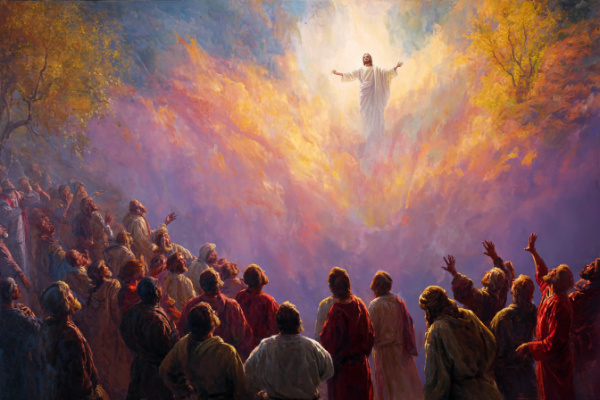
The doctrine of resurrection as taught by The Church of Jesus Christ of Latter-day Saints draws heavily upon scriptural language, dividing resurrection into “the first resurrection”—for the righteous—and a subsequent resurrection for the wicked or unrepentant.
Scriptures make clear that “the righteous will be resurrected before the wicked and will come forth in the First Resurrection…the unrepentant sinners will come forth in the last resurrection” (1 Thessalonians 4:16; Revelation 20:5-13; Doctrine & Covenants 76:85). Often, Church leaders and resources speak of the “morning of the first resurrection” as reserved for those destined for Celestial glory, while the “afternoon of the first resurrection” applies to those inheriting Terrestrial glory (see Doctrine & Covenants 76:64-65, 88:28-29, 132:19).
Scripture and prophetic explanation elaborate further:
Mosiah 15:21-23: “…the resurrection of all the prophets, and all those that have believed in their words, or all those that have kept the commandments of God, shall come forth in the first resurrection; therefore, they are the first resurrection. They are raised to dwell with God who has redeemed them; thus they have eternal life through Christ, who has broken the bands of death.”
Doctrine and Covenants 76:50-54, 64-65: “They are they who received the testimony of Jesus, and believed…were baptized…by keeping the commandments…washed and cleansed from all their sins…who overcome by faith…and are sealed by the Holy Spirit of promise…These are they who shall have part in the first resurrection. These are they who shall come forth in the resurrection of the just.”
The “first resurrection” itself encompasses an order:
Those being resurrected with celestial bodies, whose destiny is to inherit a celestial kingdom, will come forth in the morning of the first resurrection. … This is the afternoon of the first resurrection; it takes place after our Lord has ushered in the millennium. Those coming forth at that time do so with terrestrial bodies and are thus destined to inherit a terrestrial glory in eternity.
Yet, as Elder James E. Talmage and Elder Bruce R. McConkie clarified, the “first resurrection” began with Christ, has continued since, and will culminate at the Second Coming and the establishment of the Millennium. All the righteous—including prophets, faithful Saints, those who died in ignorance, and little children—shall have part, their precise timing determined by God’s wisdom and individual worthiness.
Given the above, the presence—or absence—of statements in a patriarchal blessing regarding the first resurrection, or its morning, should not be construed as either an inclusion or denial of one’s potential for exaltation. Just because a particular blessing isn’t mentioned in no way means that we cannot obey all the principles of the gospel and receive the requisite rewards. You might focus on what the blessing does say, rather than on what it doesn’t say.
Should a recipient or their loved ones not see explicit language regarding resurrection or exaltation, it is critical to remember the guiding principle: all of God’s spiritual blessings—including the privilege of celestial resurrection—are available to all who accept and keep covenants, regardless of how (or whether) those blessings are phrased in a patriarchal blessing.
President Thomas S. Monson counseled:
“Study it carefully. Be guided by its cautions. Live to merit its promises.”
The Church teaches continuously that the fulfillment of promises in a patriarchal blessing is conditioned upon faithfulness to the gospel of our Lord. Whether or not a blessing specifies timing or glory, the Lord’s promises of exaltation are available to all who accept the gospel and endure in faithful covenant keeping.
Elder Russell M. Nelson taught:
“Brothers and sisters, you may also claim the supernal blessings promised to the faithful lineage of Abraham. The Lord explained that blessings and responsibilities of His priesthood are yours because of your faith, works, and lineage—the lineage declared in your patriarchal blessings. You ‘are lawful heirs,’ He said…The ultimate blessings of the Abrahamic covenant are conferred in holy temples. These blessings allow us to come forth in the First Resurrection and inherit thrones, kingdoms, powers, principalities, and dominions, to our ‘exaltation and glory in all things’ (Doctrine & Covenants 132:19).”
Even if you have never received a patriarchal blessing or yours omits mention of resurrection, you can still qualify for every celestial promise by acting upon covenants, repenting, and trusting in Christ.
Patriarchal blessings, as well as temple covenants, are eternal in nature, not just covering mortal life but stretching endlessly beyond the veil. Many Patriarchal Blessings…indicate that the blessing covers a period of time greater than just our ‘earthly life’. The Lord’s own name is “Endless and Eternal” (Moses 7:35), so are His blessings—dependent always on personal faithfulness.
Church leaders reassure that when one truly repents, “their sins are forgotten…and we are then eligible to receive all the blessings we have been previously promised. These would include not only those given us in our Patriarchal Blessing, but our Temple blessings, and others we have been promised.” If you have returned to faithfulness after falling away, or worry about the specificity of your blessing, remember: “If we are faithful to Jesus Christ, we will have part in the First Resurrection and reign with Christ during the Millennium.”
The Lord is no respecter of persons, and His promises are sure. Let the Holy Ghost confirm the truth of these principles in your heart: your destiny is determined by your choices—not by phrases omitted in a mortal man’s inspired, yet non-exhaustive, pronouncement. The door to celestial blessings stands wide; step forward in faith.
Gramps
Related Posts
 Can I ever receive any of the unfilled promises in my patriarchal blessing that were missed because of an unsavory past?
 Should we have faith in our patriarchal blessing?
 What benefit is a patriarchal blessing in the hereafter?
 What does it mean to have access to the blessings given to Father Abraham?